-
Chinese (Simplified)
-
English
-
German
-
Korean
-
Spanish
Chinese (Simplified)
English
German
Korean
Spanish
Sign up for an account to enjoy easy online shopping and instant order tracking.
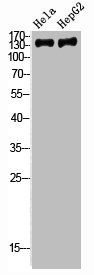
The antibody against NCOA3 was raised in rabbit using the Synthesized peptide derived from the Internal region of Human NCoA-3. as the immunogen. This antibody exists as a non-conjugated isotype IgG. The antibody was affinity-purified from rabbit antiserum by affinity-chromatography using epitope-specific immunogen. This antibody has been validated on WB, ELISA.
$167.00
| Cat.No | ADC-36868A | Clonality | Polyclonal |
|---|---|---|---|
| Host Species | Rabbit | Target Name | NCOA3 |
| Form | Liquid | Species Reactivity | Human, Mouse, Rat |
| Isotype | IgG | Storage Buffer | 0.5% BSA and 0.02% sodium azide., Liquid in PBS containing 50% glycerol |
| Purification Method | The antibody was affinity-purified from rabbit antiserum by affinity-chromatography using epitope-specific immunogen. | Conjugate | Non-conjugated |
| Application | ELISA, WB | Storage | Upon receipt |
| Immunogen Description | Synthesized peptide derived from the Internal region of Human NCoA-3. | Target Species | Human |
|---|---|---|---|
| Immunogen Sequence | Complete sequences for the immunogen, target protein, and peptides are available upon request. | Uniprot ID | Q9Y6Q9 |
Uniprot Id
Q9Y6Q9
Target Species
Human
Target Name
NCOA3
Target Full Name
Nuclear receptor coactivator 3
Target Function
Nuclear receptor coactivator that directly binds nuclear receptors and stimulates the transcriptional activities in a hormone-dependent fashion. Plays a central role in creating a multisubunit coactivator complex, which probably acts via remodeling of chromatin. Involved in the coactivation of different nuclear receptors, such as for steroids (GR and ER), retinoids (RARs and RXRs), thyroid hormone (TRs), vitamin D3 (VDR) and prostanoids (PPARs). Displays histone acetyltransferase activity. Also involved in the coactivation of the NF-kappa-B pathway via its interaction with the NFKB1 subunit.
Target Subcellular Location
Cytoplasm. Nucleus. Note=Mainly cytoplasmic and weakly nuclear. Upon TNF activation and subsequent phosphorylation, it translocates from the cytoplasm to the nucleus.
Target Protein Families
SRC/p160 nuclear receptor coactivator family
Target Tissue Specificity
Widely expressed. High expression in heart, skeletal muscle, pancreas and placenta. Low expression in brain, and very low in lung, liver and kidney.
Target Synonyms
ACTR; AIB 1; AIB-1; AIB1; Amplified in breast cancer 1; Amplified in breast cancer 1 protein; bHLHe42; CAGH 16; CAGH16; CBP interacting protein; CBP-interacting protein; Class E basic helix-loop-helix protein 42; CTG 26; CTG26; KAT13B / AIB1; MGC141848; NCOA 3; NCoA-3; Ncoa3; NCOA3_HUMAN; Nuclear receptor coactivator 3; pCIP; RAC 3; RAC-3; RAC3; Receptor associated coactivator 3; Receptor-associated coactivator 3; SRC 3; SRC-3; SRC3; Steroid receptor coactivator protein 3; Thyroid hormone receptor activator molecule 1; TNRC14; TNRC16; TRAM 1; TRAM-1; TRAM1
Target Background
The protein encoded by this gene is a nuclear receptor coactivator that interacts with nuclear hormone receptors to enhance their transcriptional activator functions. The encoded protein has histone acetyltransferase activity and recruits p300/CBP-associated factor and CREB binding protein as part of a multisubunit coactivation complex. This protein is initially found in the cytoplasm but is translocated into the nucleus upon phosphorylation. Several transcript variants encoding different isoforms have been found for this gene. In addition, a polymorphic repeat region is found in the C-terminus of the encoded protein.
Notification