-
Chinese (Simplified)
-
English
-
German
-
Korean
-
Spanish
Chinese (Simplified)
English
German
Korean
Spanish
Sign up for an account to enjoy easy online shopping and instant order tracking.
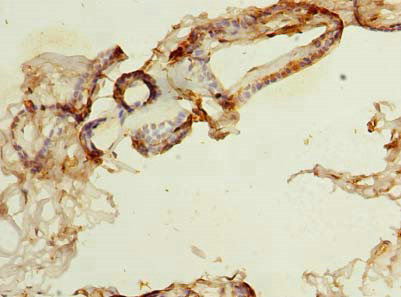
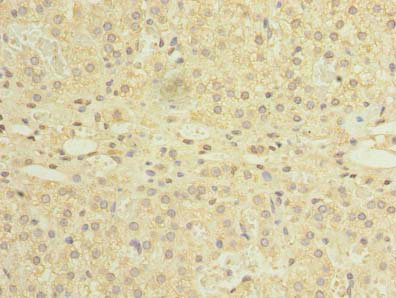
The antibody against NDFIP1 was raised in rabbit using the Recombinant Human NEDD4 family-interacting protein 1 protein (2-116AA) as the immunogen. This antibody exists as a non-conjugated isotype IgG, purified by protein G with a purity greater than 95%. This antibody has been validated on ELISA, WB, IHC, IF.
$299.00
| Cat.No | ADC-24283A | Clonality | Polyclonal |
|---|---|---|---|
| Host Species | Rabbit | Target Name | NDFIP1 |
| Form | Liquid | Species Reactivity | Human |
| Isotype | IgG | Storage Buffer | 0.01M PBS, 0.03% Proclin 300; Constituents: 50% Glycerol, PH 7.4 |
| Purification Method | >95%, Protein G purified | Conjugate | Non-conjugated |
| Application | ELISA, IF, IHC, WB | Storage | Upon receipt |
| Immunogen Description | Recombinant Human NEDD4 family-interacting protein 1 protein (2-116AA) | Target Species | Human |
|---|---|---|---|
| Immunogen Sequence | Complete sequences for the immunogen, target protein, and peptides are available upon request. | Uniprot ID | Q9BT67 |
Uniprot Id
Q9BT67
Target Species
Human
Target Name
NDFIP1
Target Full Name
NEDD4 family-interacting protein 1
Target Function
Activates HECT domain-containing E3 ubiquitin-protein ligases, including NEDD4 and ITCH, and consequently modulates the stability of their targets. As a result, controls many cellular processes. Prevents chronic T-helper cell-mediated inflammation by activating ITCH and thus controlling JUNB degradation. Promotes pancreatic beta cell death through degradation of JUNB and inhibition of the unfolded protein response, leading to reduction of insulin secretion. Restricts the production of proinflammatory cytokines in effector Th17 T-cells by promoting ITCH-mediated ubiquitination and degradation of RORC. Together with NDFIP2, limits the cytokine signaling and expansion of effector Th2 T-cells by promoting degradation of JAK1, probably by ITCH- and NEDD4L-mediated ubiquitination. Regulates peripheral T-cell tolerance to self and foreign antigens, forcing the exit of naive CD4+ T-cells from the cell cycle before they become effector T-cells. Negatively regulates RLR-mediated antiviral response by promoting SMURF1-mediated ubiquitination and subsequent degradation of MAVS. Negatively regulates KCNH2 potassium channel activity by decreasing its cell-surface expression and interfering with channel maturation through recruitment of NEDD4L to the Golgi apparatus where it mediates KCNH2 degradation. In cortical neurons, mediates the ubiquitination of the divalent metal transporter SLC11A2/DMT1 by NEDD4L, leading to its down-regulation and protection of the cells from cobalt and iron toxicity. Important for normal development of dendrites and dendritic spines in cortex. Enhances the ubiquitination of BRAT1 mediated by: NEDD4, NEDD4L and ITCH and is required for the nuclear localization of ubiquitinated BRAT1. Enhances the ITCH-mediated ubiquitination of MAP3K7 by recruiting E2 ubiquitin-conjugating enzyme UBE2L3 to ITCH. Modulates EGFR signaling through multiple pathways. In particular, may regulate the ratio of AKT1-to-MAPK8 signaling in response to EGF, acting on AKT1 probably through PTEN destabilization and on MAPK8 through ITCH-dependent MAP2K4 inactivation. As a result, may control cell growth rate. Inhibits cell proliferation by promoting PTEN nuclear localization and changing its signaling specificity.
Target Subcellular Location
Endosome membrane; Multi-pass membrane protein. Golgi apparatus membrane. Cell junction, synapse, synaptosome. Cell projection, dendrite. Secreted. Note=Detected in exosomes and secreted via the exosomal pathway (PubMed:18819914).
Target Tissue Specificity
Widely expressed. Higher levels are detected in cerebellum, pituitary, thalamus, kidney, liver, testis, salivary glands and placenta. Also expressed in fetal brain, kidney and lung.
Target Synonyms
NDFIP1; N4WBP5; PSEC0192; PSEC0223; NEDD4 family-interacting protein 1; Breast cancer-associated protein SGA-1M; NEDD4 WW domain-binding protein 5; Putative MAPK-activating protein PM13; Putative NF-kappa-B-activating protein 164; Putative NFKB and MAPK-activating protein
Notification