• Contact info@abtriva.com for inquiries and orders.
  • Chinese (Simplified)

  • English

  • German

  • Korean

  • Spanish

United States (English / $ USD)

Rabbit anti-Human NFE2L1 Polyclonal Antibody

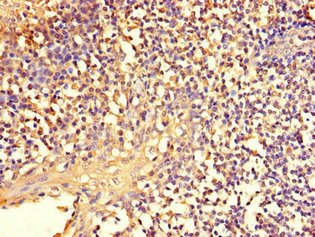
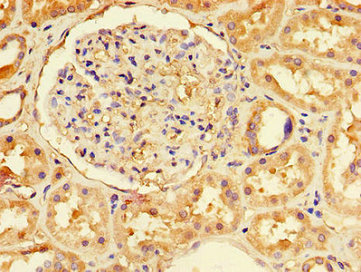
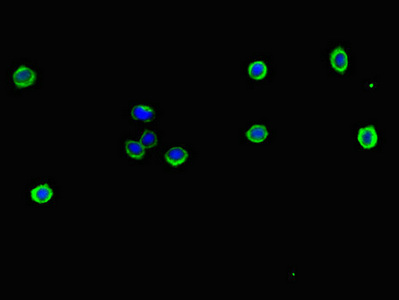
The antibody against NFE2L1 was raised in rabbit using the Recombinant Human Endoplasmic reticulum membrane sensor NFE2L1 protein (251-550AA) as the immunogen. This antibody exists as a non-conjugated isotype IgG, purified by protein G with a purity greater than 95%. This antibody has been validated on ELISA, IHC, IF.

ADC-21798A

The antibody against NFE2L1 was raised in rabbit using the Recombinant Human Endoplasmic reticulum membrane sensor NFE2L1 protein (251-550AA) as the immunogen. This antibody exists as a non-conjugated isotype IgG, purified by protein G with a purity greater than 95%. This antibody has been validated on ELISA, IHC, IF.

$299.00

Number
Order Exclusive Products Now

Request a Quote
High Purity LevelsPrecision and ReliabilityCustomization Options

Specifications


Cat.No ADC-21798A ClonalityPolyclonal
Host SpeciesRabbitTarget NameNFE2L1
FormLiquidSpecies ReactivityHuman
IsotypeIgGStorage Buffer0.01M PBS, 0.03% Proclin 300; Constituents: 50% Glycerol, PH 7.4
Purification Method>95%, Protein G purifiedConjugateNon-conjugated
ApplicationELISA, IF, IHCStorageUpon receipt

Immunogen Information


Immunogen DescriptionRecombinant Human Endoplasmic reticulum membrane sensor NFE2L1 protein (251-550AA)Target SpeciesHuman
Immunogen SequenceComplete sequences for the immunogen, target protein, and peptides are available upon request.Uniprot IDQ14494
Background Information
  • Uniprot Id

    Q14494

  • Target Species

    Human

  • Target Name

    NFE2L1

  • Target Full Name

    Endoplasmic reticulum membrane sensor NFE2L1

  • Target Function

    Endoplasmic reticulum membrane sensor that translocates into the nucleus in response to various stresses to act as a transcription factor. Constitutes a precursor of the transcription factor NRF1. Able to detect various cellular stresses, such as cholesterol excess, oxidative stress or proteasome inhibition. In response to stress, it is released from the endoplasmic reticulum membrane following cleavage by the protease DDI2 and translocates into the nucleus to form the transcription factor NRF1. Acts as a key sensor of cholesterol excess: in excess cholesterol conditions, the endoplasmic reticulum membrane form of the protein directly binds cholesterol via its CRAC motif, preventing cleavage and release of the transcription factor NRF1, thereby allowing expression of genes promoting cholesterol removal, such as CD36. Involved in proteasome homeostasis: in response to proteasome inhibition, it is released from the endoplasmic reticulum membrane, translocates to the nucleus and activates expression of genes encoding proteasome subunits.; CNC-type bZIP family transcription factor that translocates to the nucleus and regulates expression of target genes in response to various stresses. Heterodimerizes with small-Maf proteins (MAFF, MAFG or MAFK) and binds DNA motifs including the antioxidant response elements (AREs), which regulate expression of genes involved in oxidative stress response. Activates or represses expression of target genes, depending on the context. Plays a key role in cholesterol homeostasis by acting as a sensor of cholesterol excess: in low cholesterol conditions, translocates into the nucleus and represses expression of genes involved in defense against cholesterol excess, such as CD36. In excess cholesterol conditions, the endoplasmic reticulum membrane form of the protein directly binds cholesterol via its CRAC motif, preventing cleavage and release of the transcription factor NRF1, thereby allowing expression of genes promoting cholesterol removal. Critical for redox balance in response to oxidative stress: acts by binding the AREs motifs on promoters and mediating activation of oxidative stress response genes, such as GCLC, GCLM, GSS, MT1 and MT2. Plays an essential role during fetal liver hematopoiesis: probably has a protective function against oxidative stress and is involved in lipid homeostasis in the liver. Involved in proteasome homeostasis: in response to proteasome inhibition, mediates the 'bounce-back' of proteasome subunits by translocating into the nucleus and activating expression of genes encoding proteasome subunits. Also involved in regulating glucose flux. Together with CEBPB; represses expression of DSPP during odontoblast differentiation. In response to ascorbic acid induction, activates expression of SP7/Osterix in osteoblasts.

  • Target Subcellular Location

    [Endoplasmic reticulum membrane sensor NFE2L1]: Endoplasmic reticulum membrane; Single-pass type II membrane protein. Endoplasmic reticulum membrane; Single-pass type III membrane protein.; [Transcription factor NRF1]: Nucleus.

  • Target Protein Families

    BZIP family, CNC subfamily

  • Target Synonyms

    erythroid derived 2; like 1; Locus control region factor 1 ; Locus control region-factor 1; NF-E2-related factor 1; NF2L1_HUMAN; NFE2 related factor 1; NFE2-related factor 1; NFE2L1; NRF1; Nuclear factor; Nuclear Factor Erythroid 2 Related Factor 1; Nuclear factor erythroid 2-related factor 1; Nuclear factor erythroid derived 2 like 1; TCF-11; TCF11; Transcription factor 11; Transcription factor HBZ17; Transcription factor LCR F1; Transcription factor LCR-F1

  • Target Background

    This gene encodes a protein that is involved in globin gene expression in erythrocytes. Confusion has occurred in bibliographic databases due to the shared symbol of NRF1 for this gene, NFE2L1, and for "nuclear respiratory factor 1" which has an official symbol of NRF1.

Inquire Rabbit anti-Human NFE2L1 Polyclonal Antibody Now


AbTriva respects your privacy and protects your personal data in accordance with AbTriva. For more information, please see our data protection statement. *

Notification