-
Chinese (Simplified)
-
English
-
German
-
Korean
-
Spanish

Chinese (Simplified)
English
German
Korean
Spanish
Sign up for an account to enjoy easy online shopping and instant order tracking.
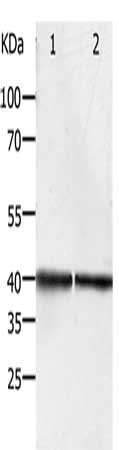
The antibody against PDX1 was raised in rabbit using the Synthetic peptide of Human PDX1 as the immunogen. This antibody exists as a non-conjugated isotype IgG, Antigen affinity purified. This antibody has been validated on ELISA, WB, IHC.
$299.00
| Cat.No | ADC-28028A | Clonality | Polyclonal |
|---|---|---|---|
| Host Species | Rabbit | Target Name | PDX1 |
| Form | Liquid | Species Reactivity | Human, Mouse, Rat |
| Isotype | IgG | Storage Buffer | 0.05% NaN3, 40% Glycerol., pH7.4 PBS |
| Purification Method | Antigen affinity purified | Conjugate | Non-conjugated |
| Application | ELISA, IHC, WB | Storage | Upon receipt |
| Immunogen Description | Synthetic peptide of Human PDX1 | Target Species | Human |
|---|---|---|---|
| Immunogen Sequence | Complete sequences for the immunogen, target protein, and peptides are available upon request. | Uniprot ID | P52945 |
Uniprot Id
P52945
Target Species
Human
Target Name
PDX1
Target Full Name
Pancreas/duodenum homeobox protein 1
Target Function
Activates insulin, somatostatin, glucokinase, islet amyloid polypeptide and glucose transporter type 2 gene transcription. Particularly involved in glucose-dependent regulation of insulin gene transcription. As part of a PDX1:PBX1b:MEIS2b complex in pancreatic acinar cells is involved in the transcriptional activation of the ELA1 enhancer; the complex binds to the enhancer B element and cooperates with the transcription factor 1 complex (PTF1) bound to the enhancer A element. Binds preferentially the DNA motif 5'-[CT]TAAT[TG]-3'. During development, specifies the early pancreatic epithelium, permitting its proliferation, branching and subsequent differentiation. At adult stage, required for maintaining the hormone-producing phenotype of the beta-cell.
Target Involvement
Pancreatic agenesis 1 (PAGEN1); Diabetes mellitus, non-insulin-dependent (NIDDM); Maturity-onset diabetes of the young 4 (MODY4)
Target Subcellular Location
Nucleus. Cytoplasm, cytosol.
Target Protein Families
Antp homeobox family, IPF1/XlHbox-8 subfamily
Target Tissue Specificity
Duodenum and pancreas (Langerhans islet beta cells and small subsets of endocrine non-beta-cells, at low levels in acinar cells).
Target Synonyms
Glucose sensitive factor; Glucose-sensitive factor; GSF; IDX 1; IDX-1; IDX1; Insulin promoter factor 1; Insulin promoter factor 1 homeodomain transcription factor; Insulin upstream factor 1; IPF 1; IPF-1; IPF1 ; Islet/duodenum homeobox 1; Islet/duodenum homeobox-1; IUF 1; IUF-1; IUF1; MODY4; Pancreas/duodenum homeobox 1; Pancreas/duodenum homeobox protein 1; pancreatic and duodenal homeobox P; PDX 1; PDX-1; PDX1; PDX1_HUMAN; Somatostatin transactivating factor 1; Somatostatin-transactivating factor 1; STF 1; STF-1; STF1
Target Background
The protein encoded by this gene is a transcriptional activator of several genes, including insulin, somatostatin, glucokinase, islet amyloid polypeptide, and glucose transporter type 2. The encoded nuclear protein is involved in the early development of the pancreas and plays a major role in glucose-dependent regulation of insulin gene expression. Defects in this gene are a cause of pancreatic agenesis, which can lead to early-onset insulin-dependent diabetes mellitus (IDDM), as well as maturity onset diabetes of the young type 4 (MODY4).
Notification