-
Chinese (Simplified)
-
English
-
German
-
Korean
-
Spanish

Chinese (Simplified)
English
German
Korean
Spanish
Sign up for an account to enjoy easy online shopping and instant order tracking.
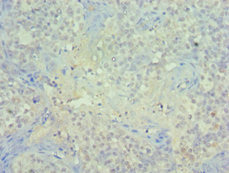
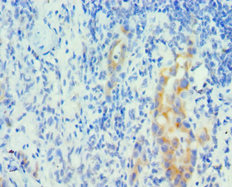
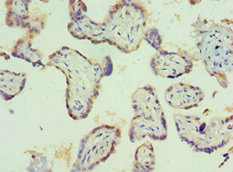
The antibody against PIAS1 was raised in rabbit using the Recombinant Human E3 SUMO-protein ligase PIAS1 protein (422-651AA) as the immunogen. This antibody exists as a non-conjugated isotype IgG, Antigen affinity purified. This antibody has been validated on ELISA, IHC.
$299.00
| Cat.No | ADC-44587A | Clonality | Polyclonal |
|---|---|---|---|
| Host Species | Rabbit | Target Name | PIAS1 |
| Form | Liquid | Species Reactivity | Human |
| Isotype | IgG | Storage Buffer | 50% Glycerol, PBS with 0.02% sodium azide, pH7.3. |
| Purification Method | Antigen affinity purified | Conjugate | Non-conjugated |
| Application | ELISA, IHC | Storage | Upon receipt |
| Immunogen Description | Recombinant Human E3 SUMO-protein ligase PIAS1 protein (422-651AA) | Target Species | Human |
|---|---|---|---|
| Immunogen Sequence | Complete sequences for the immunogen, target protein, and peptides are available upon request. | Uniprot ID | O75925 |
Uniprot Id
O75925
Target Species
Human
Target Name
PIAS1
Target Full Name
E3 SUMO-protein ligase PIAS1
Target Function
Functions as an E3-type small ubiquitin-like modifier (SUMO) ligase, stabilizing the interaction between UBE2I and the substrate, and as a SUMO-tethering factor. Plays a crucial role as a transcriptional coregulation in various cellular pathways, including the STAT pathway, the p53 pathway and the steroid hormone signaling pathway. In vitro, binds A/T-rich DNA. The effects of this transcriptional coregulation, transactivation or silencing, may vary depending upon the biological context. Sumoylates PML (at'Lys-65' and 'Lys-160') and PML-RAR and promotes their ubiquitin-mediated degradation. PIAS1-mediated sumoylation of PML promotes its interaction with CSNK2A1/CK2 which in turn promotes PML phosphorylation and degradation. Enhances the sumoylation of MTA1 and may participate in its paralog-selective sumoylation. Plays a dynamic role in adipogenesis by promoting the SUMOylation and degradation of CEBPB.
Target Subcellular Location
Nucleus speckle. Nucleus, PML body. Note=Interaction with CSRP2 may induce a partial redistribution along the cytoskeleton.
Target Protein Families
PIAS family
Target Tissue Specificity
Expressed in numerous tissues with highest level in testis.
Target Synonyms
AR interacting protein; DDXBP1; DEAD/H (Asp-Glu-Ala-Asp/His) box binding protein 1; DEAD/H box binding protein 1 ; DEAD/H box-binding protein 1; E3 SUMO-protein ligase PIAS1; GBP; Gu binding protein; Gu-binding protein; GU/RH-II; Pias1; PIAS1_HUMAN; Protein inhibitor of activated STAT protein 1; Protein inhibitor of activated STAT; 1; RNA helicase II binding protein; RNA helicase II-binding protein; Zinc finger; MIZ-type containing 3; ZMIZ3
Target Background
This gene encodes a member of the protein inhibitor of activated STAT (PIAS) family. PIAS proteins function as SUMO E3 ligases and play important roles in many cellular processes by mediating the sumoylation of target proteins. This protein plays a central role as a transcriptional coregulator of numerous cellular pathways includign the STAT1 and nuclear factor kappaB pathways. Alternate splicing results in multiple transcript variants.
Notification