-
Chinese (Simplified)
-
English
-
German
-
Korean
-
Spanish
Chinese (Simplified)
English
German
Korean
Spanish
Sign up for an account to enjoy easy online shopping and instant order tracking.
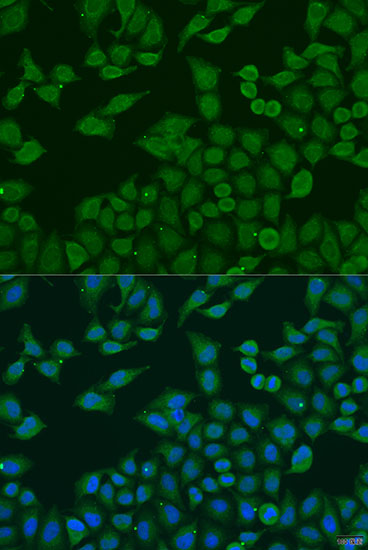
The antibody against PLA2G4C was raised in Rabbit using the recombinant fusion protein containing a sequence corresponding to amino acids 1-189 of human PLA2G4C (NP_003697.2) as the immunogen. The polyclonal antibody exists as a isotype IgG, by affinity purification. This antibody has been validated on IF/ICC, ELISA.
| Cat.No | ADA-00064A | Clonality | Polyclonal |
|---|---|---|---|
| Host Species | Rabbit | Target Name | PLA2G4C |
| Target Synonyms | CPLA2-gamma; PLA2G4C | Form | Liquid |
| Species Reactivity | Human | Isotype | IgG |
| Storage Buffer | 50% Glycerol, PBS with 0.02% sodium azide, pH7.3. | Purification Method | Affinity purification |
| Application | ELISA, IF/ICC |
| Immunogen Description | Recombinant fusion protein containing a sequence corresponding to amino acids 1-189 of human PLA2G4C (NP_003697.2). | Target Species | Human |
|---|---|---|---|
| Immunogen Sequence | MGSSEVSIIPGLQKEEKAAVERRRLHVLKALKKLRIEADEAPVVAVLGSGGGLRAHIACLGVLSEMKEQGLLDAVTYLAGVSGSTWAISSLYTNDGDMEALEADLKHRFTRQEWDLAKSLQKTIQAARSENYSLTDFWAYMVISKQTRELPESHLSNMKKPVEEGTLPYPIFAAIDNDLQPSWQEARAP | Uniprot ID | Q9UP65 |
Uniprot Id
Q9UP65
Target Species
Human
Target Name
PLA2G4C
Target Full Name
Cytosolic phospholipase A2 gamma
Target Function
Calcium-independent phospholipase, lysophospholipase and O-acyltransferase involved in phospholipid remodeling with implications in endoplasmic reticulum membrane homeostasis and lipid droplet biogenesis. Preferentially hydrolyzes the ester bond of the fatty acyl group attached at the sn-2 position of phospholipids with choline and ethanolamine head groups, producing lysophospholipids that are used in deacylation-reacylation cycles. Transfers the sn-1 fatty acyl from one lysophospholipid molecule to the sn-2 position of another lysophospholipid to form diacyl, alkylacyl and alkenylacyl glycerophospholipids. Cleaves ester bonds but not alkyl or alkenyl ether bonds at sn-1 position of lysophospholipids. Catalyzes sn-2 fatty acyl transfer from phospholipids to the sn-2 position of 1-O-alkyl or 1-O-alkenyl lysophospholipids with lower efficiency. In response to dietary fatty acids, may play a role in the formation of nascent lipid droplets from the endoplasmic reticulum likely by regulating the phospholipid composition of these organelles.; (Microbial infection) May play a role in replication and assembly of human hepatitis C virus (HCV). In response to HCV infection, promotes remodeling of host endoplasmic reticulum membranes to form organelle-like structures called membranous web, where HCV replication occur. Can further mediate translocation of replication complexes to lipid droplets to enable virion assembly.; (Microbial infection) May facilitate human T-lymphotropic virus type 1 (HTLV-1) infection by promoting leukotriene B4 (LTB4) biosynthesis. LTB4 acts as a chemoattractant for HTLV-1-infected CD4-positive T cells and favors cell to cell viral transmission.
Target Subcellular Location
Cell membrane; Lipid-anchor. Endoplasmic reticulum membrane; Lipid-anchor. Mitochondrion membrane; Lipid-anchor. Lipid droplet.
Target Tissue Specificity
Highly expressed in heart and skeletal muscle.
Target Synonyms
cPLA2 gamma; Cytosolic phospholipase A2 gamma; EC 3.1.1.4; PA24C_HUMAN; Phospholipase A2 group IVC ; PLA2G4C
Target Background
This gene encodes a protein which is a member of the phospholipase A2 enzyme family which hydrolyzes glycerophospholipids to produce free fatty acids and lysophospholipids, both of which serve as precursors in the production of signaling molecules. The encoded protein has been shown to be a calcium-independent and membrane bound enzyme. Multiple transcript variants encoding different isoforms have been found for this gene.
Notification