• Contact info@abtriva.com for inquiries and orders.
  • Chinese (Simplified)

  • English

  • German

  • Korean

  • Spanish

United States (English / $ USD)

Rabbit anti-Human PSEN1 Polyclonal Antibody

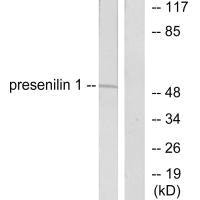
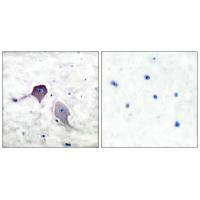
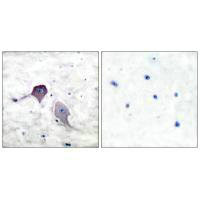
The antibody against PSEN1 was raised in rabbit using the Synthesized peptide derived from Human presenilin 1. as the immunogen. The antibody was affinity-purified from rabbit antiserum by affinity-chromatography using epitope-specific immunogen. This antibody has been validated on ELISA, WB, IHC.

ADC-42329A

The antibody against PSEN1 was raised in rabbit using the Synthesized peptide derived from Human presenilin 1. as the immunogen. The antibody was affinity-purified from rabbit antiserum by affinity-chromatography using epitope-specific immunogen. This antibody has been validated on ELISA, WB, IHC.

$297.00

Number
Order Exclusive Products Now

Request a Quote
High Purity LevelsPrecision and ReliabilityCustomization Options

Specifications


Cat.No ADC-42329A ClonalityPolyclonal
Host SpeciesRabbitTarget NamePSEN1
FormLiquidSpecies ReactivityHuman
Storage BufferPH 7.4, 0.02% sodium azide and 50% glycerol., 150mM NaCl, Rabbit IgG in phosphate buffered saline (without Mg2+ and Ca2+)Purification MethodThe antibody was affinity-purified from rabbit antiserum by affinity-chromatography using epitope-specific immunogen.
ApplicationELISA, IHC, WBStorageUpon receipt

Immunogen Information


Immunogen DescriptionSynthesized peptide derived from Human presenilin 1.Target SpeciesHuman
Immunogen SequenceComplete sequences for the immunogen, target protein, and peptides are available upon request.Uniprot IDP49768
Background Information
  • Uniprot Id

    P49768

  • Target Species

    Human

  • Target Name

    PSEN1

  • Target Full Name

    Presenilin-1

  • Target Function

    Catalytic subunit of the gamma-secretase complex, an endoprotease complex that catalyzes the intramembrane cleavage of integral membrane proteins such as Notch receptors and APP (amyloid-beta precursor protein). Requires the presence of the other members of the gamma-secretase complex for protease activity. Plays a role in Notch and Wnt signaling cascades and regulation of downstream processes via its role in processing key regulatory proteins, and by regulating cytosolic CTNNB1 levels. Stimulates cell-cell adhesion via its interaction with CDH1; this stabilizes the complexes between CDH1 (E-cadherin) and its interaction partners CTNNB1 (beta-catenin), CTNND1 and JUP (gamma-catenin). Under conditions of apoptosis or calcium influx, cleaves CDH1. This promotes the disassembly of the complexes between CDH1 and CTNND1, JUP and CTNNB1, increases the pool of cytoplasmic CTNNB1, and thereby negatively regulates Wnt signaling. Required for normal embryonic brain and skeleton development, and for normal angiogenesis. Mediates the proteolytic cleavage of EphB2/CTF1 into EphB2/CTF2. The holoprotein functions as a calcium-leak channel that allows the passive movement of calcium from endoplasmic reticulum to cytosol and is therefore involved in calcium homeostasis. Involved in the regulation of neurite outgrowth. Is a regulator of presynaptic facilitation, spike transmission and synaptic vesicles replenishment in a process that depends on gamma-secretase activity. It acts through the control of SYT7 presynaptic expression.

  • Target Involvement

    Alzheimer disease 3 (AD3); Frontotemporal dementia (FTD); Cardiomyopathy, dilated 1U (CMD1U); Acne inversa, familial, 3 (ACNINV3)

  • Target Subcellular Location

    Endoplasmic reticulum. Endoplasmic reticulum membrane; Multi-pass membrane protein. Golgi apparatus membrane; Multi-pass membrane protein. Cytoplasmic granule. Cell membrane; Multi-pass membrane protein. Cell projection, growth cone. Early endosome. Early endosome membrane; Multi-pass membrane protein. Cell projection, neuron projection. Cell projection, axon. Cell junction, synapse.

  • Target Protein Families

    Peptidase A22A family

  • Target Tissue Specificity

    Detected in azurophile granules in neutrophils and in platelet cytoplasmic granules (at protein level). Expressed in a wide range of tissues including various regions of the brain, liver, spleen and lymph nodes.

  • Target Synonyms

    AD3; Ad3h; FAD; Homo Sapiens Clone CC44 Senilin 1; Presenilin-1 CTF12; Protein S182; PS 1; PS-1; PS1-CTF12; PSEN1; PSN1_HUMAN; PSNL1; S182

  • Target Background

    Alzheimer's disease (AD) patients with an inherited form of the disease carry mutations in the presenilin proteins (PSEN1; PSEN2) or in the amyloid precursor protein (APP). These disease-linked mutations result in increased production of the longer form of amyloid-beta (main component of amyloid deposits found in AD brains). Presenilins are postulated to regulate APP processing through their effects on gamma-secretase, an enzyme that cleaves APP. Also, it is thought that the presenilins are involved in the cleavage of the Notch receptor, such that they either directly regulate gamma-secretase activity or themselves are protease enzymes. Several alternatively spliced transcript variants encoding different isoforms have been identified for this gene, the full-length nature of only some have been determined.

Inquire Rabbit anti-Human PSEN1 Polyclonal Antibody Now


AbTriva respects your privacy and protects your personal data in accordance with AbTriva. For more information, please see our data protection statement. *

Notification