• Contact info@abtriva.com for inquiries and orders.
  • Chinese (Simplified)

  • English

  • German

  • Korean

  • Spanish

United States (English / $ USD)

Rabbit anti-Human PVRL1 Polyclonal Antibody

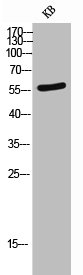
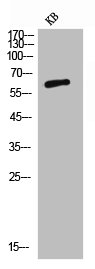
The antibody against NECTIN1 was raised in rabbit using the Synthesized peptide derived from the Internal region of Human Nectin 1. as the immunogen. This antibody exists as a non-conjugated isotype IgG. The antibody was affinity-purified from rabbit antiserum by affinity-chromatography using epitope-specific immunogen. This antibody has been validated on WB, ELISA.

ADC-36775A

The antibody against NECTIN1 was raised in rabbit using the Synthesized peptide derived from the Internal region of Human Nectin 1. as the immunogen. This antibody exists as a non-conjugated isotype IgG. The antibody was affinity-purified from rabbit antiserum by affinity-chromatography using epitope-specific immunogen. This antibody has been validated on WB, ELISA.

$167.00

Number
Order Exclusive Products Now

Request a Quote
High Purity LevelsPrecision and ReliabilityCustomization Options

Specifications


Cat.No ADC-36775A ClonalityPolyclonal
Host SpeciesRabbitTarget NameNECTIN1
FormLiquidSpecies ReactivityHuman, Mouse, Rat
IsotypeIgGStorage Buffer0.5% BSA and 0.02% sodium azide., Liquid in PBS containing 50% glycerol
Purification MethodThe antibody was affinity-purified from rabbit antiserum by affinity-chromatography using epitope-specific immunogen.ConjugateNon-conjugated
ApplicationELISA, WBStorageUpon receipt

Immunogen Information


Immunogen DescriptionSynthesized peptide derived from the Internal region of Human Nectin 1.Target SpeciesHuman
Immunogen SequenceComplete sequences for the immunogen, target protein, and peptides are available upon request.Uniprot IDQ15223
Background Information
  • Uniprot Id

    Q15223

  • Target Species

    Human

  • Target Name

    NECTIN1

  • Target Full Name

    Nectin-1

  • Target Function

    Promotes cell-cell contacts by forming homophilic or heterophilic trans-dimers. Heterophilic interactions have been detected between NECTIN1 and NECTIN3 and between NECTIN1 and NECTIN4. Has some neurite outgrowth-promoting activity.; (Microbial infection) Acts as a receptor for herpes simplex virus 1/HHV-1, herpes simplex virus 2/HHV-2, and pseudorabies virus/PRV.

  • Target Involvement

    Ectodermal dysplasia, Margarita Island type (EDMI); Non-syndromic orofacial cleft 7 (OFC7)

  • Target Subcellular Location

    [Isoform Alpha]: Cell membrane; Single-pass type I membrane protein. Cell junction, synapse, presynaptic cell membrane.; [Isoform Delta]: Cell membrane; Single-pass type I membrane protein.; [Isoform Gamma]: Secreted.

  • Target Protein Families

    Nectin family

  • Target Synonyms

    CD111; CD111 antigen; CLPED1; ectodermal dysplasia 4 (Margarita Island type); ED4; Herpes virus entry mediator C; Herpesvirus entry mediator C; Herpesvirus Ig like receptor; Herpesvirus Ig-like receptor; HIgR; HveC; MGC142031; Nectin 1; Nectin-1; OFC7; OROFACIAL CLEFT 7; OTTHUMP00000232093; OTTHUMP00000232094; OTTHUMP00000232095; Poliovirus receptor related protein 1; poliovirus receptor-like 1; Poliovirus receptor-related protein 1; PRR; PRR1; PVRL 1; PVRL1; PVRL1_HUMAN; PVRR; PVRR1; SK-12

  • Target Background

    This gene encodes an adhesion protein that plays a role in the organization of adherens junctions and tight junctions in epithelial and endothelial cells. The protein is a calcium(2+)-independent cell-cell adhesion molecule that belongs to the immunoglobulin superfamily and has 3 extracellular immunoglobulin-like loops, a single transmembrane domain (in some isoforms), and a cytoplasmic region. This protein acts as a receptor for glycoprotein D (gD) of herpes simplex viruses 1 and 2 (HSV-1, HSV-2), and pseudorabies virus (PRV) and mediates viral entry into epithelial and neuronal cells. Mutations in this gene cause cleft lip and palate/ectodermal dysplasia 1 syndrome (CLPED1) as well as non-syndromic cleft lip with or without cleft palate (CL/P). Alternative splicing results in multiple transcript variants encoding proteins with distinct C-termini.

Inquire Rabbit anti-Human PVRL1 Polyclonal Antibody Now


AbTriva respects your privacy and protects your personal data in accordance with AbTriva. For more information, please see our data protection statement. *

Notification