-
Chinese (Simplified)
-
English
-
German
-
Korean
-
Spanish
Chinese (Simplified)
English
German
Korean
Spanish
Sign up for an account to enjoy easy online shopping and instant order tracking.
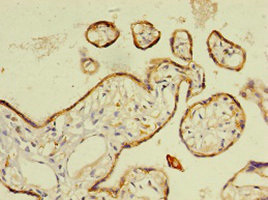
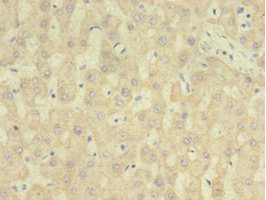
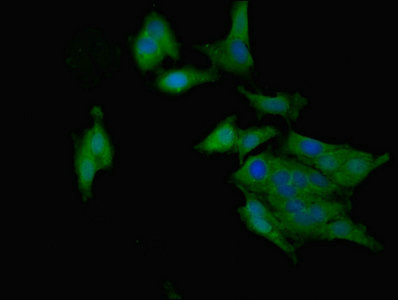
The antibody against RARRES2 was raised in rabbit using the Recombinant Human Retinoic acid receptor responder protein 2 protein (21-157AA) as the immunogen. This antibody exists as a non-conjugated isotype IgG, purified by protein G with a purity greater than 95%. This antibody has been validated on ELISA, IHC, IF.
$299.00
| Cat.No | ADC-32892A | Clonality | Polyclonal |
|---|---|---|---|
| Host Species | Rabbit | Target Name | RARRES2 |
| Form | Liquid | Species Reactivity | Human |
| Isotype | IgG | Storage Buffer | 0.01M PBS, 0.03% Proclin 300; Constituents: 50% Glycerol, PH 7.4 |
| Purification Method | >95%, Protein G purified | Conjugate | Non-conjugated |
| Application | ELISA, IF, IHC | Storage | Upon receipt |
| Immunogen Description | Recombinant Human Retinoic acid receptor responder protein 2 protein (21-157AA) | Target Species | Human |
|---|---|---|---|
| Immunogen Sequence | Complete sequences for the immunogen, target protein, and peptides are available upon request. | Uniprot ID | Q99969 |
Uniprot Id
Q99969
Target Species
Human
Target Name
RARRES2
Target Full Name
Retinoic acid receptor responder protein 2
Target Function
Adipocyte-secreted protein (adipokine) that regulates adipogenesis, metabolism and inflammation through activation of the chemokine-like receptor 1 (CMKLR1). Acts also as a ligand for CMKLR2. Can also bind to C-C chemokine receptor-like 2 (CCRL2), but with a lower affinity than it does to CMKLR1 or CMKLR2. Positively regulates adipocyte differentiation, modulates the expression of adipocyte genes involved in lipid and glucose metabolism and might play a role in angiogenesis, a process essential for the expansion of white adipose tissue. Also acts as a proinflammatory adipokine, causing an increase in secretion of proinflammatory and prodiabetic adipokines, which further impair adipose tissue metabolic function and have negative systemic effects including impaired insulin sensitivity, altered glucose and lipid metabolism, and a decrease in vascular function in other tissues. Can have both pro- and anti-inflammatory properties depending on the modality of enzymatic cleavage by different classes of proteases. Acts as a chemotactic factor for leukocyte populations expressing CMKLR1, particularly immature plasmacytoid dendritic cells, but also immature myeloid DCs, macrophages and natural killer cells. Exerts an anti-inflammatory role by preventing TNF/TNFA-induced VCAM1 expression and monocytes adhesion in vascular endothelial cells. The effect is mediated via inhibiting activation of NF-kappa-B and CRK/p38 through stimulation of AKT1/NOS3 signaling and nitric oxide production. Its dual role in inflammation and metabolism might provide a link between chronic inflammation and obesity, as well as obesity-related disorders such as type 2 diabetes and cardiovascular disease. Exhibits an antimicrobial function in the skin.
Target Subcellular Location
Secreted.
Target Tissue Specificity
Expressed at the highest levels in placenta, liver, and white adipose tissue (WAT), and to a lesser extent in many other tissues such as lung, brown adipose tissue, heart, ovary, kidney, skeletal muscle and pancreas. Within WAT, expression is enriched in
Target Research Area
Neuroscience
Target Synonyms
HP10433; RAR responsive protein TIG2; RAR-responsive protein TIG2; RARR2_HUMAN; RARRES2; Retinoic acid receptor responder (tazarotene induced) 2; Retinoic acid receptor responder 2; Retinoic acid receptor responder protein 2; Tazarotene induced gene 2 protein; Tazarotene-induced gene 2 protein; TIG2
Target Background
This gene encodes a secreted chemotactic protein that initiates chemotaxis via the ChemR23 G protein-coupled seven-transmembrane domain ligand. Expression of this gene is upregulated by the synthetic retinoid tazarotene and occurs in a wide variety of tissues. The active protein has several roles, including that as an adipokine and as an antimicrobial protein with activity against bacteria and fungi.
Notification