-
Chinese (Simplified)
-
English
-
German
-
Korean
-
Spanish
Chinese (Simplified)
English
German
Korean
Spanish
Sign up for an account to enjoy easy online shopping and instant order tracking.
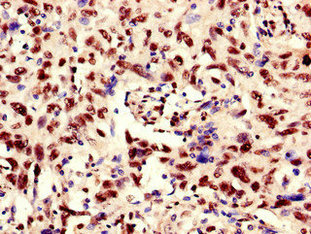
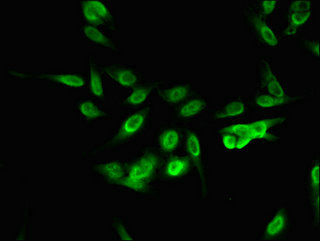
The antibody against RBM10 was raised in rabbit using the Recombinant Human RNA-binding protein 10 protein (501-700AA) as the immunogen. This antibody exists as a non-conjugated isotype IgG, purified by protein G with a purity greater than 95%. This antibody has been validated on ELISA, WB, IHC, IF.
$299.00
| Cat.No | ADC-21553A | Clonality | Polyclonal |
|---|---|---|---|
| Host Species | Rabbit | Target Name | RBM10 |
| Form | Liquid | Species Reactivity | Human, Mouse |
| Isotype | IgG | Storage Buffer | 0.01M PBS, 0.03% Proclin 300; Constituents: 50% Glycerol, PH 7.4 |
| Purification Method | >95%, Protein G purified | Conjugate | Non-conjugated |
| Application | ELISA, IF, IHC, WB | Storage | Upon receipt |
| Immunogen Description | Recombinant Human RNA-binding protein 10 protein (501-700AA) | Target Species | Human |
|---|---|---|---|
| Immunogen Sequence | Complete sequences for the immunogen, target protein, and peptides are available upon request. | Uniprot ID | P98175 |
Uniprot Id
P98175
Target Species
Human
Target Name
RBM10
Target Full Name
RNA-binding protein 10
Target Function
May be involved in post-transcriptional processing, most probably in mRNA splicing. Binds to RNA homopolymers, with a preference for poly(G) and poly(U) and little for poly(A). May bind to specific miRNA hairpins.
Target Involvement
TARP syndrome (TARPS)
Target Subcellular Location
Nucleus. Note=In the extranucleolar nucleoplasm constitutes hundreds of nuclear domains, which dynamically change their structures in a reversible manner. Upon globally reducing RNA polymerase II transcription, the nuclear bodies enlarge and decrease in number. They occur closely adjacent to nuclear speckles or IGCs (interchromatin granule clusters) but coincide with TIDRs (transcription-inactivation-dependent RNA domains).
Target Synonyms
DXS8237E; G patch domain containing protein 9; G patch domain-containing protein 9; GPATC9; GPATCH9; HGNC9896; KIAA0122; MGC1132; MGC997; Rbm10; RBM10_HUMAN; RNA binding motif protein 10 ; RNA binding protein 10; RNA binding protein S1-1; RNA-binding motif protein 10; RNA-binding protein 10; RNA-binding protein S1-1; S1-1; TARPS; ZRANB5
Target Background
This gene encodes a nuclear protein that belongs to a family proteins that contain an RNA-binding motif. The encoded protein associates with hnRNP proteins and may be involved in regulating alternative splicing. Defects in this gene are the cause of the X-linked recessive disorder, TARP syndrome. Alternate splicing results in multiple transcript variants.
Notification