-
Chinese (Simplified)
-
English
-
German
-
Korean
-
Spanish
Chinese (Simplified)
English
German
Korean
Spanish
Sign up for an account to enjoy easy online shopping and instant order tracking.
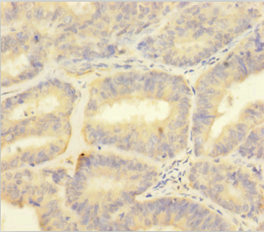
The antibody against S100A1 was raised in rabbit using the Recombinant Human Protein S100-A1 protein (2-94AA) as the immunogen. This antibody exists as a non-conjugated isotype IgG, purified by protein G with a purity greater than 95%. This antibody has been validated on ELISA, IHC, IF.
$299.00
| Cat.No | ADC-49525A | Clonality | Polyclonal |
|---|---|---|---|
| Host Species | Rabbit | Target Name | S100A1 |
| Form | Liquid | Species Reactivity | Human |
| Isotype | IgG | Storage Buffer | 0.01M PBS, 0.03% Proclin 300; Constituents: 50% Glycerol, PH 7.4 |
| Purification Method | >95%, Protein G purified | Conjugate | Non-conjugated |
| Application | ELISA, IF, IHC | Storage | Upon receipt |
| Immunogen Description | Recombinant Human Protein S100-A1 protein (2-94AA) | Target Species | Human |
|---|---|---|---|
| Immunogen Sequence | Complete sequences for the immunogen, target protein, and peptides are available upon request. | Uniprot ID | P23297 |
Uniprot Id
P23297
Target Species
Human
Target Name
S100A1
Target Full Name
Protein S100-A1
Target Function
Small calcium binding protein that plays important roles in several biological processes such as Ca(2+) homeostasis, chondrocyte biology and cardiomyocyte regulation. In response to an increase in intracellular Ca(2+) levels, binds calcium which triggers conformational changes. These changes allow interactions with specific target proteins and modulate their activity. Regulates a network in cardiomyocytes controlling sarcoplasmic reticulum Ca(2+) cycling and mitochondrial function through interaction with the ryanodine receptors RYR1 and RYR2, sarcoplasmic reticulum Ca(2+)-ATPase/ATP2A2 and mitochondrial F1-ATPase. Facilitates diastolic Ca(2+) dissociation and myofilament mechanics in order to improve relaxation during diastole.
Target Subcellular Location
Cytoplasm. Sarcoplasmic reticulum. Mitochondrion.
Target Protein Families
S-100 family
Target Tissue Specificity
Highly prevalent in heart. Also found in lesser quantities in skeletal muscle and brain.
Target Research Area
Signal Transduction
Target Synonyms
Bpb; NEF; Protein S100-A1; S-100 protein alpha chain; S-100 protein subunit alpha; S100 alpha; S100 beta; S100 calcium binding protein A1; S100 calcium binding protein B; S100 calcium-binding protein A1; S100 protein alpha polypeptide; S100A; s100a1; S100B; S100beta; S10A1_HUMAN
Target Background
The protein encoded by this gene is a member of the S100 family of proteins containing 2 EF-hand calcium-binding motifs. S100 proteins are localized in the cytoplasm and/or nucleus of a wide range of cells, and involved in the regulation of a number of cellular processes such as cell cycle progression and differentiation. S100 genes include at least 13 members which are located as a cluster on chromosome 1q21. This protein may function in stimulation of Ca2+-induced Ca2+ release, inhibition of microtubule assembly, and inhibition of protein kinase C-mediated phosphorylation. Reduced expression of this protein has been implicated in cardiomyopathies.
Notification