• Contact info@abtriva.com for inquiries and orders.
  • Chinese (Simplified)

  • English

  • German

  • Korean

  • Spanish

United States (English / $ USD)

Rabbit anti-Human SAMHD1 Polyclonal Antibody

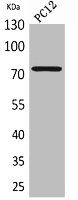
The antibody against SAMHD1 was raised in rabbit using the Synthesized peptide derived from the Internal region of Human SAMHD1. as the immunogen. This antibody exists as a non-conjugated isotype IgG. The antibody was affinity-purified from rabbit antiserum by affinity-chromatography using epitope-specific immunogen. This antibody has been validated on WB, ELISA.

ADC-36880A

The antibody against SAMHD1 was raised in rabbit using the Synthesized peptide derived from the Internal region of Human SAMHD1. as the immunogen. This antibody exists as a non-conjugated isotype IgG. The antibody was affinity-purified from rabbit antiserum by affinity-chromatography using epitope-specific immunogen. This antibody has been validated on WB, ELISA.

$167.00

Number
Order Exclusive Products Now

Request a Quote
High Purity LevelsPrecision and ReliabilityCustomization Options

Specifications


Cat.No ADC-36880A ClonalityPolyclonal
Host SpeciesRabbitTarget NameSAMHD1
FormLiquidSpecies ReactivityHuman
IsotypeIgGStorage Buffer0.5% BSA and 0.02% sodium azide., Liquid in PBS containing 50% glycerol
Purification MethodThe antibody was affinity-purified from rabbit antiserum by affinity-chromatography using epitope-specific immunogen.ConjugateNon-conjugated
ApplicationELISA, WBStorageUpon receipt

Immunogen Information


Immunogen DescriptionSynthesized peptide derived from the Internal region of Human SAMHD1.Target SpeciesHuman
Immunogen SequenceComplete sequences for the immunogen, target protein, and peptides are available upon request.Uniprot IDQ9Y3Z3
Background Information
  • Uniprot Id

    Q9Y3Z3

  • Target Species

    Human

  • Target Name

    SAMHD1

  • Target Full Name

    Deoxynucleoside triphosphate triphosphohydrolase SAMHD1

  • Target Function

    Protein that acts both as a host restriction factor involved in defense response to virus and as a regulator of DNA end resection at stalled replication forks. Has deoxynucleoside triphosphate (dNTPase) activity, which is required to restrict infection by viruses, such as HIV-1: dNTPase activity reduces cellular dNTP levels to levels too low for retroviral reverse transcription to occur, blocking early-stage virus replication in dendritic and other myeloid cells. Likewise, suppresses LINE-1 retrotransposon activity. Not able to restrict infection by HIV-2 virus; because restriction activity is counteracted by HIV-2 viral protein Vpx. In addition to virus restriction, dNTPase activity acts as a regulator of DNA precursor pools by regulating dNTP pools. Phosphorylation at Thr-592 acts as a switch to control dNTPase-dependent and -independent functions: it inhibits dNTPase activity and ability to restrict infection by viruses, while it promotes DNA end resection at stalled replication forks. Functions during S phase at stalled DNA replication forks to promote the resection of gapped or reversed forks: acts by stimulating the exonuclease activity of MRE11, activating the ATR-CHK1 pathway and allowing the forks to restart replication. Its ability to promote degradation of nascent DNA at stalled replication forks is required to prevent induction of type I interferons, thereby preventing chronic inflammation. Ability to promote DNA end resection at stalled replication forks is independent of dNTPase activity. Enhances immunoglobulin hypermutation in B-lymphocytes by promoting transversion mutation.

  • Target Involvement

    Aicardi-Goutieres syndrome 5 (AGS5); Chilblain lupus 2 (CHBL2)

  • Target Subcellular Location

    Nucleus. Chromosome.

  • Target Protein Families

    SAMHD1 family

  • Target Tissue Specificity

    Expressed in heart, skeletal muscle, spleen, liver, small intestine, placenta, lung and peripheral blood leukocytes. No expression is seen in brain and thymus.

  • Target Synonyms

    CHBL2; DCIP; Dendritic cell derived IFNG induced protein; Dendritic cell-derived IFNG-induced protein; Deoxynucleoside triphosphate triphosphohydrolase SAMHD1; dNTPase; HD domain containing 1; HDDC1 ; Mg11 ; Monocyte protein 5; MOP 5 ; MOP-5; MOP5 ; OTTHUMP00000030889; SAM domain and HD domain 1; SAM domain and HD domain containing protein 1; SAM domain and HD domain-containing protein 1; SAMH1_HUMAN; Samhd1; SBBI88

  • Target Background

    This gene may play a role in regulation of the innate immune response. The encoded protein is upregulated in response to viral infection and may be involved in mediation of tumor necrosis factor-alpha proinflammatory responses. Mutations in this gene have been associated with Aicardi-Goutieres syndrome.

Inquire Rabbit anti-Human SAMHD1 Polyclonal Antibody Now


AbTriva respects your privacy and protects your personal data in accordance with AbTriva. For more information, please see our data protection statement. *

Notification