-
Chinese (Simplified)
-
English
-
German
-
Korean
-
Spanish
Chinese (Simplified)
English
German
Korean
Spanish
Sign up for an account to enjoy easy online shopping and instant order tracking.
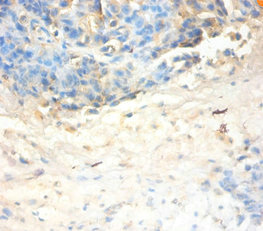
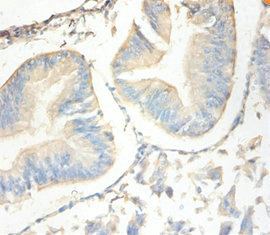
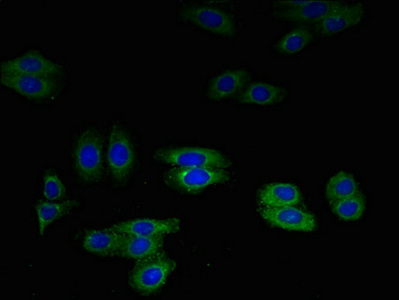
The antibody against SLPI was raised in rabbit using the Recombinant Human Antileukoproteinase protein (26-132AA) as the immunogen. This antibody exists as a non-conjugated isotype IgG, purified by protein G with a purity greater than 95%. This antibody has been validated on ELISA, IHC, IF.
$299.00
| Cat.No | ADC-54270A | Clonality | Polyclonal |
|---|---|---|---|
| Host Species | Rabbit | Target Name | SLPI |
| Form | Liquid | Species Reactivity | Human |
| Isotype | IgG | Storage Buffer | 0.01M PBS, 0.03% Proclin 300; Constituents: 50% Glycerol, PH 7.4 |
| Purification Method | >95%, Protein G purified | Conjugate | Non-conjugated |
| Application | ELISA, IF, IHC | Storage | Upon receipt |
| Immunogen Description | Recombinant Human Antileukoproteinase protein (26-132AA) | Target Species | Human |
|---|---|---|---|
| Immunogen Sequence | Complete sequences for the immunogen, target protein, and peptides are available upon request. | Uniprot ID | P03973 |
Uniprot Id
P03973
Target Species
Human
Target Name
SLPI
Target Full Name
Antileukoproteinase
Target Function
Acid-stable proteinase inhibitor with strong affinities for trypsin, chymotrypsin, elastase, and cathepsin G. Modulates the inflammatory and immune responses after bacterial infection, and after infection by the intracellular parasite L.major. Down-regulates responses to bacterial lipopolysaccharide (LPS). Plays a role in regulating the activation of NF-kappa-B and inflammatory responses. Has antimicrobial activity against mycobacteria, but not against salmonella. Contributes to normal resistance against infection by M.tuberculosis. Required for normal resistance to infection by L.major. Required for normal wound healing, probably by preventing tissue damage by limiting protease activity. Together with ELANE, required for normal differentiation and proliferation of bone marrow myeloid cells.
Target Subcellular Location
Secreted.
Target Tissue Specificity
Detected in blood plasma. Detected in bone marrow myeloid cells. Detected in airway sputum. Detected in parotid gland secretions. Detected in seminal plasma (at protein level). Detected in uterus cervix.
Target Research Area
Cardiovascular
Target Synonyms
ALK 1; ALK1; ALP; Antileukoprotease; Antileukoproteinase 1; Antileukoproteinase; Antileukoproteinase1; BLPI; Human seminal protease inhibitor; HUSI 1; HUSI; HUSI I; HUSI-1; MPI; Mucus proteinase inhibitor; Protease inhibitor WAP4; Secretory leukocyte peptidase inhibitor; Secretory leukocyte protease inhibitor; Seminal proteinase inhibitor; SLPI; SLPI_HUMAN; WAP four disulfide core domain protein 4; WAP four-disulfide core domain protein 4; WAP4; WFDC4
Target Background
This gene encodes a secreted inhibitor which protects epithelial tissues from serine proteases. It is found in various secretions including seminal plasma, cervical mucus, and bronchial secretions, and has affinity for trypsin, leukocyte elastase, and cathepsin G. Its inhibitory effect contributes to the immune response by protecting epithelial surfaces from attack by endogenous proteolytic enzymes. This antimicrobial protein has antibacterial, antifungal and antiviral activity.
Notification