-
Chinese (Simplified)
-
English
-
German
-
Korean
-
Spanish
Chinese (Simplified)
English
German
Korean
Spanish
Sign up for an account to enjoy easy online shopping and instant order tracking.
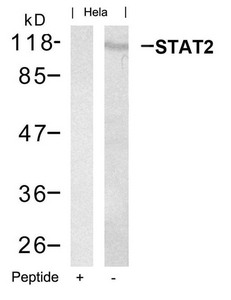
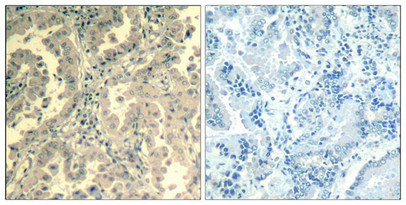
The antibody against STAT2 was raised in rabbit using the Peptide sequence around aa.688~692 (R-K-Y-L-K) derived from Human STAT2. as the immunogen. Antibodies were produced by immunizing rabbits with synthetic peptide and KLH conjugates. Antibodies were purified by affinity-chromatography using epitope-specific peptide. This antibody has been validated on ELISA, WB, IHC.
$297.00
| Cat.No | ADC-43266A | Clonality | Polyclonal |
|---|---|---|---|
| Host Species | Rabbit | Target Name | STAT2 |
| Form | Liquid | Species Reactivity | Human |
| Storage Buffer | PH 7.4, 0.02% sodium azide and 50% glycerol., 150mM NaCl, Supplied at 1.0mg/mL in phosphate buffered saline (without Mg2+ and Ca2+) | Purification Method | Antibodies were produced by immunizing rabbits with synthetic peptide and KLH conjugates. Antibodies were purified by affinity-chromatography using epitope-specific peptide. |
| Application | ELISA, IHC, WB | Storage | Upon receipt |
| Immunogen Description | Peptide sequence around aa.688~692 (R-K-Y-L-K) derived from Human STAT2. | Target Species | Human |
|---|---|---|---|
| Immunogen Sequence | Complete sequences for the immunogen, target protein, and peptides are available upon request. | Uniprot ID | P52630 |
Uniprot Id
P52630
Target Species
Human
Target Name
STAT2
Target Full Name
Signal transducer and activator of transcription 2
Target Function
Signal transducer and activator of transcription that mediates signaling by type I interferons (IFN-alpha and IFN-beta). Following type I IFN binding to cell surface receptors, Jak kinases (TYK2 and JAK1) are activated, leading to tyrosine phosphorylation of STAT1 and STAT2. The phosphorylated STATs dimerize, associate with IRF9/ISGF3G to form a complex termed ISGF3 transcription factor, that enters the nucleus. ISGF3 binds to the IFN stimulated response element (ISRE) to activate the transcription of interferon stimulated genes, which drive the cell in an antiviral state. In addition, has also a negative feedback regulatory role in the type I interferon signaling by recruiting USP18 to the type I IFN receptor subunit IFNAR2 thereby mitigating the response to type I IFNs. Acts as a regulator of mitochondrial fission by modulating the phosphorylation of DNM1L at 'Ser-616' and 'Ser-637' which activate and inactivate the GTPase activity of DNM1L respectively.
Target Involvement
Immunodeficiency 44 (IMD44)
Target Subcellular Location
Cytoplasm. Nucleus.
Target Protein Families
Transcription factor STAT family
Target Synonyms
Homo sapiens interferon alpha induced transcriptional activator; interferon alpha induced transcriptional activator; ISGF 3; ISGF3; MGC59816; P113; signal transducer and activator of transcription 2 113kD; Signal transducer and activator of transcription 2; STAT113; Stat2; STAT2_HUMAN
Target Background
The protein encoded by this gene is a member of the STAT protein family. In response to cytokines and growth factors, STAT family members are phosphorylated by the receptor associated kinases, and then form homo- or heterodimers that translocate to the cell nucleus where they act as transcription activators. In response to interferon (IFN), this protein forms a complex with STAT1 and IFN regulatory factor family protein p48 (ISGF3G), in which this protein acts as a transactivator, but lacks the ability to bind DNA directly. The protein mediates innate antiviral activity. Mutations in this gene result in Immunodeficiency 44.
Notification