• Contact info@abtriva.com for inquiries and orders.
  • Chinese (Simplified)

  • English

  • German

  • Korean

  • Spanish

United States (English / $ USD)

Rabbit anti-Human STRADA Polyclonal Antibody

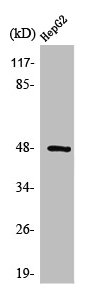
The antibody against STRADA was raised in rabbit using the Synthesized peptide derived from the N-terminal region of Human Strad. as the immunogen. This antibody exists as a non-conjugated isotype IgG. The antibody was affinity-purified from rabbit antiserum by affinity-chromatography using epitope-specific immunogen. This antibody has been validated on WB, IHC, ELISA.

ADC-37545A

The antibody against STRADA was raised in rabbit using the Synthesized peptide derived from the N-terminal region of Human Strad. as the immunogen. This antibody exists as a non-conjugated isotype IgG. The antibody was affinity-purified from rabbit antiserum by affinity-chromatography using epitope-specific immunogen. This antibody has been validated on WB, IHC, ELISA.

$167.00

Number
Order Exclusive Products Now

Request a Quote
High Purity LevelsPrecision and ReliabilityCustomization Options

Specifications


Cat.No ADC-37545A ClonalityPolyclonal
Host SpeciesRabbitTarget NameSTRADA
FormLiquidSpecies ReactivityHuman, Mouse
IsotypeIgGStorage Buffer0.5% BSA and 0.02% sodium azide., Liquid in PBS containing 50% glycerol
Purification MethodThe antibody was affinity-purified from rabbit antiserum by affinity-chromatography using epitope-specific immunogen.ConjugateNon-conjugated
ApplicationELISA, IHC, WBStorageUpon receipt

Immunogen Information


Immunogen DescriptionSynthesized peptide derived from the N-terminal region of Human Strad.Target SpeciesHuman
Immunogen SequenceComplete sequences for the immunogen, target protein, and peptides are available upon request.Uniprot IDQ7RTN6
Background Information
  • Uniprot Id

    Q7RTN6

  • Target Species

    Human

  • Target Name

    STRADA

  • Target Full Name

    STE20-related kinase adapter protein alpha

  • Target Function

    Pseudokinase which, in complex with CAB39/MO25 (CAB39/MO25alpha or CAB39L/MO25beta), binds to and activates STK11/LKB1. Adopts a closed conformation typical of active protein kinases and binds STK11/LKB1 as a pseudosubstrate, promoting conformational change of STK11/LKB1 in an active conformation.

  • Target Involvement

    A homozygous 7-kb deletion involving STRADA is a cause of a syndrome characterized by polyhydramnios, megalencephaly and symptomatic epilepsy.

  • Target Subcellular Location

    Nucleus. Cytoplasm.

  • Target Protein Families

    Protein kinase superfamily, STE Ser/Thr protein kinase family, STE20 subfamily

  • Target Synonyms

    STRADA; LYK5; STRAD; STE20-related kinase adapter protein alpha; STRAD alpha; STE20-related adapter protein; Serologically defined breast cancer antigen NY-BR-96

  • Target Background

    The protein encoded by this gene contains a STE20-like kinase domain, but lacks several residues that are critical for catalytic activity, so it is termed a 'pseudokinase'. The protein forms a heterotrimeric complex with serine/threonine kinase 11 (STK11, also known as LKB1) and the scaffolding protein calcium binding protein 39 (CAB39, also known as MO25). The protein activates STK11 leading to the phosphorylation of both proteins and excluding STK11 from the nucleus. The protein is necessary for STK11-induced G1 cell cycle arrest. A mutation in this gene has been shown to result in polyhydramnios, megalencephaly, and symptomatic epilepsy (PMSE) syndrome. Multiple transcript variants encoding different isoforms have been found for this gene. Additional transcript variants have been described but their full-length nature is not known.

Inquire Rabbit anti-Human STRADA Polyclonal Antibody Now


AbTriva respects your privacy and protects your personal data in accordance with AbTriva. For more information, please see our data protection statement. *

Notification