• Contact info@abtriva.com for inquiries and orders.
  • Chinese (Simplified)

  • English

  • German

  • Korean

  • Spanish

United States (English / $ USD)

Rabbit anti-Human TCIM Polyclonal Antibody

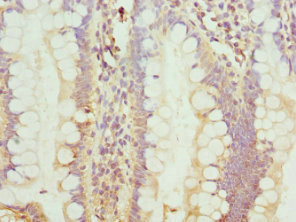
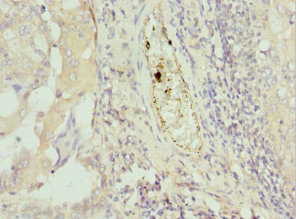
The antibody against TCIM was raised in rabbit using the Recombinant Human Transcriptional and immune response regulator protein (1-106AA) as the immunogen. This antibody exists as a non-conjugated isotype IgG, Antigen affinity purified. This antibody has been validated on ELISA, IHC.

ADC-17556A

The antibody against TCIM was raised in rabbit using the Recombinant Human Transcriptional and immune response regulator protein (1-106AA) as the immunogen. This antibody exists as a non-conjugated isotype IgG, Antigen affinity purified. This antibody has been validated on ELISA, IHC.

$299.00

Number
Order Exclusive Products Now

Request a Quote
High Purity LevelsPrecision and ReliabilityCustomization Options

Specifications


Cat.No ADC-17556A ClonalityPolyclonal
Host SpeciesRabbitTarget NameTCIM
FormLiquidSpecies ReactivityHuman
IsotypeIgGStorage Buffer50% Glycerol, PBS with 0.02% sodium azide, pH7.3.
Purification MethodAntigen affinity purifiedConjugateNon-conjugated
ApplicationELISA, IHCStorageUpon receipt

Immunogen Information


Immunogen DescriptionRecombinant Human Transcriptional and immune response regulator protein (1-106AA)Target SpeciesHuman
Immunogen SequenceComplete sequences for the immunogen, target protein, and peptides are available upon request.Uniprot IDQ9NR00
Background Information
  • Uniprot Id

    Q9NR00

  • Target Species

    Human

  • Target Name

    TCIM

  • Target Full Name

    Transcriptional and immune response regulator

  • Target Function

    Seems to be involved in the regulation of cell growth an differentiation, may play different and opposite roles depending on the tissue or cell type. May enhance the WNT-CTNNB1 pathway by relieving antagonistic activity of CBY1. Enhances the proliferation of follicular dendritic cells. Plays a role in the mitogen-activated MAPK2/3 signaling pathway, positively regulates G1-to-S-phase transition of the cell cycle. In endothelial cells, enhances key inflammatory mediators and inflammatory response through the modulation of NF-kappaB transcriptional regulatory activity. Involved in the regulation of heat shock response, seems to play a positive feedback with HSF1 to modulate heat-shock downstream gene expression. Plays a role in the regulation of hematopoiesis even if the mechanisms are unknown. In cancers such as thyroid or lung cancer, it has been described as promoter of cell proliferation, G1-to-S-phase transition and inhibitor of apoptosis. However, it negatively regulates self-renewal of liver cancer cells via suppresion of NOTCH2 signaling.

  • Target Subcellular Location

    Cytoplasm. Nucleus, nucleolus. Nucleus speckle. Nucleus.

  • Target Tissue Specificity

    Ubiquitous. Expressed in thyroid papillary carcinoma. Expressed in liver, expression levels decrease in hepatocellular carcinoma. Slightly detected in normal lung, its expression is highly induced in lung cancer cells (at protein level).

  • Target Research Area

    Signal Transduction

  • Target Synonyms

    C8orf4; CH004_HUMAN; Chromosome 8 open reading frame 4; Human thyroid cancer 1; MGC22806; TC-1; TC1; Thyroid cancer protein 1; Uncharacterized protein C8orf4

  • Target Background

    This gene encodes a small, monomeric, predominantly unstructured protein that functions as a positive regulator of the Wnt/beta-catenin signaling pathway. This protein interacts with a repressor of beta-catenin mediated transcription at nuclear speckles. It is thought to competitively block interactions of the repressor with beta-catenin, resulting in up-regulation of beta-catenin target genes. The encoded protein may also play a role in the NF-kappaB and ERK1/2 signaling pathways. Expression of this gene may play a role in the proliferation of several types of cancer including thyroid cancer, breast cancer and hematological malignancies.

Inquire Rabbit anti-Human TCIM Polyclonal Antibody Now


AbTriva respects your privacy and protects your personal data in accordance with AbTriva. For more information, please see our data protection statement. *

Notification