• Contact info@abtriva.com for inquiries and orders.
  • Chinese (Simplified)

  • English

  • German

  • Korean

  • Spanish

United States (English / $ USD)

Rabbit anti-Human TNFRSF11B Polyclonal Antibody

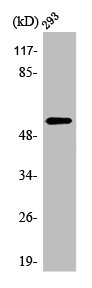
The antibody against TNFRSF11B was raised in rabbit using the Synthesized peptide derived from the N-terminal region of Human OPG. as the immunogen. This antibody exists as a non-conjugated isotype IgG. The antibody was affinity-purified from rabbit antiserum by affinity-chromatography using epitope-specific immunogen. This antibody has been validated on WB, IHC, IF, ELISA.

ADC-37962A

The antibody against TNFRSF11B was raised in rabbit using the Synthesized peptide derived from the N-terminal region of Human OPG. as the immunogen. This antibody exists as a non-conjugated isotype IgG. The antibody was affinity-purified from rabbit antiserum by affinity-chromatography using epitope-specific immunogen. This antibody has been validated on WB, IHC, IF, ELISA.

$167.00

Number
Order Exclusive Products Now

Request a Quote
High Purity LevelsPrecision and ReliabilityCustomization Options

Specifications


Cat.No ADC-37962A ClonalityPolyclonal
Host SpeciesRabbitTarget NameTNFRSF11B
FormLiquidSpecies ReactivityHuman, Mouse
IsotypeIgGStorage Buffer0.5% BSA and 0.02% sodium azide., Liquid in PBS containing 50% glycerol
Purification MethodThe antibody was affinity-purified from rabbit antiserum by affinity-chromatography using epitope-specific immunogen.ConjugateNon-conjugated
ApplicationELISA, IF, IHC, WBStorageUpon receipt

Immunogen Information


Immunogen DescriptionSynthesized peptide derived from the N-terminal region of Human OPG.Target SpeciesHuman
Immunogen SequenceComplete sequences for the immunogen, target protein, and peptides are available upon request.Uniprot IDO00300
Background Information
  • Uniprot Id

    O00300

  • Target Species

    Human

  • Target Name

    TNFRSF11B

  • Target Full Name

    Tumor necrosis factor receptor superfamily member 11B

  • Target Function

    Acts as decoy receptor for TNFSF11/RANKL and thereby neutralizes its function in osteoclastogenesis. Inhibits the activation of osteoclasts and promotes osteoclast apoptosis in vitro. Bone homeostasis seems to depend on the local ratio between TNFSF11 and TNFRSF11B. May also play a role in preventing arterial calcification. May act as decoy receptor for TNFSF10/TRAIL and protect against apoptosis. TNFSF10/TRAIL binding blocks the inhibition of osteoclastogenesis.

  • Target Involvement

    Paget disease of bone 5, juvenile-onset (PDB5)

  • Target Subcellular Location

    Secreted.

  • Target Tissue Specificity

    Highly expressed in adult lung, heart, kidney, liver, spleen, thymus, prostate, ovary, small intestine, thyroid, lymph node, trachea, adrenal gland, testis, and bone marrow. Detected at very low levels in brain, placenta and skeletal muscle. Highly expres

  • Target Synonyms

    MGC29565; OCIF; OPG; Osteoclastogenesis inhibitory factor; Osteoprotegerin; PDB5; TNF receptor superfamily member 11b; TNFRSF 11B; TNFRSF11B; TR 1; TR1; TR11B_HUMAN; Tumor necrosis factor receptor superfamily member 11B

  • Target Background

    The protein encoded by this gene is a member of the TNF-receptor superfamily. This protein is an osteoblast-secreted decoy receptor that functions as a negative regulator of bone resorption. This protein specifically binds to its ligand, osteoprotegerin ligand, both of which are key extracellular regulators of osteoclast development. Studies of the mouse counterpart also suggest that this protein and its ligand play a role in lymph-node organogenesis and vascular calcification. Alternatively spliced transcript variants of this gene have been reported, but their full length nature has not been determined.

Inquire Rabbit anti-Human TNFRSF11B Polyclonal Antibody Now


AbTriva respects your privacy and protects your personal data in accordance with AbTriva. For more information, please see our data protection statement. *

Notification