• Contact info@abtriva.com for inquiries and orders.
  • Chinese (Simplified)

  • English

  • German

  • Korean

  • Spanish

United States (English / $ USD)

Rabbit anti-Human TRPM4 Polyclonal Antibody

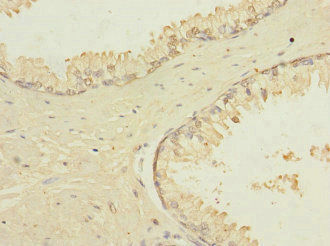
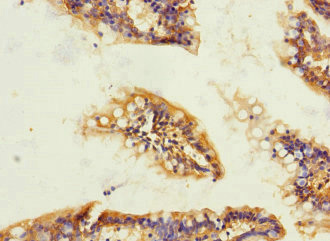
The antibody against TRPM4 was raised in rabbit using the Recombinant Human Transient receptor potential cation channel subfamily M member 4 protein (1-240AA) as the immunogen. This antibody exists as a non-conjugated isotype IgG, Antigen affinity purified. This antibody has been validated on ELISA, IHC.

ADC-16491A

The antibody against TRPM4 was raised in rabbit using the Recombinant Human Transient receptor potential cation channel subfamily M member 4 protein (1-240AA) as the immunogen. This antibody exists as a non-conjugated isotype IgG, Antigen affinity purified. This antibody has been validated on ELISA, IHC.

$299.00

Number
Order Exclusive Products Now

Request a Quote
High Purity LevelsPrecision and ReliabilityCustomization Options

Specifications


Cat.No ADC-16491A ClonalityPolyclonal
Host SpeciesRabbitTarget NameTRPM4
Target Synonymsmember 4 antibody; Trpm4 antibody; TRPM4_HUMAN antibody; TRPM4B antibody, subfamily MFormLiquid
Species ReactivityHumanIsotypeIgG
Storage Buffer50% Glycerol, PBS with 0.02% sodium azide, pH7.3.Purification MethodAntigen affinity purified
ConjugateNon-conjugatedApplicationELISA, IHC
StorageUpon receipt

Immunogen Information


Immunogen DescriptionRecombinant Human Transient receptor potential cation channel subfamily M member 4 protein (1-240AA)Target SpeciesHuman
Immunogen SequenceComplete sequences for the immunogen, target protein, and peptides are available upon request.Uniprot IDQ8TD43
Background Information
  • Uniprot Id

    Q8TD43

  • Target Species

    Human

  • Target Name

    TRPM4

  • Target Full Name

    Transient receptor potential cation channel subfamily M member 4

  • Target Function

    Calcium-activated non selective (CAN) cation channel that mediates membrane depolarization. While it is activated by increase in intracellular Ca(2+), it is impermeable to it. Mediates transport of monovalent cations (Na(+) > K(+) > Cs(+) > Li(+)), leading to depolarize the membrane. It thereby plays a central role in cadiomyocytes, neurons from entorhinal cortex, dorsal root and vomeronasal neurons, endocrine pancreas cells, kidney epithelial cells, cochlea hair cells etc. Participates in T-cell activation by modulating Ca(2+) oscillations after T lymphocyte activation, which is required for NFAT-dependent IL2 production. Involved in myogenic constriction of cerebral arteries. Controls insulin secretion in pancreatic beta-cells. May also be involved in pacemaking or could cause irregular electrical activity under conditions of Ca(2+) overload. Affects T-helper 1 (Th1) and T-helper 2 (Th2) cell motility and cytokine production through differential regulation of calcium signaling and NFATC1 localization. Enhances cell proliferation through up-regulation of the beta-catenin signaling pathway. Plays a role in keratinocyte differentiation.

  • Target Involvement

    Progressive familial heart block 1B (PFHB1B)

  • Target Subcellular Location

    [Isoform 1]: Cell membrane; Multi-pass membrane protein. Endoplasmic reticulum. Golgi apparatus.; [Isoform 2]: Cell membrane. Endoplasmic reticulum. Golgi apparatus.

  • Target Protein Families

    Transient receptor (TC 1.A.4) family, LTrpC subfamily, TRPM4 sub-subfamily

  • Target Tissue Specificity

    Widely expressed with a high expression in intestine and prostate. In brain, it is both expressed in whole cerebral arteries and isolated vascular smooth muscle cells. Prominently expressed in Purkinje fibers. Expressed at higher levels in T-helper 2 (Th2

  • Target Synonyms

    1110030C19Rik; AW047689; Calcium-activated non-selective cation channel 1; FLJ20041; hTRPM4; Long transient receptor potential channel 4; LTrpC-4; LTrpC4; Melastatin 4; Melastatin like 2 protein; Melastatin-4; Melastatin-like 2; Mls2s; PFHB1B; Transient receptor potential cation channel subfamily M member 4; Transient receptor potential cation channel, subfamily M, member 4; Trpm4; TRPM4_HUMAN; TRPM4B

  • Target Background

    The protein encoded by this gene is a calcium-activated nonselective ion channel that mediates transport of monovalent cations across membranes, thereby depolarizing the membrane. The activity of the encoded protein increases with increasing intracellular calcium concentration, but this channel does not transport calcium.

Inquire Rabbit anti-Human TRPM4 Polyclonal Antibody Now


AbTriva respects your privacy and protects your personal data in accordance with AbTriva. For more information, please see our data protection statement. *

Notification