-
Chinese (Simplified)
-
English
-
German
-
Korean
-
Spanish
Chinese (Simplified)
English
German
Korean
Spanish
Sign up for an account to enjoy easy online shopping and instant order tracking.
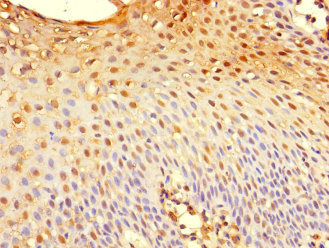
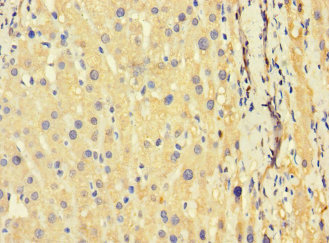
The antibody against TSC22D3 was raised in rabbit using the Recombinant Human TSC22 domain family protein 3 protein (58-134AA) as the immunogen. This antibody exists as a non-conjugated isotype IgG, purified by protein G with a purity greater than 95%. This antibody has been validated on ELISA, WB, IHC.
$299.00
| Cat.No | ADC-18486A | Clonality | Polyclonal |
|---|---|---|---|
| Host Species | Rabbit | Target Name | TSC22D3 |
| Target Synonyms | member 3 antibody; TSC22 related inducible leucine zipper 3 antibody; TSC22D3 antibody | Form | Liquid |
| Species Reactivity | Human | Isotype | IgG |
| Storage Buffer | 0.01M PBS, 0.03% Proclin 300; Constituents: 50% Glycerol, PH 7.4 | Purification Method | >95%, Protein G purified |
| Conjugate | Non-conjugated | Application | ELISA, IHC, WB |
| Storage | Upon receipt |
| Immunogen Description | Recombinant Human TSC22 domain family protein 3 protein (58-134AA) | Target Species | Human |
|---|---|---|---|
| Immunogen Sequence | Complete sequences for the immunogen, target protein, and peptides are available upon request. | Uniprot ID | Q99576 |
Uniprot Id
Q99576
Target Species
Human
Target Name
TSC22D3
Target Full Name
TSC22 domain family protein 3
Target Function
Protects T-cells from IL2 deprivation-induced apoptosis through the inhibition of FOXO3A transcriptional activity that leads to the down-regulation of the pro-apoptotic factor BCL2L11. In macrophages, plays a role in the anti-inflammatory and immunosuppressive effects of glucocorticoids and IL10. In T-cells, inhibits anti-CD3-induced NFKB1 nuclear translocation. In vitro, suppresses AP1 and NFKB1 DNA-binding activities. Isoform 1 inhibits myogenic differentiation and mediates anti-myogenic effects of glucocorticoids by binding and regulating MYOD1 and HDAC1 transcriptional activity resulting in reduced expression of MYOG.
Target Subcellular Location
[Isoform 1]: Cytoplasm. Nucleus.
Target Protein Families
TSC-22/Dip/Bun family
Target Tissue Specificity
Expressed in brain, lung, spleen and skeletal muscle. Lower levels detected in heart and kidney. Not detected in the pancreas. In non-lymphoid tissues, in the absence of inflammation, the major source of constitutive expression is the macrophage lineage.
Target Synonyms
Delta sleep-inducing peptide immunoreactor; DIP; DSIP immunoreactive leucine zipper protein; DSIP-immunoreactive peptide; Dsip1; Dsipi; GILZ; Glucocorticoid-induced leucine zipper protein; hDIP; Protein DIP; T22D3_HUMAN; TSC-22-like protein; TSC-22-related protein; TSC-22R; TSC22 domain family protein 3; TSC22 domain family, member 3; TSC22 related inducible leucine zipper 3; TSC22D3
Target Background
This gene encodes the anti-inflammatory protein glucocorticoid (GC)-induced leucine zipper. Expression of this gene stimulated by glucocorticoids and interleukin 10 and it appears to play a key role in the anti-inflammatory and immunosuppressive effects of this steroid. This protein has also been shown to inhibit pro-inflammatory molecules including nuclear factor κB. Alternate splicing results in multiple transcript variants.
Notification