• Contact info@abtriva.com for inquiries and orders.
  • Chinese (Simplified)

  • English

  • German

  • Korean

  • Spanish

United States (English / $ USD)

Rabbit anti-Human TWNK Polyclonal Antibody

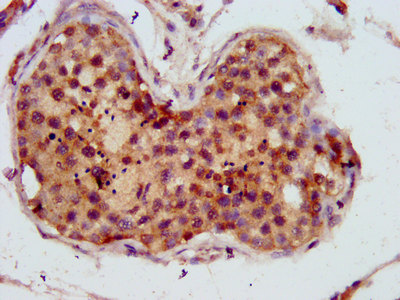
The antibody against TWNK was raised in rabbit using the Recombinant Human Twinkle protein, mitochondrial protein (559-684AA) as the immunogen. This antibody exists as a non-conjugated isotype IgG, purified by protein G with a purity greater than 95%. This antibody has been validated on ELISA, WB, IHC.

ADC-06434A

The antibody against TWNK was raised in rabbit using the Recombinant Human Twinkle protein, mitochondrial protein (559-684AA) as the immunogen. This antibody exists as a non-conjugated isotype IgG, purified by protein G with a purity greater than 95%. This antibody has been validated on ELISA, WB, IHC.

$299.00

Number
Order Exclusive Products Now

Request a Quote
High Purity LevelsPrecision and ReliabilityCustomization Options

Specifications


Cat.No ADC-06434A ClonalityPolyclonal
Host SpeciesRabbitTarget NameTWNK
Target Synonymsmitochondrial antibody; TWINL antibodyFormLiquid
Species ReactivityHuman, MouseIsotypeIgG
Storage Buffer0.01M PBS, 0.03% Proclin 300; Constituents: 50% Glycerol, PH 7.4Purification Method>95%, Protein G purified
ConjugateNon-conjugatedApplicationELISA, IHC, WB
StorageUpon receipt

Immunogen Information


Immunogen DescriptionRecombinant Human Twinkle protein, mitochondrial protein (559-684AA)Target SpeciesHuman
Immunogen SequenceComplete sequences for the immunogen, target protein, and peptides are available upon request.Uniprot IDQ96RR1
Background Information
  • Uniprot Id

    Q96RR1

  • Target Species

    Human

  • Target Name

    TWNK

  • Target Full Name

    Twinkle mtDNA helicase

  • Target Function

    Mitochondrial helicase involved in mtDNA replication and repair. Might have a role in mtDNA repair. Has DNA strand separation activity needed to form a processive replication fork for leading strand synthesis which is catalyzed by the formation of a replisome complex with POLG and mtSDB. Preferentially unwinds DNA substrates with pre-existing 5'-and 3'- single-stranded tails but is also active on a 5'- flap substrate. Can dissociate the invading strand of immobile or mobile D-loop DNA structures irrespective of the single strand polarity of the third strand. In addition to its DNA strand separation activity, also has DNA strand annealing, DNA strand-exchange and DNA branch migration activities.; Lack DNA unwinding and ATP hydrolysis activities. Does not bind single-stranded or double-stranded DNA.

  • Target Involvement

    Progressive external ophthalmoplegia with mitochondrial DNA deletions, autosomal dominant, 3 (PEOA3); Mitochondrial DNA depletion syndrome 7 (MTDPS7); Perrault syndrome 5 (PRLTS5)

  • Target Subcellular Location

    Mitochondrion matrix, mitochondrion nucleoid.

  • Target Tissue Specificity

    High relative levels in skeletal muscle, testis and pancreas. Lower levels of expression in the heart, brain, placenta, lung, liver, kidney, spleen, thymus, prostate, ovary, small intestine, colon and leukocytes. Expression is coregulated with MRPL43.

  • Target Research Area

    Epigenetics and Nuclear Signaling

  • Target Synonyms

    Ataxin 8; Ataxin8; ATXN 8; ATXN8; C10 orf2 ; C10orf 2 ; C10orf2; Chromosome 10 open reading frame 2; IOSCA; mitochondrial; MTDPS7; PEO 1; PEO; PEO1; PEO1_HUMAN; PEOA3; Progressive external ophthalmoplegia 1 protein; SANDO; SCA 8; SCA8; T7 gp4 like protein with intramitochondrial nucleoid localization; T7 gp4-like protein with intramitochondrial nucleoid localization; T7 helicase-related protein with intramitochondrial nucleoid localization; T7 like mitochondrial DNA helicase; T7-like mitochondrial DNA helicase; Twinkle protein; Twinkle protein, mitochondrial; TWINL

  • Target Background

    This gene encodes a hexameric DNA helicase which unwinds short stretches of double-stranded DNA in the 5' to 3' direction and, along with mitochondrial single-stranded DNA binding protein and mtDNA polymerase gamma, is thought to play a key role in mtDNA replication. The protein localizes to the mitochondrial matrix and mitochondrial nucleoids. Mutations in this gene cause infantile onset spinocerebellar ataxia (IOSCA) and progressive external ophthalmoplegia (PEO) and are also associated with several mitochondrial depletion syndromes. Alternative splicing results in multiple transcript variants encoding distinct isoforms.

Inquire Rabbit anti-Human TWNK Polyclonal Antibody Now


AbTriva respects your privacy and protects your personal data in accordance with AbTriva. For more information, please see our data protection statement. *

Notification