• Contact info@abtriva.com for inquiries and orders.
  • Chinese (Simplified)

  • English

  • German

  • Korean

  • Spanish

United States (English / $ USD)

Rabbit anti-Human UBA5 Polyclonal Antibody

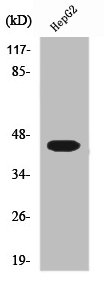
The antibody against UBA5 was raised in rabbit using the Synthesized peptide derived from the C-terminal region of Human Uba5. as the immunogen. This antibody exists as a non-conjugated isotype IgG. The antibody was affinity-purified from rabbit antiserum by affinity-chromatography using epitope-specific immunogen. This antibody has been validated on WB, IHC, ELISA.

ADC-37410A

The antibody against UBA5 was raised in rabbit using the Synthesized peptide derived from the C-terminal region of Human Uba5. as the immunogen. This antibody exists as a non-conjugated isotype IgG. The antibody was affinity-purified from rabbit antiserum by affinity-chromatography using epitope-specific immunogen. This antibody has been validated on WB, IHC, ELISA.

$167.00

Number
Order Exclusive Products Now

Request a Quote
High Purity LevelsPrecision and ReliabilityCustomization Options

Specifications


Cat.No ADC-37410A ClonalityPolyclonal
Host SpeciesRabbitTarget NameUBA5
FormLiquidSpecies ReactivityHuman, Mouse, Rat
IsotypeIgGStorage Buffer0.5% BSA and 0.02% sodium azide., Liquid in PBS containing 50% glycerol
Purification MethodThe antibody was affinity-purified from rabbit antiserum by affinity-chromatography using epitope-specific immunogen.ConjugateNon-conjugated
ApplicationELISA, IHC, WBStorageUpon receipt

Immunogen Information


Immunogen DescriptionSynthesized peptide derived from the C-terminal region of Human Uba5.Target SpeciesHuman
Immunogen SequenceComplete sequences for the immunogen, target protein, and peptides are available upon request.Uniprot IDQ9GZZ9
Background Information
  • Uniprot Id

    Q9GZZ9

  • Target Species

    Human

  • Target Name

    UBA5

  • Target Full Name

    Ubiquitin-like modifier-activating enzyme 5

  • Target Function

    E1-like enzyme which specifically catalyzes the first step in ufmylation. Activates UFM1 by first adenylating its C-terminal glycine residue with ATP, and thereafter linking this residue to the side chain of a cysteine residue in E1, yielding a UFM1-E1 thioester and free AMP. Activates UFM1 via a trans-binding mechanism, in which UFM1 interacts with distinct sites in both subunits of the UBA5 homodimer. Trans-binding also promotes stabilization of the UBA5 homodimer, and enhances ATP-binding. Transfer of UFM1 from UBA5 to the E2-like enzyme UFC1 also takes place using a trans mechanism. Ufmylation is involved in reticulophagy (also called ER-phagy) induced in response to endoplasmic reticulum stress. Ufmylation is essential for erythroid differentiation of both megakaryocytes and erythrocytes.

  • Target Involvement

    Epileptic encephalopathy, early infantile, 44 (EIEE44); Spinocerebellar ataxia, autosomal recessive, 24 (SCAR24)

  • Target Subcellular Location

    Cytoplasm. Nucleus. Endoplasmic reticulum membrane. Golgi apparatus.

  • Target Protein Families

    Ubiquitin-activating E1 family, UBA5 subfamily

  • Target Tissue Specificity

    Widely expressed.

  • Target Synonyms

    5730525G14Rik; AW240750; FLJ23251; FLJ23251UBA5; MGC105565; ThiFP1; UBA5; UBA5 ubiquitin activating enzyme E1 homolog; UBA5_HUMAN; UBE1DC; UBE1DC1; Ubiquitin activating enzyme 5; Ubiquitin activating enzyme E1 domain containing 1; Ubiquitin activating enzyme E1 domain containing protein 1; Ubiquitin like modifier activating enzyme 5; Ubiquitin-activating enzyme 5; Ubiquitin-activating enzyme E1 domain-containing protein 1; Ubiquitin-like modifier-activating enzyme 5; UFM1 activating enzyme; UFM1-activating enzyme

  • Target Background

    This gene encodes a member of the E1-like ubiquitin-activating enzyme family. This protein activates ubiquitin-fold modifier 1, a ubiquitin-like post-translational modifier protein, via the formation of a high-energy thioester bond. Alternative splicing results in multiple transcript variants. A pseudogene of this gene has been identified on chromosome 1.

Inquire Rabbit anti-Human UBA5 Polyclonal Antibody Now


AbTriva respects your privacy and protects your personal data in accordance with AbTriva. For more information, please see our data protection statement. *

Notification