-
Chinese (Simplified)
-
English
-
German
-
Korean
-
Spanish
Chinese (Simplified)
English
German
Korean
Spanish
Sign up for an account to enjoy easy online shopping and instant order tracking.
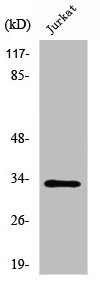
The antibody against UCP3 was raised in rabbit using the Synthesized peptide derived from the C-terminal region of Human UCP3. as the immunogen. This antibody exists as a non-conjugated isotype IgG. The antibody was affinity-purified from rabbit antiserum by affinity-chromatography using epitope-specific immunogen. This antibody has been validated on WB, ELISA.
$167.00
| Cat.No | ADC-37400A | Clonality | Polyclonal |
|---|---|---|---|
| Host Species | Rabbit | Target Name | UCP3 |
| Target Synonyms | UCP3; SLC25A9; Mitochondrial uncoupling protein 3; UCP 3; Solute carrier family 25 member 9 | Form | Liquid |
| Species Reactivity | Human, Mouse, Rat | Isotype | IgG |
| Storage Buffer | 0.5% BSA and 0.02% sodium azide., Liquid in PBS containing 50% glycerol | Purification Method | The antibody was affinity-purified from rabbit antiserum by affinity-chromatography using epitope-specific immunogen. |
| Conjugate | Non-conjugated | Application | ELISA, WB |
| Storage | Upon receipt |
| Immunogen Description | Synthesized peptide derived from the C-terminal region of Human UCP3. | Target Species | Human |
|---|---|---|---|
| Immunogen Sequence | Complete sequences for the immunogen, target protein, and peptides are available upon request. | Uniprot ID | P55916 |
Uniprot Id
P55916
Target Species
Human
Target Name
UCP3
Target Full Name
Putative mitochondrial transporter UCP3
Target Function
UCP are mitochondrial transporter proteins that create proton leaks across the inner mitochondrial membrane, thus uncoupling oxidative phosphorylation. As a result, energy is dissipated in the form of heat. May play a role in the modulation of tissue respiratory control. Participates in thermogenesis and energy balance.
Target Involvement
Obesity (OBESITY)
Target Subcellular Location
Mitochondrion inner membrane; Multi-pass membrane protein.
Target Protein Families
Mitochondrial carrier (TC 2.A.29) family
Target Tissue Specificity
Only in skeletal muscle and heart. Is more expressed in glycolytic than in oxidative skeletal muscles.
Target Synonyms
UCP3; SLC25A9; Mitochondrial uncoupling protein 3; UCP 3; Solute carrier family 25 member 9
Target Background
Mitochondrial uncoupling proteins (UCP) are members of the larger family of mitochondrial anion carrier proteins (MACP). UCPs separate oxidative phosphorylation from ATP synthesis with energy dissipated as heat, also referred to as the mitochondrial proton leak. UCPs facilitate the transfer of anions from the inner to the outer mitochondrial membrane and the return transfer of protons from the outer to the inner mitochondrial membrane. They also reduce the mitochondrial membrane potential in mammalian cells. The different UCPs have tissue-specific expression; this gene is primarily expressed in skeletal muscle. This gene's protein product is postulated to protect mitochondria against lipid-induced oxidative stress. Expression levels of this gene increase when fatty acid supplies to mitochondria exceed their oxidation capacity and the protein enables the export of fatty acids from mitochondria. UCPs contain the three solcar protein domains typically found in MACPs. Two splice variants have been found for this gene.
Notification