-
Chinese (Simplified)
-
English
-
German
-
Korean
-
Spanish
Chinese (Simplified)
English
German
Korean
Spanish
Sign up for an account to enjoy easy online shopping and instant order tracking.
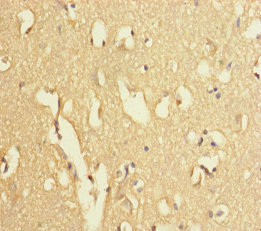
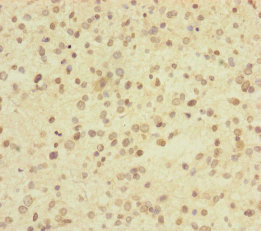
The antibody against USP2 was raised in rabbit using the Recombinant Human Ubiquitin carboxyl-terminal hydrolase 2 protein (200-430AA) as the immunogen. This antibody exists as a non-conjugated isotype IgG, Antigen affinity purified. This antibody has been validated on ELISA, IHC.
$299.00
| Cat.No | ADC-16166A | Clonality | Polyclonal |
|---|---|---|---|
| Host Species | Rabbit | Target Name | USP2 |
| Form | Liquid | Species Reactivity | Human |
| Isotype | IgG | Storage Buffer | 50% Glycerol, PBS with 0.02% sodium azide, pH7.3. |
| Purification Method | Antigen affinity purified | Conjugate | Non-conjugated |
| Application | ELISA, IHC | Storage | Upon receipt |
| Immunogen Description | Recombinant Human Ubiquitin carboxyl-terminal hydrolase 2 protein (200-430AA) | Target Species | Human |
|---|---|---|---|
| Immunogen Sequence | Complete sequences for the immunogen, target protein, and peptides are available upon request. | Uniprot ID | O75604 |
Uniprot Id
O75604
Target Species
Human
Target Name
USP2
Target Full Name
Ubiquitin carboxyl-terminal hydrolase 2
Target Function
Hydrolase that deubiquitinates polyubiquitinated target proteins such as MDM2, MDM4 and CCND1. Isoform 1 and isoform 4 possess both ubiquitin-specific peptidase and isopeptidase activities. Deubiquitinates MDM2 without reversing MDM2-mediated p53/TP53 ubiquitination and thus indirectly promotes p53/TP53 degradation and limits p53 activity. Has no deubiquitinase activity against p53/TP53. Prevents MDM2-mediated degradation of MDM4. Plays a role in the G1/S cell-cycle progression in normal and cancer cells. Regulates the circadian clock by modulating its intrinsic circadian rhythm and its capacity to respond to external cues. Associates with clock proteins and deubiquitinates core clock component PER1 but does not affect its overall stability. Regulates the nucleocytoplasmic shuttling and nuclear retention of PER1 and its repressive role on the clock transcription factors CLOCK and ARNTL/BMAL1. Plays a role in the regulation of myogenic differentiation of embryonic muscle cells.; Circadian clock output effector that regulates Ca(2+) absorption in the small intestine. Probably functions by regulating protein levels of the membrane scaffold protein NHERF4 in a rhythmic manner, and is therefore likely to control Ca(2+) membrane permeability mediated by the Ca(2+) channel TRPV6 in the intestine.
Target Subcellular Location
Cytoplasm. Cytoplasm, perinuclear region.; [Isoform 4]: Nucleus. Membrane; Peripheral membrane protein. Cytoplasm.
Target Protein Families
Peptidase C19 family, USP2 subfamily
Target Tissue Specificity
Expressed in mesangial cells of the kidney and in different types of glomerulonephritides (at protein level).
Target Synonyms
41 kDa ubiquitin specific protease; 41 kDa ubiquitin-specific protease; Deubiquitinating enzyme 2; Ubiquitin carboxyl terminal hydrolase 2; Ubiquitin carboxyl-terminal hydrolase 2; ubiquitin specific peptidase 2; Ubiquitin specific processing protease 2; Ubiquitin specific protease 12; Ubiquitin specific protease 9; Ubiquitin specific protease, 41kD; Ubiquitin thioesterase 2; Ubiquitin thiolesterase 2; Ubiquitin-specific-processing protease 2; Ubiquitin-specific-processing protease testis; UBP-t; UBP2_HUMAN; UBP41; USP2; USP9
Notification