-
Chinese (Simplified)
-
English
-
German
-
Korean
-
Spanish

Chinese (Simplified)
English
German
Korean
Spanish
Sign up for an account to enjoy easy online shopping and instant order tracking.
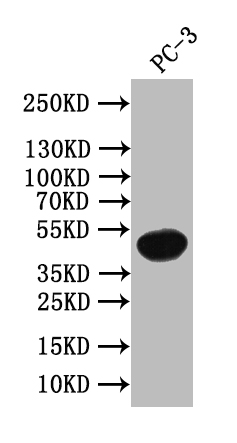
The antibody against WNT5A was raised in rabbit using the Recombinant Human Protein Wnt-5a protein as the immunogen. This antibody exists as a non-conjugated isotype IgG, purified by protein G with a purity greater than 95%. This antibody has been validated on ELISA, WB, IHC.
$299.00
| Cat.No | ADC-12333A | Clonality | Polyclonal |
|---|---|---|---|
| Host Species | Rabbit | Target Name | WNT5A |
| Form | Liquid | Species Reactivity | Human |
| Isotype | IgG | Storage Buffer | PH 7.4, 0.02% sodium azide and 50% glycerol., 150mM NaCl |
| Purification Method | >95%, Protein G purified | Conjugate | Non-conjugated |
| Application | ELISA, IHC, WB | Storage | Upon receipt |
| Immunogen Description | Recombinant Human Protein Wnt-5a protein | Target Species | Human |
|---|---|---|---|
| Immunogen Sequence | Complete sequences for the immunogen, target protein, and peptides are available upon request. | Uniprot ID | P41221 |
Uniprot Id
P41221
Target Species
Human
Target Name
WNT5A
Target Full Name
Protein Wnt-5a
Target Function
Ligand for members of the frizzled family of seven transmembrane receptors. Can activate or inhibit canonical Wnt signaling, depending on receptor context. In the presence of FZD4, activates beta-catenin signaling. In the presence of ROR2, inhibits the canonical Wnt pathway by promoting beta-catenin degradation through a GSK3-independent pathway which involves down-regulation of beta-catenin-induced reporter gene expression. Suppression of the canonical pathway allows chondrogenesis to occur and inhibits tumor formation. Stimulates cell migration. Decreases proliferation, migration, invasiveness and clonogenicity of carcinoma cells and may act as a tumor suppressor. Mediates motility of melanoma cells. Required during embryogenesis for extension of the primary anterior-posterior axis and for outgrowth of limbs and the genital tubercle. Inhibits type II collagen expression in chondrocytes.
Target Involvement
Robinow syndrome, autosomal dominant 1 (DRS1)
Target Subcellular Location
Secreted, extracellular space, extracellular matrix. Secreted.
Target Protein Families
Wnt family
Target Tissue Specificity
Expression is increased in differentiated thyroid carcinomas compared to normal thyroid tissue and anaplastic thyroid tumors where expression is low or undetectable. Expression is found in thyrocytes but not in stromal cells (at protein level). Detected i
Target Research Area
Neuroscience, Cancer
Target Synonyms
hWNT 5A; hWNT5A; Protein Wnt 5a; Protein Wnt-5a; Protein Wnt5a; Wingless type MMTV integration site family member 5A; Wnt 5a; WNT 5A protein; WNT 5A protein precursor; WNT5A; WNT5A protein precursor; WNT5A_HUMAN
Target Background
The WNT gene family consists of structurally related genes which encode secreted signaling proteins. These proteins have been implicated in oncogenesis and in several developmental processes, including regulation of cell fate and patterning during embryogenesis. This gene encodes a member of the WNT family that signals through both the canonical and non-canonical WNT pathways. This protein is a ligand for the seven transmembrane receptor frizzled-5 and the tyrosine kinase orphan receptor 2. This protein plays an essential role in regulating developmental pathways during embryogenesis. This protein may also play a role in oncogenesis. Mutations in this gene are the cause of autosomal dominant Robinow syndrome. Alternate splicing results in multiple transcript variants.
Notification