-
Chinese (Simplified)
-
English
-
German
-
Korean
-
Spanish
Chinese (Simplified)
English
German
Korean
Spanish
Sign up for an account to enjoy easy online shopping and instant order tracking.
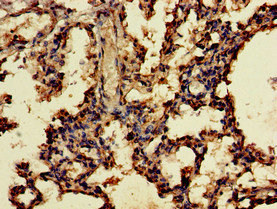
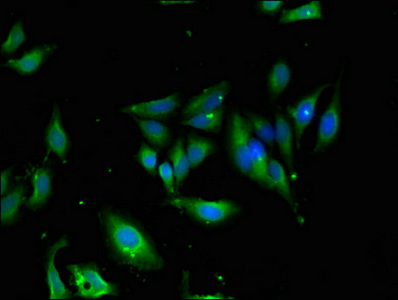
The antibody against UNC13D was raised in rabbit using the Recombinant Human Protein unc-13 homolog D protein (7-172AA) as the immunogen. This antibody exists as a non-conjugated isotype IgG, purified by protein G with a purity greater than 95%. This antibody has been validated on ELISA, IHC, IF.
$299.00
| Cat.No | ADC-11339A | Clonality | Polyclonal |
|---|---|---|---|
| Host Species | Rabbit | Target Name | UNC13D |
| Target Synonyms | C. elegans, D antibody; UNC13D antibody; Unc13h4 antibody, homolog of | Form | Liquid |
| Species Reactivity | Human | Isotype | IgG |
| Storage Buffer | 0.01M PBS, 0.03% Proclin 300; Constituents: 50% Glycerol, PH 7.4 | Purification Method | >95%, Protein G purified |
| Conjugate | Non-conjugated | Application | ELISA, IF, IHC |
| Storage | Upon receipt |
| Immunogen Description | Recombinant Human Protein unc-13 homolog D protein (7-172AA) | Target Species | Human |
|---|---|---|---|
| Immunogen Sequence | Complete sequences for the immunogen, target protein, and peptides are available upon request. | Uniprot ID | Q70J99 |
Uniprot Id
Q70J99
Target Species
Human
Target Name
UNC13D
Target Full Name
Protein unc-13 homolog D
Target Function
Plays a role in cytotoxic granule exocytosis in lymphocytes. Required for both granule maturation and granule docking and priming at the immunologic synapse. Regulates assembly of recycling and late endosomal structures, leading to the formation of an endosomal exocytic compartment that fuses with perforin-containing granules at the immunologic synapse and licences them for exocytosis. Regulates Ca(2+)-dependent secretory lysosome exocytosis in mast cells.
Target Involvement
Familial hemophagocytic lymphohistiocytosis 3 (FHL3)
Target Subcellular Location
Cytoplasm. Membrane; Peripheral membrane protein. Late endosome. Recycling endosome. Lysosome. Note=Colocalizes with cytotoxic granules at the plasma membrane. Localizes to endosomal exocytic vesicles.
Target Protein Families
Unc-13 family
Target Tissue Specificity
Expressed at high levels in spleen, thymus and leukocytes. Also expressed in lung and placenta, and at very low levels in brain, heart, skeletal muscle and kidney. Expressed in cytotoxic T-lymphocytes (CTL) and mast cells.
Target Synonyms
FHL 3; FHL3; FLJ00067; HLH 3; HLH3; HPLH 3; HPLH3; Jinx; Munc13 4; Munc13-4; Protein unc 13 homolog D; Protein unc-13 homolog D; UN13D_HUMAN; Unc 13 homolog D; UNC 13D; Unc-13 homolog D (C. elegans); Unc13 homolog D (C elegans); Unc13 homolog D; UNC13, C. elegans, homolog of, D; UNC13D; Unc13h4
Target Background
This gene encodes a protein that is a member of the UNC13 family, containing similar domain structure as other family members but lacking an N-terminal phorbol ester-binding C1 domain present in other Munc13 proteins. The protein appears to play a role in vesicle maturation during exocytosis and is involved in regulation of cytolytic granules secretion. Mutations in this gene are associated with familial hemophagocytic lymphohistiocytosis type 3, a genetically heterogeneous, rare autosomal recessive disorder.
Notification