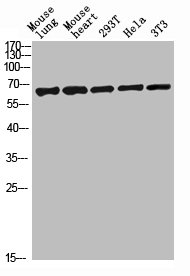
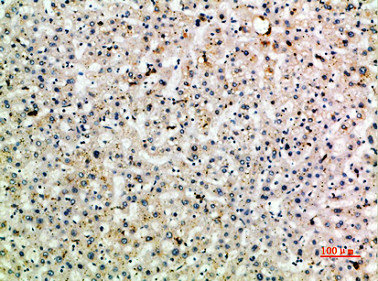
-
Chinese (Simplified)
-
English
-
German
-
Korean
-
Spanish
Chinese (Simplified)
English
German
Korean
Spanish
Sign up for an account to enjoy easy online shopping and instant order tracking.
The antibody against CLEC4M was raised in rabbit using the Synthetic peptide from Human protein at AA range: 271-320 as the immunogen. This antibody exists as a non-conjugated antibody. The antibody was affinity-purified from rabbit serum by affinity-chromatography using specific immunogen. This antibody has been validated on WB, IHC, ELISA.
$167.00
| Cat.No | ADC-12994A | Clonality | Polyclonal |
|---|---|---|---|
| Host Species | Rabbit | Target Name | CLEC4M |
| Form | Liquid | Species Reactivity | Human, Mouse, Rat |
| Storage Buffer | PH 7.4, containing 0.02% sodium azide as Preservative and 50% Glycerol., PBS | Purification Method | The antibody was affinity-purified from rabbit serum by affinity-chromatography using specific immunogen. |
| Conjugate | Non-conjugated | Application | ELISA, IHC, WB |
| Storage | Upon receipt |
| Immunogen Description | Synthetic peptide from Human protein at AA range: 271-320 | Target Species | Human |
|---|---|---|---|
| Immunogen Sequence | Complete sequences for the immunogen, target protein, and peptides are available upon request. | Uniprot ID | Q9H2X3 |
Uniprot Id
Q9H2X3
Target Species
Human
Target Name
CLEC4M
Target Full Name
C-type lectin domain family 4 member M
Target Function
Probable pathogen-recognition receptor involved in peripheral immune surveillance in liver. May mediate the endocytosis of pathogens which are subsequently degraded in lysosomal compartments. Is a receptor for ICAM3, probably by binding to mannose-like carbohydrates.; (Microbial infection) Acts as an attachment receptor for Ebolavirus.; (Microbial infection) Acts as an attachment receptor for Hepatitis C virus.; (Microbial infection) Acts as an attachment receptor for HIV-1.; (Microbial infection) Acts as an attachment receptor for Human coronavirus 229E.; (Microbial infection) Acts as an attachment receptor for Human cytomegalovirus/HHV-5.; (Microbial infection) Acts as an attachment receptor for Influenzavirus.; (Microbial infection) Acts as an attachment receptor for SARS-CoV.; (Microbial infection) Acts as an attachment receptor for West-nile virus.; (Microbial infection) Acts as an attachment receptor for Japanese encephalitis virus.; (Microbial infection) Acts as an attachment receptor for Marburg virus glycoprotein.; (Microbial infection) Recognition of M.bovis by dendritic cells may occur partially via this molecule.
Target Subcellular Location
[Isoform 1]: Cell membrane; Single-pass type II membrane protein.; [Isoform 2]: Cell membrane; Single-pass type II membrane protein.; [Isoform 3]: Cell membrane; Single-pass type II membrane protein.; [Isoform 5]: Secreted.; [Isoform 6]: Secreted.; [Isoform 7]: Secreted.; [Isoform 10]: Secreted.
Target Tissue Specificity
Predominantly highly expressed in liver sinusoidal endothelial cells and in lymph node. Found in placental endothelium but not in macrophages. Expressed in type II alveolar cells and lung endothelial cells.
Target Synonyms
C type lectin domain family 4; member M; C-type lectin domain family 4 member M; CD209 antigen like; CD209 antigen like protein 1; CD209 antigen-like protein 1; CD209L; CD209L1; CD299; CD299 antigen; CLC4M_HUMAN; CLEC4M; DC SIGN related protein; DC SIGN2; DC SIGNR; DC-SIGN-related protein; DC-SIGN2; DC-SIGNR; DCSIGN related protein; DCSIGNR; Dendritic cell-specific ICAM-3-grabbing non-integrin 2; HP10347; L SIGN; L-SIGN; Liver/lymph node specific ICAM3 grabbing nonintegrin; Liver/lymph node-specific ICAM-3-grabbing non-integrin; LSIGN; Mannose binding C type lectin DC SIGNR; MGC129964; MGC47866
Target Background
This gene encodes a C-type lectin that functions in cell adhesion and pathogen recognition. This receptor recognizes a wide range of evolutionarily divergent pathogens with a large impact on public health, including tuberculosis mycobacteria, and viruses including Ebola, hepatitis C, HIV-1, influenza A, West Nile virus and the SARS-CoV acute respiratory syndrome coronavirus. The protein is organized into four distinct domains: a C-terminal carbohydrate recognition domain, a flexible tandem-repeat neck domain of variable length, a transmembrane region and an N-terminal cytoplasmic domain involved in internalization. This gene is closely related in terms of both sequence and function to a neighboring gene, CD209 (Gene ID: 30835), also known as DC-SIGN. The two genes differ in viral recognition and expression patterns, with this gene showing high expression in endothelial cells of the liver, lymph node and placenta. Polymorphisms in the tandem repeat neck domain are associated with resistance to SARS infection.
Notification