• Contact info@abtriva.com for inquiries and orders.
  • Chinese (Simplified)

  • English

  • German

  • Korean

  • Spanish

United States (English / $ USD)

Rabbit anti-Human DISC1 Polyclonal Antibody

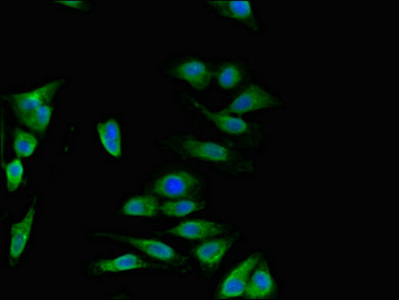
The antibody against DISC1 was raised in rabbit using the Recombinant Human Disrupted in schizophrenia 1 protein (99-325AA) as the immunogen. This antibody exists as a non-conjugated isotype IgG, purified by protein G with a purity greater than 95%. This antibody has been validated on ELISA, WB, IF.

ADC-13652A

The antibody against DISC1 was raised in rabbit using the Recombinant Human Disrupted in schizophrenia 1 protein (99-325AA) as the immunogen. This antibody exists as a non-conjugated isotype IgG, purified by protein G with a purity greater than 95%. This antibody has been validated on ELISA, WB, IF.

$299.00

Number
Order Exclusive Products Now

Request a Quote
High Purity LevelsPrecision and ReliabilityCustomization Options

Specifications


Cat.No ADC-13652A ClonalityPolyclonal
Host SpeciesRabbitTarget NameDISC1
Target SynonymsC1orf136 antibody; DISC1 antibody; DISC1_HUMAN antibody; Disrupted in schizophrenia 1 antibody; Disrupted in schizophrenia 1 protein antibody; KIAA0457 antibody; RP4-730B13.1 antibody; SCZD9 antibodyFormLiquid
Species ReactivityHumanIsotypeIgG
Storage Buffer0.01M PBS, 0.03% Proclin 300; Constituents: 50% Glycerol, PH 7.4Purification Method>95%, Protein G purified
ConjugateNon-conjugatedApplicationELISA, IF, WB
StorageUpon receipt

Immunogen Information


Immunogen DescriptionRecombinant Human Disrupted in schizophrenia 1 protein (99-325AA)Target SpeciesHuman
Immunogen SequenceComplete sequences for the immunogen, target protein, and peptides are available upon request.Uniprot IDQ9NRI5
Background Information
  • Uniprot Id

    Q9NRI5

  • Target Species

    Human

  • Target Name

    DISC1

  • Target Full Name

    Disrupted in schizophrenia 1 protein

  • Target Function

    Involved in the regulation of multiple aspects of embryonic and adult neurogenesis. Required for neural progenitor proliferation in the ventrical/subventrical zone during embryonic brain development and in the adult dentate gyrus of the hippocampus. Participates in the Wnt-mediated neural progenitor proliferation as a positive regulator by modulating GSK3B activity and CTNNB1 abundance. Plays a role as a modulator of the AKT-mTOR signaling pathway controlling the tempo of the process of newborn neurons integration during adult neurogenesis, including neuron positioning, dendritic development and synapse formation. Inhibits the activation of AKT-mTOR signaling upon interaction with CCDC88A. Regulates the migration of early-born granule cell precursors toward the dentate gyrus during the hippocampal development. Inhibits ATF4 transcription factor activity in neurons by disrupting ATF4 dimerization and DNA-binding. Plays a role, together with PCNT, in the microtubule network formation.

  • Target Involvement

    Schizophrenia 9 (SCZD9)

  • Target Subcellular Location

    Cytoplasm. Cytoplasm, cytoskeleton. Mitochondrion. Cytoplasm, cytoskeleton, microtubule organizing center, centrosome. Cell junction, synapse, postsynaptic density.

  • Target Tissue Specificity

    Ubiquitous. Highly expressed in the dentate gyrus of the hippocampus. Also expressed in the temporal and parahippocampal cortices and cells of the white matter.

  • Target Synonyms

    C1orf136; DISC1; DISC1_HUMAN; Disrupted in schizophrenia 1; Disrupted in schizophrenia 1 protein; KIAA0457; RP4-730B13.1; SCZD9

  • Target Background

    This gene encodes a protein with multiple coiled coil motifs which is located in the nucleus, cytoplasm and mitochondria. The protein is involved in neurite outgrowth and cortical development through its interaction with other proteins. This gene is disrupted in a t(1;11)(q42.1;q14.3) translocation which segregates with schizophrenia and related psychiatric disorders in a large Scottish family. Alternate transcriptional splice variants, encoding different isoforms, have been characterized.

Inquire Rabbit anti-Human DISC1 Polyclonal Antibody Now


AbTriva respects your privacy and protects your personal data in accordance with AbTriva. For more information, please see our data protection statement. *

Notification