-
Chinese (Simplified)
-
English
-
German
-
Korean
-
Spanish
Chinese (Simplified)
English
German
Korean
Spanish
Sign up for an account to enjoy easy online shopping and instant order tracking.
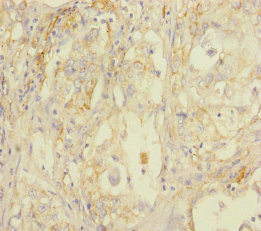
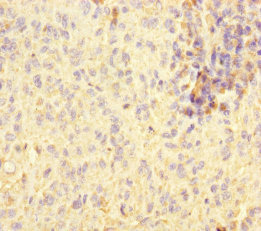
The antibody against STOML2 was raised in rabbit using the Recombinant Human Stomatin-like protein 2, mitochondrial protein (29-356AA) as the immunogen. This antibody exists as a non-conjugated isotype IgG, Antigen affinity purified. This antibody has been validated on ELISA, IHC.
$299.00
| Cat.No | ADC-16167A | Clonality | Polyclonal |
|---|---|---|---|
| Host Species | Rabbit | Target Name | STOML2 |
| Target Synonyms | mitochondrial antibody; Stomatin-like protein 2 antibody; STOML2 antibody | Form | Liquid |
| Species Reactivity | Human | Isotype | IgG |
| Storage Buffer | 50% Glycerol, PBS with 0.02% sodium azide, pH7.3. | Purification Method | Antigen affinity purified |
| Conjugate | Non-conjugated | Application | ELISA, IHC |
| Storage | Upon receipt |
| Immunogen Description | Recombinant Human Stomatin-like protein 2, mitochondrial protein (29-356AA) | Target Species | Human |
|---|---|---|---|
| Immunogen Sequence | Complete sequences for the immunogen, target protein, and peptides are available upon request. | Uniprot ID | Q9UJZ1 |
Uniprot Id
Q9UJZ1
Target Species
Human
Target Name
STOML2
Target Full Name
Stomatin-like protein 2, mitochondrial
Target Function
Mitochondrial protein that probably regulates the biogenesis and the activity of mitochondria. Stimulates cardiolipin biosynthesis, binds cardiolipin-enriched membranes where it recruits and stabilizes some proteins including prohibitin and may therefore act in the organization of functional microdomains in mitochondrial membranes. Through regulation of the mitochondrial function may play a role into several biological processes including cell migration, cell proliferation, T-cell activation, calcium homeostasis and cellular response to stress. May play a role in calcium homeostasis through negative regulation of calcium efflux from mitochondria. Required for mitochondrial hyperfusion a pro-survival cellular response to stress which results in increased ATP production by mitochondria. May also regulate the organization of functional domains at the plasma membrane and play a role in T-cell activation through association with the T-cell receptor signaling complex and its regulation.
Target Subcellular Location
Cell membrane; Peripheral membrane protein. Mitochondrion. Mitochondrion inner membrane; Lipid-anchor. Mitochondrion intermembrane space. Membrane raft. Cytoplasm, cytoskeleton.
Target Protein Families
Band 7/mec-2 family
Target Tissue Specificity
Ubiquitously expressed at low levels. Expressed in lymphoid tissues (at protein level).
Target Synonyms
EPB72 like protein 2; EPB72-like protein 2; HSPC108; OTTHUMP00000021320; Paraprotein target 7; Paratarg 7; SLP 2; SLP-2; SLP2; STML2_HUMAN; Stomatin (EPB72) like 2; Stomatin like 2; Stomatin like protein 2; Stomatin like protein 2, mitochondrial; Stomatin-like protein 2; STOML2
Target Background
Enables GTPase binding activity and cardiolipin binding activity. Involved in several processes, including inorganic cation transmembrane transport; positive regulation of cardiolipin metabolic process; and positive regulation of mitochondrial DNA replication. Located in membrane raft; mitochondrial inner membrane; and mitochondrial intermembrane space. Is extrinsic component of plasma membrane. Colocalizes with several cellular components, including COP9 signalosome; T cell receptor complex; and immunological synapse.
Notification