-
Chinese (Simplified)
-
English
-
German
-
Korean
-
Spanish
Chinese (Simplified)
English
German
Korean
Spanish
Sign up for an account to enjoy easy online shopping and instant order tracking.
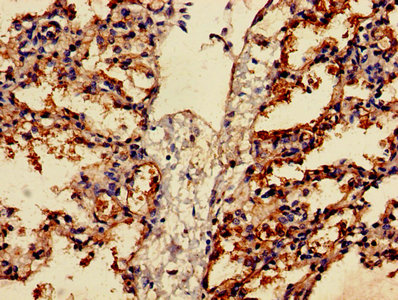
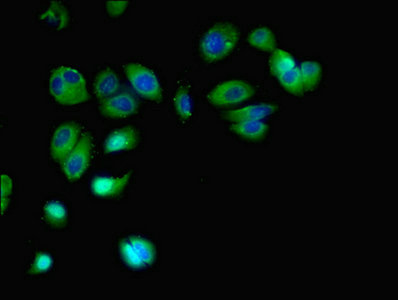
The antibody against FFAR2 was raised in rabbit using the Recombinant Human Free fatty acid receptor 2 protein (277-330AA) as the immunogen. This antibody exists as a non-conjugated isotype IgG, purified by protein G with a purity greater than 95%. This antibody has been validated on ELISA, IHC, IF.
$299.00
| Cat.No | ADC-22058A | Clonality | Polyclonal |
|---|---|---|---|
| Host Species | Rabbit | Target Name | FFAR2 |
| Target Synonyms | FFAR2; FFA2; GPCR43; GPR43; Free fatty acid receptor 2; G-protein coupled receptor 43 | Form | Liquid |
| Species Reactivity | Human | Isotype | IgG |
| Storage Buffer | 0.01M PBS, 0.03% Proclin 300; Constituents: 50% Glycerol, PH 7.4 | Purification Method | >95%, Protein G purified |
| Conjugate | Non-conjugated | Application | ELISA, IF, IHC |
| Storage | Upon receipt |
| Immunogen Description | Recombinant Human Free fatty acid receptor 2 protein (277-330AA) | Target Species | Human |
|---|---|---|---|
| Immunogen Sequence | Complete sequences for the immunogen, target protein, and peptides are available upon request. | Uniprot ID | O15552 |
Uniprot Id
O15552
Target Species
Human
Target Name
FFAR2
Target Full Name
Free fatty acid receptor 2
Target Function
G protein-coupled receptor that is activated by a major product of dietary fiber digestion, the short chain fatty acids (SCFAs), and that plays a role in the regulation of whole-body energy homeostasis and in intestinal immunity. In omnivorous mammals, the short chain fatty acids acetate, propionate and butyrate are produced primarily by the gut microbiome that metabolizes dietary fibers. SCFAs serve as a source of energy but also act as signaling molecules. That G protein-coupled receptor is probably coupled to the pertussis toxin-sensitive, G(i/o)-alpha family of G proteins but also to the Gq family. Its activation results in the formation of inositol 1,4,5-trisphosphate, the mobilization of intracellular calcium, the phosphorylation of the MAPK3/ERK1 and MAPK1/ERK2 kinases and the inhibition of intracellular cAMP accumulation. May play a role in glucose homeostasis by regulating the secretion of GLP-1, in response to short-chain fatty acids accumulating in the intestine. May also regulate the production of LEP/Leptin, a hormone acting on the central nervous system to inhibit food intake. Finally, may also regulate whole-body energy homeostasis through adipogenesis regulating both differentiation and lipid storage of adipocytes. In parallel to its role in energy homeostasis, may also mediate the activation of the inflammatory and immune responses by SCFA in the intestine, regulating the rapid production of chemokines and cytokines. May also play a role in the resolution of the inflammatory response and control chemotaxis in neutrophils. In addition to SCFAs, may also be activated by the extracellular lectin FCN1 in a process leading to activation of monocytes and inducing the secretion of interleukin-8/IL-8 in response to the presence of microbes. Among SCFAs, the fatty acids containing less than 6 carbons, the most potent activators are probably acetate, propionate and butyrate. Exhibits a SCFA-independent constitutive G protein-coupled receptor activity.
Target Subcellular Location
Cell membrane; Multi-pass membrane protein.
Target Protein Families
G-protein coupled receptor 1 family
Target Tissue Specificity
Expressed at relatively high levels in peripheral blood leukocytes and, to lesser extent, in spleen.
Target Synonyms
FFAR2; FFA2; GPCR43; GPR43; Free fatty acid receptor 2; G-protein coupled receptor 43
Notification