-
Chinese (Simplified)
-
English
-
German
-
Korean
-
Spanish
Chinese (Simplified)
English
German
Korean
Spanish
Sign up for an account to enjoy easy online shopping and instant order tracking.
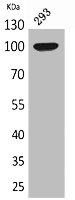
The antibody against ENPP2 was raised in rabbit using the Synthesized peptide derived from the Internal region of Human Autotaxin. as the immunogen. This antibody exists as a non-conjugated isotype IgG. The antibody was affinity-purified from rabbit antiserum by affinity-chromatography using epitope-specific immunogen. This antibody has been validated on WB, ELISA.
$167.00
| Cat.No | ADC-37003A | Clonality | Polyclonal |
|---|---|---|---|
| Host Species | Rabbit | Target Name | ENPP2 |
| Form | Liquid | Species Reactivity | Human, Mouse, Rat |
| Isotype | IgG | Storage Buffer | 0.5% BSA and 0.02% sodium azide., Liquid in PBS containing 50% glycerol |
| Purification Method | The antibody was affinity-purified from rabbit antiserum by affinity-chromatography using epitope-specific immunogen. | Conjugate | Non-conjugated |
| Application | ELISA, WB | Storage | Upon receipt |
| Immunogen Description | Synthesized peptide derived from the Internal region of Human Autotaxin. | Target Species | Human |
|---|---|---|---|
| Immunogen Sequence | Complete sequences for the immunogen, target protein, and peptides are available upon request. | Uniprot ID | Q13822 |
Uniprot Id
Q13822
Target Species
Human
Target Name
ENPP2
Target Full Name
Autotaxin
Target Function
Hydrolyzes lysophospholipids to produce the signaling molecule lysophosphatidic acid (LPA) in extracellular fluids. Major substrate is lysophosphatidylcholine. Also can act on sphingosylphosphorylcholine producing sphingosine-1-phosphate, a modulator of cell motility. Can hydrolyze, in vitro, bis-pNPP, to some extent pNP-TMP, and barely ATP. Involved in several motility-related processes such as angiogenesis and neurite outgrowth. Acts as an angiogenic factor by stimulating migration of smooth muscle cells and microtubule formation. Stimulates migration of melanoma cells, probably via a pertussis toxin-sensitive G protein. May have a role in induction of parturition. Possible involvement in cell proliferation and adipose tissue development (Probable). Tumor cell motility-stimulating factor. Required for LPA production in activated platelets, cleaves the sn-1 lysophospholipids to generate sn-1 lysophosphatidic acids containing predominantly 18:2 and 20:4 fatty acids. Shows a preference for the sn-1 to the sn-2 isomer of 1-O-alkyl-sn-glycero-3-phosphocholine (lyso-PAF).
Target Subcellular Location
Secreted.
Target Protein Families
Nucleotide pyrophosphatase/phosphodiesterase family
Target Tissue Specificity
Detected in blood plasma (at protein level). Predominantly expressed in brain, placenta, ovary, and small intestine. Expressed in a number of carcinomas such as hepatocellular and prostate carcinoma, neuroblastoma and non-small-cell lung cancer. Expressed
Target Synonyms
ATX; ATX X; Autotaxin; Autotaxin t; E NPP 2; E-NPP 2; Ectonucleotide pyrophosphatase/phosphodiesterase 2; Ectonucleotide pyrophosphatase/phosphodiesterase family member 2; Enpp2; ENPP2_HUMAN; Extracellular lysophospholipase D; FLJ26803; LysoPLD; NPP2; PD IALPHA; PDNP2; Phosphodiesterase I alpha; Phosphodiesterase I/nucleotide pyrophosphatase 2; Plasma lysophospholipase D
Target Background
The protein encoded by this gene functions as both a phosphodiesterase, which cleaves phosphodiester bonds at the 5' end of oligonucleotides, and a phospholipase, which catalyzes production of lysophosphatidic acid (LPA) in extracellular fluids. LPA evokes growth factor-like responses including stimulation of cell proliferation and chemotaxis. This gene product stimulates the motility of tumor cells and has angiogenic properties, and its expression is upregulated in several kinds of carcinomas. The gene product is secreted and further processed to make the biologically active form. Several alternatively spliced transcript variants encoding different isoforms have been identified.
Notification