-
Chinese (Simplified)
-
English
-
German
-
Korean
-
Spanish
Chinese (Simplified)
English
German
Korean
Spanish
Sign up for an account to enjoy easy online shopping and instant order tracking.
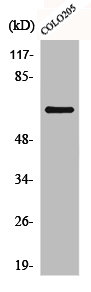
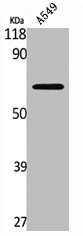
The antibody against COQ8A was raised in rabbit using the Synthesized peptide derived from the Internal region of Human CABC1. as the immunogen. This antibody exists as a non-conjugated isotype IgG. The antibody was affinity-purified from rabbit antiserum by affinity-chromatography using epitope-specific immunogen. This antibody has been validated on WB, IHC, IF, ELISA.
$167.00
| Cat.No | ADC-39177A | Clonality | Polyclonal |
|---|---|---|---|
| Host Species | Rabbit | Target Name | COQ8A |
| Form | Liquid | Species Reactivity | Human, Mouse, Rat |
| Isotype | IgG | Storage Buffer | 0.5% BSA and 0.02% sodium azide., Liquid in PBS containing 50% glycerol |
| Purification Method | The antibody was affinity-purified from rabbit antiserum by affinity-chromatography using epitope-specific immunogen. | Conjugate | Non-conjugated |
| Application | ELISA, IF, IHC, WB | Storage | Upon receipt |
| Immunogen Description | Synthesized peptide derived from the Internal region of Human CABC1. | Target Species | Human |
|---|---|---|---|
| Immunogen Sequence | Complete sequences for the immunogen, target protein, and peptides are available upon request. | Uniprot ID | Q8NI60 |
Uniprot Id
Q8NI60
Target Species
Human
Target Name
COQ8A
Target Full Name
Atypical kinase COQ8A, mitochondrial
Target Function
Atypical kinase involved in the biosynthesis of coenzyme Q, also named ubiquinone, an essential lipid-soluble electron transporter for aerobic cellular respiration. Its substrate specificity is unclear: does not show any protein kinase activity. Probably acts as a small molecule kinase, possibly a lipid kinase that phosphorylates a prenyl lipid in the ubiquinone biosynthesis pathway, as suggested by its ability to bind coenzyme Q lipid intermediates. Shows an unusual selectivity for binding ADP over ATP.
Target Involvement
Coenzyme Q10 deficiency, primary, 4 (COQ10D4)
Target Subcellular Location
Mitochondrion. Membrane; Single-pass membrane protein.
Target Protein Families
Protein kinase superfamily, ADCK protein kinase family
Target Tissue Specificity
Widely expressed, with highest levels in adrenal gland, heart, pancreas, nasal mucosa, stomach, uterus and skeletal muscle.
Target Synonyms
aarF domain containing protein kinase 3; aarF domain-containing protein kinase 3; ADCK 3; Adck3; ADCK3_HUMAN; ARCA2; CABC 1; CABC1 ; Chaperone ABC1 (activity of bc1 complex S.pombe) like; Chaperone ABC1 activity of bc1 complex homolog; Chaperone ABC1 like; Chaperone activity of bc1 complex like; Chaperone activity of bc1 complex like mitochondrial; Chaperone activity of bc1 complex-like; Chaperone-ABC1-like; Coenzyme Q8 homolog; COQ 8; COQ10D4; COQ8; COQ8; S. cerevisiae; homolog of; MGC4849; mitochondrial; OTTHUMP00000035734; OTTHUMP00000035737; SCAR9
Target Background
This gene encodes a mitochondrial protein similar to yeast ABC1, which functions in an electron-transferring membrane protein complex in the respiratory chain. It is not related to the family of ABC transporter proteins. Expression of this gene is induced by the tumor suppressor p53 and in response to DNA damage, and inhibiting its expression partially suppresses p53-induced apoptosis. Alternatively spliced transcript variants have been found; however, their full-length nature has not been determined.
Notification