-
Chinese (Simplified)
-
English
-
German
-
Korean
-
Spanish

Chinese (Simplified)
English
German
Korean
Spanish
Sign up for an account to enjoy easy online shopping and instant order tracking.
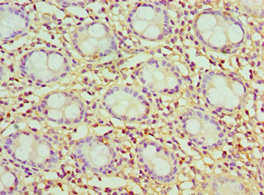
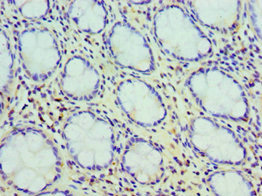
The antibody against CCK was raised in rabbit using the Recombinant Human Cholecystokinin protein (21-115AA) as the immunogen. This antibody exists as a non-conjugated isotype IgG, Antigen affinity purified. This antibody has been validated on ELISA, IHC.
$299.00
| Cat.No | ADC-40546A | Clonality | Polyclonal |
|---|---|---|---|
| Host Species | Rabbit | Target Name | CCK |
| Form | Liquid | Species Reactivity | Human |
| Isotype | IgG | Storage Buffer | 50% Glycerol, PBS with 0.02% sodium azide, pH7.3. |
| Purification Method | Antigen affinity purified | Conjugate | Non-conjugated |
| Application | ELISA, IHC | Storage | Upon receipt |
| Immunogen Description | Recombinant Human Cholecystokinin protein (21-115AA) | Target Species | Human |
|---|---|---|---|
| Immunogen Sequence | Complete sequences for the immunogen, target protein, and peptides are available upon request. | Uniprot ID | P06307 |
Uniprot Id
P06307
Target Species
Human
Target Name
CCK
Target Full Name
Cholecystokinin
Target Function
This peptide hormone induces gall bladder contraction and the release of pancreatic enzymes in the gut. Its function in the brain is not clear. Binding to CCK-A receptors stimulates amylase release from the pancreas, binding to CCK-B receptors stimulates gastric acid secretion.
Target Subcellular Location
Secreted.
Target Protein Families
Gastrin/cholecystokinin family
Target Synonyms
(1-49)-CCK58; CCK; CCK12; CCK18; CCK25; CCK33; CCK39; CCK5; CCK58; CCK7; CCK8; CCKN_HUMAN; Cholecystokinin-5
Target Background
This gene encodes a member of the gastrin/cholecystokinin family of proteins. The encoded preproprotein is proteolytically processed to generate multiple protein products, including the peptide hormones cholecystokinin-8, -12, -33, and others. The encoded peptides have been shown to regulate gastric acid secretion and food intake. A sulfated form of cholecystokinin-8 may modulate neuronal activity in the brain. Alternative splicing results in multiple transcript variants.
Notification