-
Chinese (Simplified)
-
English
-
German
-
Korean
-
Spanish
Chinese (Simplified)
English
German
Korean
Spanish
Sign up for an account to enjoy easy online shopping and instant order tracking.
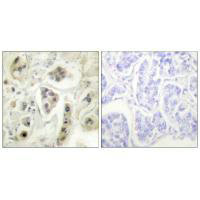
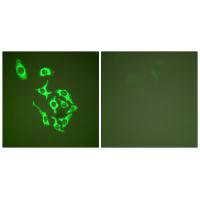
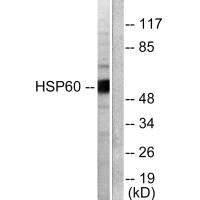
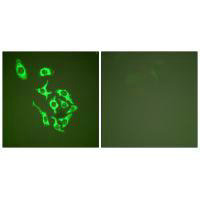
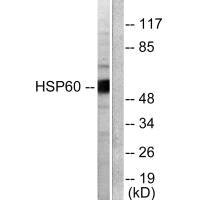
The antibody against HSPD1 was raised in rabbit using the Synthesized peptide derived from Human HSP60. as the immunogen. The antibody was affinity-purified from rabbit antiserum by affinity-chromatography using epitope-specific immunogen. This antibody has been validated on ELISA, WB, IHC, IF.
$297.00
| Cat.No | ADC-42383A | Clonality | Polyclonal |
|---|---|---|---|
| Host Species | Rabbit | Target Name | HSPD1 |
| Form | Liquid | Species Reactivity | Human, Mouse, Rat |
| Storage Buffer | PH 7.4, 0.02% sodium azide and 50% glycerol., 150mM NaCl, Rabbit IgG in phosphate buffered saline (without Mg2+ and Ca2+) | Purification Method | The antibody was affinity-purified from rabbit antiserum by affinity-chromatography using epitope-specific immunogen. |
| Application | ELISA, IF, IHC, WB | Storage | Upon receipt |
| Immunogen Description | Synthesized peptide derived from Human HSP60. | Target Species | Human |
|---|---|---|---|
| Immunogen Sequence | Complete sequences for the immunogen, target protein, and peptides are available upon request. | Uniprot ID | P10809 |
Uniprot Id
P10809
Target Species
Human
Target Name
HSPD1
Target Full Name
60 kDa heat shock protein, mitochondrial
Target Function
Chaperonin implicated in mitochondrial protein import and macromolecular assembly. Together with Hsp10, facilitates the correct folding of imported proteins. May also prevent misfolding and promote the refolding and proper assembly of unfolded polypeptides generated under stress conditions in the mitochondrial matrix. The functional units of these chaperonins consist of heptameric rings of the large subunit Hsp60, which function as a back-to-back double ring. In a cyclic reaction, Hsp60 ring complexes bind one unfolded substrate protein per ring, followed by the binding of ATP and association with 2 heptameric rings of the co-chaperonin Hsp10. This leads to sequestration of the substrate protein in the inner cavity of Hsp60 where, for a certain period of time, it can fold undisturbed by other cell components. Synchronous hydrolysis of ATP in all Hsp60 subunits results in the dissociation of the chaperonin rings and the release of ADP and the folded substrate protein (Probable).
Target Involvement
Spastic paraplegia 13, autosomal dominant (SPG13); Leukodystrophy, hypomyelinating, 4 (HLD4)
Target Subcellular Location
Mitochondrion matrix.
Target Protein Families
Chaperonin (HSP60) family
Target Synonyms
60 kDa chaperonin; 60 kDa heat shock protein; mitochondrial; CH60_HUMAN; Chaperonin 60; Chaperonin; 60-KD; CPN60; fa04a05; GROEL; heat shock 60kDa protein 1 (chaperonin); Heat shock protein 1 (chaperonin); Heat shock protein 60; Heat shock protein 65; heat shock protein family D (Hsp60) member 1; HLD4; Hsp 60; HSP 65; HSP-60; HSP60; HSP65; HSPD1; HuCHA60; Mitochondrial matrix protein P1; P60 lymphocyte protein; short heat shock protein 60 Hsp60s1; SPG13
Target Background
This gene encodes a member of the chaperonin family. The encoded mitochondrial protein may function as a signaling molecule in the innate immune system. This protein is essential for the folding and assembly of newly imported proteins in the mitochondria. This gene is adjacent to a related family member and the region between the 2 genes functions as a bidirectional promoter. Several pseudogenes have been associated with this gene. Two transcript variants encoding the same protein have been identified for this gene. Mutations associated with this gene cause autosomal recessive spastic paraplegia 13.
Notification