• Contact info@abtriva.com for inquiries and orders.
  • Chinese (Simplified)

  • English

  • German

  • Korean

  • Spanish

United States (English / $ USD)

Rabbit anti-Human ILK Polyclonal Antibody

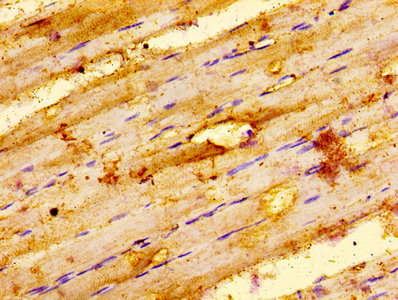
The antibody against ILK was raised in rabbit using the Recombinant Human Integrin-linked protein kinase protein (1-228AA) as the immunogen. This antibody exists as a non-conjugated isotype IgG, purified by protein G with a purity greater than 95%. This antibody has been validated on ELISA, WB, IHC, IF.

ADC-46351A

The antibody against ILK was raised in rabbit using the Recombinant Human Integrin-linked protein kinase protein (1-228AA) as the immunogen. This antibody exists as a non-conjugated isotype IgG, purified by protein G with a purity greater than 95%. This antibody has been validated on ELISA, WB, IHC, IF.

$299.00

Number
Order Exclusive Products Now

Request a Quote
High Purity LevelsPrecision and ReliabilityCustomization Options

Specifications


Cat.No ADC-46351A ClonalityPolyclonal
Host SpeciesRabbitTarget NameILK
FormLiquidSpecies ReactivityHuman, Mouse, Rat
IsotypeIgGStorage Buffer0.01M PBS, 0.03% Proclin 300; Constituents: 50% Glycerol, PH 7.4
Purification Method>95%, Protein G purifiedConjugateNon-conjugated
ApplicationELISA, IF, IHC, WBStorageUpon receipt

Immunogen Information


Immunogen DescriptionRecombinant Human Integrin-linked protein kinase protein (1-228AA)Target SpeciesHuman
Immunogen SequenceComplete sequences for the immunogen, target protein, and peptides are available upon request.Uniprot IDQ13418
Background Information
  • Uniprot Id

    Q13418

  • Target Species

    Human

  • Target Name

    ILK

  • Target Full Name

    Scaffold protein ILK

  • Target Function

    Receptor-proximal protein kinase regulating integrin-mediated signal transduction. May act as a mediator of inside-out integrin signaling. Focal adhesion protein part of the complex ILK-PINCH. This complex is considered to be one of the convergence points of integrin- and growth factor-signaling pathway. Could be implicated in mediating cell architecture, adhesion to integrin substrates and anchorage-dependent growth in epithelial cells. Regulates cell motility by forming a complex with PARVB. Phosphorylates beta-1 and beta-3 integrin subunit on serine and threonine residues, but also AKT1 and GSK3B.

  • Target Subcellular Location

    Cell junction, focal adhesion. Cell membrane; Peripheral membrane protein; Cytoplasmic side. Cell projection, lamellipodium. Cytoplasm, myofibril, sarcomere.

  • Target Protein Families

    Protein kinase superfamily, TKL Ser/Thr protein kinase family

  • Target Tissue Specificity

    Highly expressed in heart followed by skeletal muscle, pancreas and kidney. Weakly expressed in placenta, lung and liver.

  • Target Research Area

    Signal Transduction

  • Target Synonyms

    59 kDa serine/threonine protein kinase; 59 kDa serine/threonine-protein kinase; DKFZp686F1765 ; Epididymis secretory protein Li 28; HEL S 28; ILK 1; ILK 2; ILK; ILK-1; ILK-2; ILK_HUMAN; ILK1; ILK2; Integrin linked kinase 2; Integrin linked Kinase; Integrin linked protein kinase; Integrin-linked protein kinase; p59; p59ILK

  • Target Background

    This gene encodes a protein with a kinase-like domain and four ankyrin-like repeats. The encoded protein associates at the cell membrane with the cytoplasmic domain of beta integrins, where it regulates integrin-mediated signal transduction. Activity of this protein is important in the epithelial to mesenchymal transition, and over-expression of this gene is implicated in tumor growth and metastasis. Alternative splicing results in multiple transcript variants.

Inquire Rabbit anti-Human ILK Polyclonal Antibody Now


AbTriva respects your privacy and protects your personal data in accordance with AbTriva. For more information, please see our data protection statement. *

Notification