-
Chinese (Simplified)
-
English
-
German
-
Korean
-
Spanish
Chinese (Simplified)
English
German
Korean
Spanish
Sign up for an account to enjoy easy online shopping and instant order tracking.
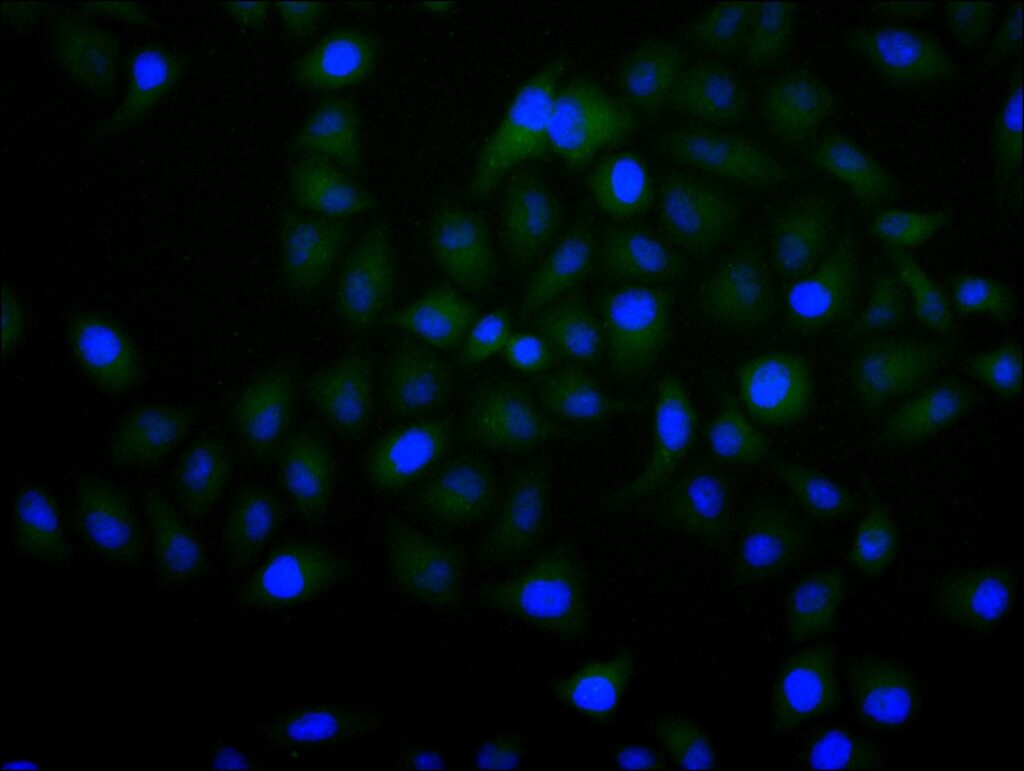
The antibody against NLRP10 was raised in rabbit using the Recombinant Human NACHT, LRR and PYD domains-containing protein 10 protein (589-655AA) as the immunogen. This antibody exists as a non-conjugated isotype IgG, purified by protein G with a purity greater than 95%. This antibody has been validated on ELISA, WB, IHC, IF.
$299.00
| Cat.No | ADC-06525A | Clonality | Polyclonal |
|---|---|---|---|
| Host Species | Rabbit | Target Name | NLRP10 |
| Target Synonyms | CLR11.1 antibody; NACHT, leucine rich repeat and PYD containing 10 antibody; NACHT, leucine rich repeat and pyrin domain containing 10 antibody; PAN5 antibody; PYNOD antibody, LRR and PYD domains containing protein 10 antibody; NACHT, LRR and PYD domains-containing protein 10 antibody; NAL10_HUMAN antibody; NALP10 antibody; NLR family, pyrin domain containing 10 antibody; Nlrp10 antibody; NOD8 antibody; Nucleotide-binding oligomerization domain protein 8 antibody; Nucleotide-binding oligomerization domain | Form | Liquid |
| Species Reactivity | Human, Rat | Isotype | IgG |
| Storage Buffer | 0.01M PBS, 0.03% Proclin 300; Constituents: 50% Glycerol, PH 7.4 | Purification Method | >95%, Protein G purified |
| Conjugate | Non-conjugated | Application | ELISA, IF, IHC, WB |
| Storage | Upon receipt |
| Immunogen Description | Recombinant Human NACHT, LRR and PYD domains-containing protein 10 protein (589-655AA) | Target Species | Human |
|---|---|---|---|
| Immunogen Sequence | Complete sequences for the immunogen, target protein, and peptides are available upon request. | Uniprot ID | Q86W26 |
Uniprot Id
Q86W26
Target Species
Human
Target Name
NLRP10
Target Full Name
NACHT, LRR and PYD domains-containing protein 10
Target Function
Inhibits autoprocessing of CASP1, CASP1-dependent IL1B secretion, PYCARD aggregation and PYCARD-mediated apoptosis but not apoptosis induced by FAS or BID. Displays anti-inflammatory activity. Required for immunity against C.albicans infection. Involved in the innate immune response by contributing to proinflammatory cytokine release in response to invasive bacterial infection. Contributes to T-cell-mediated inflammatory responses in the skin. Plays a role in protection against periodontitis through its involvement in induction of IL1A via ERK activation in oral epithelial cells infected with periodontal pathogens. Exhibits both ATPase and GTPase activities.
Target Subcellular Location
Cytoplasm. Cell membrane; Peripheral membrane protein.
Target Protein Families
NLRP family
Target Tissue Specificity
Highly expressed in basal and suprabasal epidermal cell layers with lower levels in dermal fibroblast cells (at protein level). Widely expressed with highest levels in heart, brain and skeletal muscle. Also expressed in liver, colon, dermis and epidermis.
Target Synonyms
CLR11.1; NACHT, leucine rich repeat and PYD containing 10; NACHT, LRR and PYD domains containing protein 10; NACHT, LRR and PYD domains-containing protein 10; NAL10_HUMAN; NALP10; NLR family, pyrin domain containing 10; Nlrp10; NOD8; Nucleotide-binding oligomerization domain protein 8; Nucleotide-binding oligomerization domain, leucine rich repeat and pyrin domain containing 10; PAN5; PYNOD
Target Background
Members of the NALP protein family typically contain a NACHT domain, a NACHT-associated domain (NAD), a C-terminal leucine-rich repeat (LRR) region, and an N-terminal pyrin domain (PYD). The protein encoded by this gene belongs to the NALP protein family despite lacking the LRR region. This protein likely plays a regulatory role in the innate immune system. The protein belongs to the signal-induced multiprotein complex, the inflammasome, that activates the pro-inflammatory caspases, caspase-1 and caspase-5. Other experiments indicate that this gene acts as a multifunctional negative regulator of inflammation and apoptosis.
Notification