• Contact info@abtriva.com for inquiries and orders.
  • Chinese (Simplified)

  • English

  • German

  • Korean

  • Spanish

United States (English / $ USD)

Rabbit anti-Human EDAR Polyclonal Antibody

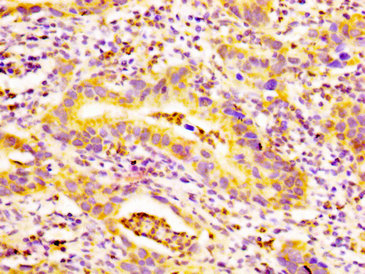
The antibody against EDAR was raised in rabbit using the Recombinant Human Tumor necrosis factor receptor superfamily member EDAR protein (27-170AA) as the immunogen. This antibody exists as a non-conjugated isotype IgG, purified by protein G with a purity greater than 95%. This antibody has been validated on ELISA, WB, IHC, IF.

ADC-07386A

The antibody against EDAR was raised in rabbit using the Recombinant Human Tumor necrosis factor receptor superfamily member EDAR protein (27-170AA) as the immunogen. This antibody exists as a non-conjugated isotype IgG, purified by protein G with a purity greater than 95%. This antibody has been validated on ELISA, WB, IHC, IF.

$299.00

Number
Order Exclusive Products Now

Request a Quote
High Purity LevelsPrecision and ReliabilityCustomization Options

Specifications


Cat.No ADC-07386A ClonalityPolyclonal
Host SpeciesRabbitTarget NameEDAR
FormLiquidSpecies ReactivityHuman
IsotypeIgGStorage Buffer0.01M PBS, 0.03% Proclin 300; Constituents: 50% Glycerol, PH 7.4
Purification Method>95%, Protein G purifiedConjugateNon-conjugated
ApplicationELISA, IF, IHC, WBStorageUpon receipt

Immunogen Information


Immunogen DescriptionRecombinant Human Tumor necrosis factor receptor superfamily member EDAR protein (27-170AA)Target SpeciesHuman
Immunogen SequenceComplete sequences for the immunogen, target protein, and peptides are available upon request.Uniprot IDQ9UNE0
Background Information
  • Uniprot Id

    Q9UNE0

  • Target Species

    Human

  • Target Name

    EDAR

  • Target Full Name

    Tumor necrosis factor receptor superfamily member EDAR

  • Target Function

    Receptor for EDA isoform A1, but not for EDA isoform A2. Mediates the activation of NF-kappa-B and JNK. May promote caspase-independent cell death.

  • Target Involvement

    Ectodermal dysplasia 10A, hypohidrotic/hair/nail type, autosomal dominant (ECTD10A); Ectodermal dysplasia 10B, hypohidrotic/hair/tooth type, autosomal recessive (ECTD10B)

  • Target Subcellular Location

    Membrane; Single-pass type I membrane protein.

  • Target Tissue Specificity

    Detected in fetal kidney, lung, skin and cultured neonatal epidermal keratinocytes. Not detected in lymphoblast and fibroblast cell lines.

  • Target Synonyms

    Anhidrotic ectodysplasin receptor 1; DL; Downless (mouse) homolog; Downless homolog; Downless mouse homolog of; ECTD10A; ECTD10B; Ectodermal dysplasia receptor; Ectodysplasin 1 anhidrotic receptor; Ectodysplasin A receptor; Ectodysplasin A1 isoform receptor; Ectodysplasin-A receptor; ED 1R; ED 3; ED 5; ED1R; ED3; ED5; EDA 1R; EDA 3; EDA A1 receptor; EDA A1R; EDA-A1 receptor; EDA1R; EDA3; Edar; EDAR_HUMAN; HRM1; Tumor necrosis factor receptor superfamily member EDAR

  • Target Background

    This gene encodes a member of the tumor necrosis factor receptor family. The encoded transmembrane protein is a receptor for the soluble ligand ectodysplasin A, and can activate the nuclear factor-kappaB, JNK, and caspase-independent cell death pathways. It is required for the development of hair, teeth, and other ectodermal derivatives. Mutations in this gene result in autosomal dominant and recessive forms of hypohidrotic ectodermal dysplasia.

Inquire Rabbit anti-Human EDAR Polyclonal Antibody Now


AbTriva respects your privacy and protects your personal data in accordance with AbTriva. For more information, please see our data protection statement. *

Notification