-
Chinese (Simplified)
-
English
-
German
-
Korean
-
Spanish
Chinese (Simplified)
English
German
Korean
Spanish
Sign up for an account to enjoy easy online shopping and instant order tracking.
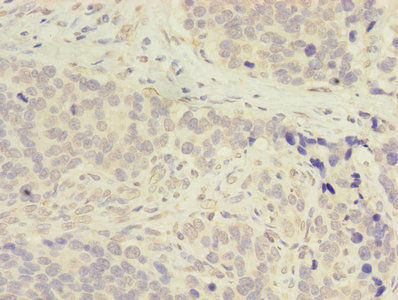
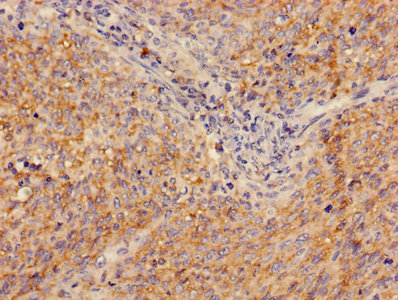
The antibody against ADA was raised in rabbit using the Recombinant Human Adenosine deaminase protein (157-343AA) as the immunogen. This antibody exists as a non-conjugated isotype IgG, purified by protein G with a purity greater than 95%. This antibody has been validated on ELISA, WB, IHC, IF.
$299.00
| Cat.No | ADC-32880A | Clonality | Polyclonal |
|---|---|---|---|
| Host Species | Rabbit | Target Name | ADA |
| Target Synonyms | ada antibody; ADA_HUMAN antibody; ADA1 antibody; Adenosine aminohydrolase antibody; Adenosine deaminase antibody | Form | Liquid |
| Species Reactivity | Human | Isotype | IgG |
| Storage Buffer | 0.01M PBS, 0.03% Proclin 300; Constituents: 50% Glycerol, PH 7.4 | Purification Method | >95%, Protein G purified |
| Conjugate | Non-conjugated | Application | ELISA, IF, IHC, WB |
| Storage | Upon receipt |
| Immunogen Description | Recombinant Human Adenosine deaminase protein (157-343AA) | Target Species | Human |
|---|---|---|---|
| Immunogen Sequence | Complete sequences for the immunogen, target protein, and peptides are available upon request. | Uniprot ID | P00813 |
Uniprot Id
P00813
Target Species
Human
Target Name
ADA
Target Full Name
Adenosine deaminase
Target Function
Catalyzes the hydrolytic deamination of adenosine and 2-deoxyadenosine. Plays an important role in purine metabolism and in adenosine homeostasis. Modulates signaling by extracellular adenosine, and so contributes indirectly to cellular signaling events. Acts as a positive regulator of T-cell coactivation, by binding DPP4. Its interaction with DPP4 regulates lymphocyte-epithelial cell adhesion. Enhances dendritic cell immunogenicity by affecting dendritic cell costimulatory molecule expression and cytokines and chemokines secretion. Enhances CD4+ T-cell differentiation and proliferation. Acts as a positive modulator of adenosine receptors ADORA1 and ADORA2A, by enhancing their ligand affinity via conformational change. Stimulates plasminogen activation. Plays a role in male fertility. Plays a protective role in early postimplantation embryonic development.
Target Involvement
Severe combined immunodeficiency autosomal recessive T-cell-negative/B-cell-negative/NK-cell-negative due to adenosine deaminase deficiency (ADASCID)
Target Subcellular Location
Cell membrane; Peripheral membrane protein; Extracellular side. Cell junction. Cytoplasmic vesicle lumen. Cytoplasm. Lysosome.
Target Protein Families
Metallo-dependent hydrolases superfamily, Adenosine and AMP deaminases family
Target Tissue Specificity
Found in all tissues, occurs in large amounts in T-lymphocytes. Expressed at the time of weaning in gastrointestinal tissues.
Target Synonyms
ada; ADA_HUMAN; ADA1; Adenosine aminohydrolase; Adenosine deaminase
Target Background
This gene encodes an enzyme that catalyzes the hydrolysis of adenosine to inosine in the purine catabolic pathway. Various mutations have been described for this gene and have been linked to human diseases related to impaired immune function such as severe combined immunodeficiency disease (SCID) which is the result of a deficiency in the ADA enzyme. In ADA-deficient individuals there is a marked depletion of T, B, and NK lymphocytes, and consequently, a lack of both humoral and cellular immunity. Conversely, elevated levels of this enzyme are associated with congenital hemolytic anemia.
Notification