• Contact info@abtriva.com for inquiries and orders.
  • Chinese (Simplified)

  • English

  • German

  • Korean

  • Spanish

United States (English / $ USD)

Rabbit anti-Human ADARB1 Polyclonal Antibody

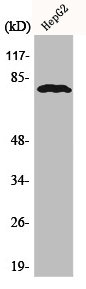
The antibody against ADARB1 was raised in rabbit using the Synthesized peptide derived from the Internal region of Human ADAR2. as the immunogen. This antibody exists as a non-conjugated isotype IgG. The antibody was affinity-purified from rabbit antiserum by affinity-chromatography using epitope-specific immunogen. This antibody has been validated on WB, IHC, ELISA.

ADC-39379A

The antibody against ADARB1 was raised in rabbit using the Synthesized peptide derived from the Internal region of Human ADAR2. as the immunogen. This antibody exists as a non-conjugated isotype IgG. The antibody was affinity-purified from rabbit antiserum by affinity-chromatography using epitope-specific immunogen. This antibody has been validated on WB, IHC, ELISA.

$167.00

Number
Order Exclusive Products Now

Request a Quote
High Purity LevelsPrecision and ReliabilityCustomization Options

Specifications


Cat.No ADC-39379A ClonalityPolyclonal
Host SpeciesRabbitTarget NameADARB1
FormLiquidSpecies ReactivityHuman, Mouse, Rat
IsotypeIgGStorage Buffer0.5% BSA and 0.02% sodium azide., Liquid in PBS containing 50% glycerol
Purification MethodThe antibody was affinity-purified from rabbit antiserum by affinity-chromatography using epitope-specific immunogen.ConjugateNon-conjugated
ApplicationELISA, IHC, WBStorageUpon receipt

Immunogen Information


Immunogen DescriptionSynthesized peptide derived from the Internal region of Human ADAR2.Target SpeciesHuman
Immunogen SequenceComplete sequences for the immunogen, target protein, and peptides are available upon request.Uniprot IDP78563
Background Information
  • Uniprot Id

    P78563

  • Target Species

    Human

  • Target Name

    ADARB1

  • Target Full Name

    Double-stranded RNA-specific editase 1

  • Target Function

    Catalyzes the hydrolytic deamination of adenosine to inosine in double-stranded RNA (dsRNA) referred to as A-to-I RNA editing. This may affect gene expression and function in a number of ways that include mRNA translation by changing codons and hence the amino acid sequence of proteins; pre-mRNA splicing by altering splice site recognition sequences; RNA stability by changing sequences involved in nuclease recognition; genetic stability in the case of RNA virus genomes by changing sequences during viral RNA replication; and RNA structure-dependent activities such as microRNA production or targeting or protein-RNA interactions. Can edit both viral and cellular RNAs and can edit RNAs at multiple sites (hyper-editing) or at specific sites (site-specific editing). Its cellular RNA substrates include: bladder cancer-associated protein (BLCAP), neurotransmitter receptors for glutamate (GRIA2 and GRIK2) and serotonin (HTR2C), GABA receptor (GABRA3) and potassium voltage-gated channel (KCNA1). Site-specific RNA editing of transcripts encoding these proteins results in amino acid substitutions which consequently alter their functional activities. Edits GRIA2 at both the Q/R and R/G sites efficiently but converts the adenosine in hotspot1 much less efficiently. Can exert a proviral effect towards human immunodeficiency virus type 1 (HIV-1) and enhances its replication via both an editing-dependent and editing-independent mechanism. The former involves editing of adenosines in the 5'UTR while the latter occurs via suppression of EIF2AK2/PKR activation and function. Can inhibit cell proliferation and migration and can stimulate exocytosis.; Has a lower catalytic activity than isoform 2.; Has a higher catalytic activity than isoform 1.

  • Target Subcellular Location

    Nucleus. Nucleus, nucleolus.; [Isoform 1]: Nucleus. Nucleus, nucleolus.; [Isoform 2]: Nucleus. Nucleus, nucleolus.

  • Target Tissue Specificity

    Highly expressed in brain and heart and at lower levels in placenta. Fair expression in lung, liver and kidney. Detected in brain, heart, kidney, lung and liver (at protein level).; [Isoform 5]: Highly expressed in hippocampus and colon. Expressed in pedi

  • Target Synonyms

    DARB 1; ADARB1; 1700057H01Rik; ADAR2; ADAR2a ; ADAR2a L1 ; ADAR2a L2 ; ADAR2a L3; ADAR2b; ADAR2c ; ADAR2d ; ADAR2g ; Adarb1; Adenosine deaminase; RNA specific; 2; Adenosine deaminase; RNA specific; B1 (homolog of rat RED1) ; Adenosine deaminase; RNA specific; B1 (RED1 homolog rat); Adenosine deaminase; RNA specific; B1; AW124433; AW558573; BB220382; D10Bwg0447e; Double stranded RNA specific editase 1; Double-stranded RNA-specific editase 1; DRABA2; DRADA2; dsRNA adenosine deaminase; EC 3.5.-.- ; Human dsRNA adenosine deaminase DRADA2 ; Human dsRNA adenosine deaminase DRADA2b; EC 3.5; OTTHUMP00000115341 ; OTTHUMP00000115342 ; RED 1; RED1_HUMAN; RNA editase ; RNA editase 1; RNA editing deaminase 1; RNA editing enzyme 1; RNA editing enzyme 1; rat; homolog of; RNA specific adenosine deaminase B1 ; RNA-editing deaminase 1; RNA-editing enzyme 1

  • Target Background

    This gene encodes the enzyme responsible for pre-mRNA editing of the glutamate receptor subunit B by site-specific deamination of adenosines. Studies in rat found that this enzyme acted on its own pre-mRNA molecules to convert an AA dinucleotide to an AI dinucleotide which resulted in a new splice site. Alternative splicing of this gene results in several transcript variants, some of which have been characterized by the presence or absence of an ALU cassette insert and a short or long C-terminal region.

Inquire Rabbit anti-Human ADARB1 Polyclonal Antibody Now


AbTriva respects your privacy and protects your personal data in accordance with AbTriva. For more information, please see our data protection statement. *

Notification