-
Chinese (Simplified)
-
English
-
German
-
Korean
-
Spanish
Chinese (Simplified)
English
German
Korean
Spanish
Sign up for an account to enjoy easy online shopping and instant order tracking.
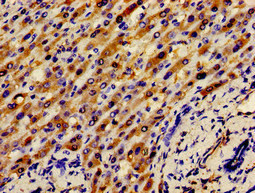
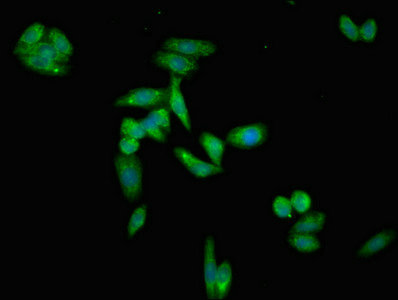
The antibody against APOH was raised in rabbit using the Recombinant Human Beta-2-glycoprotein 1 protein (119-345AA) as the immunogen. This antibody exists as a non-conjugated isotype IgG, purified by protein G with a purity greater than 95%. This antibody has been validated on ELISA, WB, IHC, IF.
$299.00
| Cat.No | ADC-08826A | Clonality | Polyclonal |
|---|---|---|---|
| Host Species | Rabbit | Target Name | APOH |
| Form | Liquid | Species Reactivity | Human, Rat |
| Isotype | IgG | Storage Buffer | 0.01M PBS, 0.03% Proclin 300; Constituents: 50% Glycerol, PH 7.4 |
| Purification Method | >95%, Protein G purified | Conjugate | Non-conjugated |
| Application | ELISA, IF, IHC, WB | Storage | Upon receipt |
| Immunogen Description | Recombinant Human Beta-2-glycoprotein 1 protein (119-345AA) | Target Species | Human |
|---|---|---|---|
| Immunogen Sequence | Complete sequences for the immunogen, target protein, and peptides are available upon request. | Uniprot ID | P02749 |
Uniprot Id
P02749
Target Species
Human
Target Name
APOH
Target Full Name
Beta-2-glycoprotein 1
Target Function
Binds to various kinds of negatively charged substances such as heparin, phospholipids, and dextran sulfate. May prevent activation of the intrinsic blood coagulation cascade by binding to phospholipids on the surface of damaged cells.
Target Subcellular Location
Secreted.
Target Tissue Specificity
Expressed by the liver and secreted in plasma.
Target Synonyms
Activated protein C binding protein; Activated protein C-binding protein; Anticardiolipin cofactor; APC inhibitor; Apo-H; APOH; APOH_HUMAN; apolipoprotein H (beta-2-glycoprotein I); Apolipoprotein H; B2G1; B2GP1; B2GPI; Beta 2 glycoprotein I; Beta 2 glycoprotein I precursor; Beta(2)GPI; Beta-2-glycoprotein 1; Beta-2-glycoprotein I; BG; Glycoprotein 1; beta-2; Glycoprotein I; beta-2; OTTMUSP00000003033
Target Background
Apolipoprotein H, also known as beta-2-glycoprotein I, is a component of circulating plasma lipoproteins. It has been implicated in a variety of physiologic pathways including lipoprotein metabolism, coagulation, hemostasis, and the production of antiphospholipid autoantibodies. APOH may be a required cofactor for anionic phospholipid binding by the antiphospholipid autoantibodies found in sera of many patients with lupus and primary antiphospholipid syndrome (APS). The anti-beta (2) glycoprotein I antibodies from APS patients, mediate inhibition of activated protein C which has anticoagulant properties. Because beta-2-GPI is the main autoantigen in patients with APS, the disruption of this pathway by autoantibodies may be an important mechanism for thrombosis in patients with APS.
Notification