• Contact info@abtriva.com for inquiries and orders.
  • Chinese (Simplified)

  • English

  • German

  • Korean

  • Spanish

United States (English / $ USD)

Rabbit anti-Human BRCA2 Polyclonal Antibody

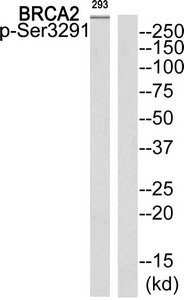
The antibody against BRCA2 was raised in rabbit using the Peptide sequence around phosphorylation site of Serine 3291 (F-V-S(p)-P-A) derived from Human BRCA2. as the immunogen. Antibodies were produced by immunizing rabbits with synthetic phosphopeptide and KLH conjugates. Antibodies were purified by affinity-chromatography using epitope-specific phosphopeptide. Non-phospho specific antibodies were removed by chromatogramphy usi This antibody has been validated on ELISA, WB.

ADC-42648A

The antibody against BRCA2 was raised in rabbit using the Peptide sequence around phosphorylation site of Serine 3291 (F-V-S(p)-P-A) derived from Human BRCA2. as the immunogen. Antibodies were produced by immunizing rabbits with synthetic phosphopeptide and KLH conjugates. Antibodies were purified by affinity-chromatography using epitope-specific phosphopeptide. Non-phospho specific antibodies were removed by chromatogramphy usi This antibody has been validated on ELISA, WB.

$360.00

Number
Order Exclusive Products Now

Request a Quote
High Purity LevelsPrecision and ReliabilityCustomization Options

Specifications


Cat.No ADC-42648A ClonalityPolyclonal
Host SpeciesRabbitTarget Namebrca2
FormLiquidSpecies ReactivityHuman, Mouse, Rat
Storage BufferPH 7.4, 0.02% sodium azide and 50% glycerol., 150mM NaCl, Rabbit IgG in phosphate buffered saline (without Mg2+ and Ca2+)ApplicationELISA, WB
StorageUpon receipt

Immunogen Information


Immunogen DescriptionPeptide sequence around phosphorylation site of Serine 3291 (F-V-S(p)-P-A) derived from Human BRCA2.Target SpeciesHuman
Immunogen SequenceComplete sequences for the immunogen, target protein, and peptides are available upon request.Uniprot IDP51587
Background Information
  • Uniprot Id

    P51587

  • Target Species

    Human

  • Target Name

    BRCA2

  • Target Full Name

    Breast cancer type 2 susceptibility protein

  • Target Function

    Involved in double-strand break repair and/or homologous recombination. Binds RAD51 and potentiates recombinational DNA repair by promoting assembly of RAD51 onto single-stranded DNA (ssDNA). Acts by targeting RAD51 to ssDNA over double-stranded DNA, enabling RAD51 to displace replication protein-A (RPA) from ssDNA and stabilizing RAD51-ssDNA filaments by blocking ATP hydrolysis. Part of a PALB2-scaffolded HR complex containing RAD51C and which is thought to play a role in DNA repair by HR. May participate in S phase checkpoint activation. Binds selectively to ssDNA, and to ssDNA in tailed duplexes and replication fork structures. May play a role in the extension step after strand invasion at replication-dependent DNA double-strand breaks; together with PALB2 is involved in both POLH localization at collapsed replication forks and DNA polymerization activity. In concert with NPM1, regulates centrosome duplication. Interacts with the TREX-2 complex (transcription and export complex 2) subunits PCID2 and SEM1, and is required to prevent R-loop-associated DNA damage and thus transcription-associated genomic instability. Silencing of BRCA2 promotes R-loop accumulation at actively transcribed genes in replicating and non-replicating cells, suggesting that BRCA2 mediates the control of R-loop associated genomic instability, independently of its known role in homologous recombination.

  • Target Involvement

    Breast cancer (BC); Pancreatic cancer 2 (PNCA2); Breast-ovarian cancer, familial, 2 (BROVCA2); Fanconi anemia complementation group D1 (FANCD1); Glioma 3 (GLM3)

  • Target Subcellular Location

    Nucleus. Cytoplasm, cytoskeleton, microtubule organizing center, centrosome.

  • Target Tissue Specificity

    Highest levels of expression in breast and thymus, with slightly lower levels in lung, ovary and spleen.

  • Target Synonyms

    BRCA 2; BRCA1/BRCA2 containing complex subunit 2; Brca2; BRCA2; DNA repair associated; BRCA2_HUMAN; BRCC 2; BRCC2; Breast and ovarian cancer susceptibility gene early onset; breast and ovarian cancer susceptibility protein 2; Breast cancer 2 early onset; Breast Cancer 2 tumor suppressor; Breast cancer susceptibility protein BRCA2; Breast cancer type 2 susceptibility protein; BROVCA2; FACD; FAD 1; FAD; FAD1; FANCB; FANCD 1; FANCD; FANCD1; FANCD1 gene; Fanconi anemia complementation group D1; Fanconi anemia group D1 protein; GLM3; mutant BRCA2; OTTHUMP00000018803; OTTHUMP00000042401; PNCA2; XRCC11

  • Target Background

    Inherited mutations in BRCA1 and this gene, BRCA2, confer increased lifetime risk of developing breast or ovarian cancer. Both BRCA1 and BRCA2 are involved in maintenance of genome stability, specifically the homologous recombination pathway for double-strand DNA repair. The largest exon in both genes is exon 11, which harbors the most important and frequent mutations in breast cancer patients. The BRCA2 gene was found on chromosome 13q12.3 in human. The BRCA2 protein contains several copies of a 70 aa motif called the BRC motif, and these motifs mediate binding to the RAD51 recombinase which functions in DNA repair. BRCA2 is considered a tumor suppressor gene, as tumors with BRCA2 mutations generally exhibit loss of heterozygosity (LOH) of the wild-type allele.

Inquire Rabbit anti-Human BRCA2 Polyclonal Antibody Now


AbTriva respects your privacy and protects your personal data in accordance with AbTriva. For more information, please see our data protection statement. *

Notification