• Contact info@abtriva.com for inquiries and orders.
  • Chinese (Simplified)

  • English

  • German

  • Korean

  • Spanish

United States (English / $ USD)

Rabbit anti-Human CCL8 Polyclonal Antibody

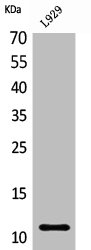
The antibody against CCL8 was raised in rabbit using the Synthesized peptide derived from the C-terminal region of Human MCP-2. as the immunogen. This antibody exists as a non-conjugated isotype IgG. The antibody was affinity-purified from rabbit antiserum by affinity-chromatography using epitope-specific immunogen. This antibody has been validated on WB, ELISA.

ADC-37060A

The antibody against CCL8 was raised in rabbit using the Synthesized peptide derived from the C-terminal region of Human MCP-2. as the immunogen. This antibody exists as a non-conjugated isotype IgG. The antibody was affinity-purified from rabbit antiserum by affinity-chromatography using epitope-specific immunogen. This antibody has been validated on WB, ELISA.

$167.00

Number
Order Exclusive Products Now

Request a Quote
High Purity LevelsPrecision and ReliabilityCustomization Options

Specifications


Cat.No ADC-37060A ClonalityPolyclonal
Host SpeciesRabbitTarget NameCCL8
FormLiquidSpecies ReactivityHuman
IsotypeIgGStorage Buffer0.5% BSA and 0.02% sodium azide., Liquid in PBS containing 50% glycerol
Purification MethodThe antibody was affinity-purified from rabbit antiserum by affinity-chromatography using epitope-specific immunogen.ConjugateNon-conjugated
ApplicationELISA, WBStorageUpon receipt

Immunogen Information


Immunogen DescriptionSynthesized peptide derived from the C-terminal region of Human MCP-2.Target SpeciesHuman
Immunogen SequenceComplete sequences for the immunogen, target protein, and peptides are available upon request.Uniprot IDP80075
Background Information
  • Uniprot Id

    P80075

  • Target Species

    Human

  • Target Name

    CCL8

  • Target Full Name

    C-C motif chemokine 8

  • Target Function

    Chemotactic factor that attracts monocytes, lymphocytes, basophils and eosinophils. May play a role in neoplasia and inflammatory host responses. This protein can bind heparin. The processed form MCP-2(6-76) does not show monocyte chemotactic activity, but inhibits the chemotactic effect most predominantly of CCL7, and also of CCL2 and CCL5 and CCL8.

  • Target Subcellular Location

    Secreted.

  • Target Protein Families

    Intercrine beta (chemokine CC) family

  • Target Tissue Specificity

    Highest expression found in the small intestine and peripheral blood cells. Intermediate levels seen in the heart, placenta, lung, skeletal muscle, thymus, colon, ovary, spinal cord and pancreas. Low levels seen in the brain, liver, spleen and prostate.

  • Target Research Area

    Immunology

  • Target Synonyms

    Ccl8; CCL8_HUMAN; HC14; MCP-2; MCP-2(6-76); Monocyte chemoattractant protein 2; Monocyte chemotactic protein 2; SCYA10; SCYA8; Small-inducible cytokine A8

  • Target Background

    This antimicrobial gene is one of several chemokine genes clustered on the q-arm of chromosome 17. Chemokines form a superfamily of secreted proteins involved in immunoregulatory and inflammatory processes. The superfamily is divided into four subfamilies based on the arrangement of N-terminal cysteine residues of the mature peptide. This chemokine is a member of the CC subfamily which is characterized by two adjacent cysteine residues. This cytokine displays chemotactic activity for monocytes, lymphocytes, basophils and eosinophils. By recruiting leukocytes to sites of inflammation this cytokine may contribute to tumor-associated leukocyte infiltration and to the antiviral state against HIV infection.

Inquire Rabbit anti-Human CCL8 Polyclonal Antibody Now


AbTriva respects your privacy and protects your personal data in accordance with AbTriva. For more information, please see our data protection statement. *

Notification