-
Chinese (Simplified)
-
English
-
German
-
Korean
-
Spanish
Chinese (Simplified)
English
German
Korean
Spanish
Sign up for an account to enjoy easy online shopping and instant order tracking.
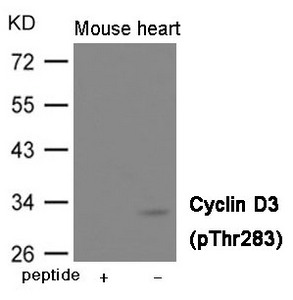
The antibody against CCND3 was raised in rabbit using the Peptide sequence around phosphorylation site of Threonine 283(T-S-T(p)-P-T) derived from Human Cyclin D3. as the immunogen. Antibodies were produced by immunizing rabbits with synthetic phosphopeptide and KLH conjugates. Antibodies were purified by affinity-chromatography using epitope-specific phosphopeptide. Non-phospho specific antibodies were removed by chromatogramphy usi This antibody has been validated on ELISA, WB.
$360.00
| Cat.No | ADC-43014A | Clonality | Polyclonal |
|---|---|---|---|
| Host Species | Rabbit | Target Name | CCND3 |
| Target Synonyms | CCND 3 antibody; Ccnd3 antibody; CCND3_HUMAN antibody; CyclinD3 antibody; D3 type cyclin antibody; G1 S specific cyclin D3 antibody; G1/S specific cyclin D3 antibody; G1/S-specific cyclin-D3 antibody | Form | Liquid |
| Species Reactivity | Human, Mouse, Rat | Storage Buffer | PH 7.4, 0.02% sodium azide and 50% glycerol., 150mM NaCl, Supplied at 1.0mg/mL in phosphate buffered saline (without Mg2+ and Ca2+) |
| Application | ELISA, WB | Storage | Upon receipt |
| Immunogen Description | Peptide sequence around phosphorylation site of Threonine 283(T-S-T(p)-P-T) derived from Human Cyclin D3. | Target Species | Human |
|---|---|---|---|
| Immunogen Sequence | Complete sequences for the immunogen, target protein, and peptides are available upon request. | Uniprot ID | P30281 |
Uniprot Id
P30281
Target Species
Human
Target Name
CCND3
Target Full Name
G1/S-specific cyclin-D3
Target Function
Regulatory component of the cyclin D3-CDK4 (DC) complex that phosphorylates and inhibits members of the retinoblastoma (RB) protein family including RB1 and regulates the cell-cycle during G(1)/S transition. Phosphorylation of RB1 allows dissociation of the transcription factor E2F from the RB/E2F complex and the subsequent transcription of E2F target genes which are responsible for the progression through the G(1) phase. Hypophosphorylates RB1 in early G(1) phase. Cyclin D-CDK4 complexes are major integrators of various mitogenenic and antimitogenic signals. Component of the ternary complex, cyclin D3/CDK4/CDKN1B, required for nuclear translocation and activity of the cyclin D-CDK4 complex. Shows transcriptional coactivator activity with ATF5 independently of CDK4.
Target Subcellular Location
Nucleus. Cytoplasm.
Target Protein Families
Cyclin family, Cyclin D subfamily
Target Research Area
Cell Biology
Target Synonyms
CCND 3; Ccnd3; CCND3_HUMAN; CyclinD3; D3 type cyclin; G1 S specific cyclin D3; G1/S specific cyclin D3; G1/S-specific cyclin-D3
Target Background
The protein encoded by this gene belongs to the highly conserved cyclin family, whose members are characterized by a dramatic periodicity in protein abundance through the cell cycle. Cyclins function as regulators of CDK kinases. Different cyclins exhibit distinct expression and degradation patterns which contribute to the temporal coordination of each mitotic event. This cyclin forms a complex with and functions as a regulatory subunit of CDK4 or CDK6, whose activtiy is required for cell cycle G1/S transition. This protein has been shown to interact with and be involved in the phosphorylation of tumor suppressor protein Rb. The CDK4 activity associated with this cyclin was reported to be necessary for cell cycle progression through G2 phase into mitosis after UV radiation. Several transcript variants encoding different isoforms have been found for this gene.
Notification