• Contact info@abtriva.com for inquiries and orders.
  • Chinese (Simplified)

  • English

  • German

  • Korean

  • Spanish

United States (English / $ USD)

Rabbit anti-Human CD160 Polyclonal Antibody

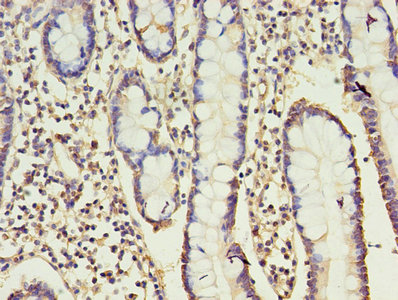
The antibody against CD160 was raised in rabbit using the Recombinant Human CD160 antigen protein (27-159AA) as the immunogen. This antibody exists as a non-conjugated isotype IgG, purified by protein G with a purity greater than 95%. This antibody has been validated on ELISA, IHC.

ADC-43877A

The antibody against CD160 was raised in rabbit using the Recombinant Human CD160 antigen protein (27-159AA) as the immunogen. This antibody exists as a non-conjugated isotype IgG, purified by protein G with a purity greater than 95%. This antibody has been validated on ELISA, IHC.

$299.00

Number
Order Exclusive Products Now

Request a Quote
High Purity LevelsPrecision and ReliabilityCustomization Options

Specifications


Cat.No ADC-43877A ClonalityPolyclonal
Host SpeciesRabbitTarget NameCD160
FormLiquidSpecies ReactivityHuman
IsotypeIgGStorage Buffer0.01M PBS, 0.03% Proclin 300; Constituents: 50% Glycerol, PH 7.4
Purification Method>95%, Protein G purifiedConjugateNon-conjugated
ApplicationELISA, IHCStorageUpon receipt

Immunogen Information


Immunogen DescriptionRecombinant Human CD160 antigen protein (27-159AA)Target SpeciesHuman
Immunogen SequenceComplete sequences for the immunogen, target protein, and peptides are available upon request.Uniprot IDO95971
Background Information
  • Uniprot Id

    O95971

  • Target Species

    Human

  • Target Name

    CD160

  • Target Full Name

    CD160 antigen

  • Target Function

    Receptor on immune cells capable to deliver stimulatory or inhibitory signals that regulate cell activation and differentiation. Exists as a GPI-anchored and as a transmembrane form, each likely initiating distinct signaling pathways via phosphoinositol 3-kinase in activated NK cells and via LCK and CD247/CD3 zeta chain in activated T cells. Receptor for both classical and non-classical MHC class I molecules. In the context of acute viral infection, recognizes HLA-C and triggers NK cell cytotoxic activity, likely playing a role in anti-viral innate immune response. On CD8+ T cells, binds HLA-A2-B2M in complex with a viral peptide and provides a costimulatory signal to activated/memory T cells. Upon persistent antigen stimulation, such as occurs during chronic viral infection, may progressively inhibit TCR signaling in memory CD8+ T cells, contributing to T cell exhaustion. On endothelial cells, recognizes HLA-G and controls angiogenesis in immune privileged sites. Receptor or ligand for TNF superfamily member TNFRSF14, participating in bidirectional cell-cell contact signaling between antigen presenting cells and lymphocytes. Upon ligation of TNFRSF14, provides stimulatory signal to NK cells enhancing IFNG production and anti-tumor immune response. On activated CD4+ T cells, interacts with TNFRSF14 and downregulates CD28 costimulatory signaling, restricting memory and alloantigen-specific immune response. In the context of bacterial infection, acts as a ligand for TNFRSF14 on epithelial cells, triggering the production of antimicrobial proteins and proinflammatory cytokines.; The soluble GPI-cleaved form, usually released by activated lymphocytes, might play an immune regulatory role by limiting lymphocyte effector functions.

  • Target Subcellular Location

    [CD160 antigen]: Cell membrane; Lipid-anchor, GPI-anchor.; [CD160 antigen, soluble form]: Secreted.

  • Target Tissue Specificity

    Expression is restricted to functional NK and cytotoxic T lymphocytes. Expressed in viral-specific effector memory and terminally differentiated effector memory CD8+ T cells. Expressed in memory and activated CD4+ T cell subsets (at protein level). Expres

  • Target Synonyms

    BY55; BY55_HUMAN; CD160; CD160 antigen [Precursor]; CD160 antigen; CD160 delta Ig; CD160 molecule; CD160 transmembrane isoform; FLJ46513; Natural killer cell receptor BY55; Natural killer cell receptor; immunoglobulin superfamily member; NK1; NK28

  • Target Background

    CD160 is an 27 kDa glycoprotein which was initially identified with the monoclonal antibody BY55. Its expression is tightly associated with peripheral blood NK cells and CD8 T lymphocytes with cytolytic effector activity. The cDNA sequence of CD160 predicts a cysteine-rich, glycosylphosphatidylinositol-anchored protein of 181 amino acids with a single Ig-like domain weakly homologous to KIR2DL4 molecule. CD160 is expressed at the cell surface as a tightly disulfide-linked multimer. RNA blot analysis revealed CD160 mRNAs of 1.5 and 1.6 kb whose expression was highly restricted to circulating NK and T cells, spleen and small intestine. Within NK cells CD160 is expressed by CD56dimCD16+ cells whereas among circulating T cells its expression is mainly restricted to TCRgd bearing cells and to TCRab+CD8brightCD95+CD56+CD28-CD27-cells. In tissues, CD160 is expressed on all intestinal intraepithelial lymphocytes. CD160 shows a broad specificity for binding to both classical and nonclassical MHC class I molecules.

Inquire Rabbit anti-Human CD160 Polyclonal Antibody Now


AbTriva respects your privacy and protects your personal data in accordance with AbTriva. For more information, please see our data protection statement. *

Notification