• Contact info@abtriva.com for inquiries and orders.
  • Chinese (Simplified)

  • English

  • German

  • Korean

  • Spanish

United States (English / $ USD)

Rabbit anti-Human CDK5RAP3 Polyclonal Antibody

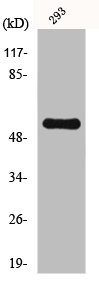
The antibody against CDK5RAP3 was raised in rabbit using the Synthesized peptide derived from the Internal region of Human HSF-27. as the immunogen. This antibody exists as a non-conjugated isotype IgG. The antibody was affinity-purified from rabbit antiserum by affinity-chromatography using epitope-specific immunogen. This antibody has been validated on WB, IHC, ELISA.

ADC-38451A

The antibody against CDK5RAP3 was raised in rabbit using the Synthesized peptide derived from the Internal region of Human HSF-27. as the immunogen. This antibody exists as a non-conjugated isotype IgG. The antibody was affinity-purified from rabbit antiserum by affinity-chromatography using epitope-specific immunogen. This antibody has been validated on WB, IHC, ELISA.

$167.00

Number
Order Exclusive Products Now

Request a Quote
High Purity LevelsPrecision and ReliabilityCustomization Options

Specifications


Cat.No ADC-38451A ClonalityPolyclonal
Host SpeciesRabbitTarget NameCDK5RAP3
FormLiquidSpecies ReactivityHuman, Mouse, Rat
IsotypeIgGStorage Buffer0.5% BSA and 0.02% sodium azide., Liquid in PBS containing 50% glycerol
Purification MethodThe antibody was affinity-purified from rabbit antiserum by affinity-chromatography using epitope-specific immunogen.ConjugateNon-conjugated
ApplicationELISA, IHC, WBStorageUpon receipt

Immunogen Information


Immunogen DescriptionSynthesized peptide derived from the Internal region of Human HSF-27.Target SpeciesHuman
Immunogen SequenceComplete sequences for the immunogen, target protein, and peptides are available upon request.Uniprot IDQ96JB5
Background Information
  • Uniprot Id

    Q96JB5

  • Target Species

    Human

  • Target Name

    CDK5RAP3

  • Target Full Name

    CDK5 regulatory subunit-associated protein 3

  • Target Function

    Substrate adapter for ufmylation, the covalent attachment of the ubiquitin-like modifier UFM1 to substrate proteins, in response to endoplasmic reticulum stress. Negatively regulates NF-kappa-B-mediated gene transcription through the control of RELA phosphorylation. Probable tumor suppressor initially identified as a CDK5R1 interactor controlling cell proliferation. Also regulates mitotic G2/M transition checkpoint and mitotic G2 DNA damage checkpoint. Through its interaction with CDKN2A/ARF and MDM2 may induce MDM2-dependent p53/TP53 ubiquitination, stabilization and activation in the nucleus, thereby promoting G1 cell cycle arrest and inhibition of cell proliferation. May also play a role in the rupture of the nuclear envelope during apoptosis. May regulate MAPK14 activity by regulating its dephosphorylation by PPM1D/WIP1. Required for liver development.; (Microbial infection) May be negatively regulated by hepatitis B virus large envelope protein mutant pre-s2 to promote mitotic entry.

  • Target Subcellular Location

    Nucleus. Cytoplasm. Cytoplasm, cytoskeleton, microtubule organizing center, centrosome.

  • Target Protein Families

    CDK5RAP3 family

  • Target Tissue Specificity

    Ubiquitously expressed. Expressed in heart, brain, placenta, lung, liver, skeletal muscle, kidney and pancreas. Isoform 3 is expressed in kidney, liver, skeletal muscle and placenta.

  • Target Synonyms

    C53; CDK5 activator binding protein C53; CDK5 activator-binding protein C53; CDK5 regulatory subunit associated protein 3; CDK5 regulatory subunit-associated protein 3; Cdk5rap3; CK5P3_HUMAN; HSF 27; HSF27; IC53; Ischemic heart CDK5 activator binding protein C53; LXXLL/leucine zipper containing ARFbinding protein; LZAP; MST016; OK/SW cl.114; PP1553; Protein HSF-27

  • Target Background

    This gene encodes a protein that has been reported to function in signaling pathways governing transcriptional regulation and cell cycle progression. It may play a role in tumorigenesis and metastasis. A pseudogene of this gene is located on the long arm of chromosome 20. Alternative splicing results in multiple transcript variants that encode different isoforms.

Inquire Rabbit anti-Human CDK5RAP3 Polyclonal Antibody Now


AbTriva respects your privacy and protects your personal data in accordance with AbTriva. For more information, please see our data protection statement. *

Notification