-
Chinese (Simplified)
-
English
-
German
-
Korean
-
Spanish
Chinese (Simplified)
English
German
Korean
Spanish
Sign up for an account to enjoy easy online shopping and instant order tracking.
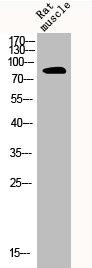
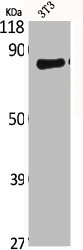
The antibody against CLCN4 was raised in rabbit using the Synthesized peptide derived from the Internal region of Human CLC-4. as the immunogen. This antibody exists as a non-conjugated isotype IgG. The antibody was affinity-purified from rabbit antiserum by affinity-chromatography using epitope-specific immunogen. This antibody has been validated on WB, IF, ELISA.
$167.00
| Cat.No | ADC-39010A | Clonality | Polyclonal |
|---|---|---|---|
| Host Species | Rabbit | Target Name | CLCN4 |
| Form | Liquid | Species Reactivity | Human, Mouse, Rat |
| Isotype | IgG | Storage Buffer | 0.5% BSA and 0.02% sodium azide., Liquid in PBS containing 50% glycerol |
| Purification Method | The antibody was affinity-purified from rabbit antiserum by affinity-chromatography using epitope-specific immunogen. | Conjugate | Non-conjugated |
| Application | ELISA, IF, WB | Storage | Upon receipt |
| Immunogen Description | Synthesized peptide derived from the Internal region of Human CLC-4. | Target Species | Human |
|---|---|---|---|
| Immunogen Sequence | Complete sequences for the immunogen, target protein, and peptides are available upon request. | Uniprot ID | P51793 |
Uniprot Id
P51793
Target Species
Human
Target Name
CLCN4
Target Full Name
H(+)/Cl(-) exchange transporter 4
Target Function
Strongly outwardly rectifying, electrogenic H(+)/Cl(-)exchanger which mediates the exchange of chloride ions against protons. The CLC channel family contains both chloride channels and proton-coupled anion transporters that exchange chloride or another anion for protons. The presence of conserved gating glutamate residues is typical for family members that function as antiporters.
Target Involvement
Mental retardation, X-linked 49 (MRX49)
Target Subcellular Location
Early endosome membrane; Multi-pass membrane protein. Late endosome membrane; Multi-pass membrane protein. Endoplasmic reticulum membrane; Multi-pass membrane protein. Lysosome membrane; Multi-pass membrane protein. Recycling endosome membrane; Multi-pass membrane protein.
Target Protein Families
Chloride channel (TC 2.A.49) family, ClC-4/CLCN4 subfamily
Target Tissue Specificity
Abundant in skeletal muscle and also detectable in brain and heart.
Target Synonyms
Chloride channel 4; Chloride channel protein 4; Chloride channel; voltage sensitive 4; Chloride transporter ClC-4; ClC 4A; ClC-4; CLC4; ClC4A; CLCN4; CLCN4_HUMAN; H(+)/Cl(-) exchange transporter 4; MGC163150
Target Background
The CLCN family of voltage-dependent chloride channel genes comprises nine members (CLCN1-7, Ka and Kb) which demonstrate quite diverse functional characteristics while sharing significant sequence homology. Chloride channel 4 has an evolutionary conserved CpG island and is conserved in both mouse and hamster. This gene is mapped in close proximity to APXL (Apical protein Xenopus laevis-like) and OA1 (Ocular albinism type I), which are both located on the human X chromosome at band p22.3. The physiological role of chloride channel 4 remains unknown but may contribute to the pathogenesis of neuronal disorders. Alternate splicing results in two transcript variants that encode different proteins.
Notification