-
Chinese (Simplified)
-
English
-
German
-
Korean
-
Spanish
Chinese (Simplified)
English
German
Korean
Spanish
Sign up for an account to enjoy easy online shopping and instant order tracking.
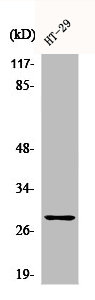
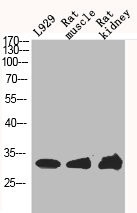
The antibody against CLIC4 was raised in rabbit using the Synthesized peptide derived from the N-terminal region of Human CLIC4. as the immunogen. This antibody exists as a non-conjugated isotype IgG. The antibody was affinity-purified from rabbit antiserum by affinity-chromatography using epitope-specific immunogen. This antibody has been validated on WB, IHC, ELISA.
$167.00
| Cat.No | ADC-39005A | Clonality | Polyclonal |
|---|---|---|---|
| Host Species | Rabbit | Target Name | CLIC4 |
| Form | Liquid | Species Reactivity | Human, Mouse, Rat |
| Isotype | IgG | Storage Buffer | 0.5% BSA and 0.02% sodium azide., Liquid in PBS containing 50% glycerol |
| Purification Method | The antibody was affinity-purified from rabbit antiserum by affinity-chromatography using epitope-specific immunogen. | Conjugate | Non-conjugated |
| Application | ELISA, IHC, WB | Storage | Upon receipt |
| Immunogen Description | Synthesized peptide derived from the N-terminal region of Human CLIC4. | Target Species | Human |
|---|---|---|---|
| Immunogen Sequence | Complete sequences for the immunogen, target protein, and peptides are available upon request. | Uniprot ID | Q9Y696 |
Uniprot Id
Q9Y696
Target Species
Human
Target Name
CLIC4
Target Full Name
Chloride intracellular channel protein 4
Target Function
Can insert into membranes and form poorly selective ion channels that may also transport chloride ions. Channel activity depends on the pH. Membrane insertion seems to be redox-regulated and may occur only under oxydizing conditions. Promotes cell-surface expression of HRH3. Has alternate cellular functions like a potential role in angiogenesis or in maintaining apical-basolateral membrane polarity during mitosis and cytokinesis. Could also promote endothelial cell proliferation and regulate endothelial morphogenesis (tubulogenesis).
Target Subcellular Location
Cytoplasm, cytoskeleton, microtubule organizing center, centrosome. Cytoplasmic vesicle membrane; Single-pass membrane protein. Nucleus matrix. Cell membrane; Single-pass membrane protein. Mitochondrion. Cell junction. Note=Colocalized with AKAP9 at the centrosome and midbody. Exists both as soluble cytoplasmic protein and as membrane protein with probably a single transmembrane domain. Present in an intracellular vesicular compartment that likely represent trans-Golgi network vesicles.
Target Protein Families
Chloride channel CLIC family
Target Tissue Specificity
Detected in epithelial cells from colon, esophagus and kidney (at protein level). Expression is prominent in heart, kidney, placenta and skeletal muscle.
Target Research Area
Cell Biology
Target Synonyms
Chloride intracellular channel 4; Chloride intracellular channel 4 (mitochondrial); Chloride intracellular channel 4 like; Chloride intracellular channel protein 4; Clic4; CLIC4_HUMAN; CLIC4L; DKFZP566G223; FLJ38640; H1; HUH1; Intracellular chloride ion channel protein p64H1; MC3S5; mtCLIC; p64H1
Target Background
Chloride channels are a diverse group of proteins that regulate fundamental cellular processes including stabilization of cell membrane potential, transepithelial transport, maintenance of intracellular pH, and regulation of cell volume. Chloride intracellular channel 4 (CLIC4) protein, encoded by the CLIC4 gene, is a member of the p64 family; the gene is expressed in many tissues and exhibits a intracellular vesicular pattern in Panc-1 cells (pancreatic cancer cells).
Notification