-
Chinese (Simplified)
-
English
-
German
-
Korean
-
Spanish
Chinese (Simplified)
English
German
Korean
Spanish
Sign up for an account to enjoy easy online shopping and instant order tracking.
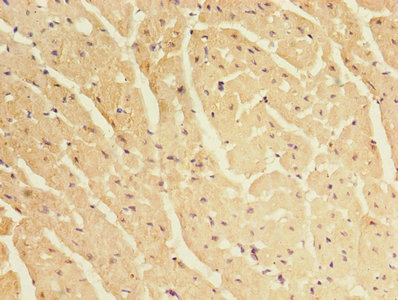
The antibody against CRYBA1 was raised in rabbit using the Recombinant Human Beta-crystallin A3 protein (1-215AA) as the immunogen. This antibody exists as a non-conjugated isotype IgG, purified by protein G with a purity greater than 95%. This antibody has been validated on ELISA, WB, IHC, IF.
$299.00
| Cat.No | ADC-22152A | Clonality | Polyclonal |
|---|---|---|---|
| Host Species | Rabbit | Target Name | CRYBA1 |
| Form | Liquid | Species Reactivity | Human, Mouse |
| Isotype | IgG | Storage Buffer | 0.01M PBS, 0.03% Proclin 300; Constituents: 50% Glycerol, PH 7.4 |
| Purification Method | >95%, Protein G purified | Conjugate | Non-conjugated |
| Application | ELISA, IF, IHC, WB | Storage | Upon receipt |
| Immunogen Description | Recombinant Human Beta-crystallin A3 protein (1-215AA) | Target Species | Human |
|---|---|---|---|
| Immunogen Sequence | Complete sequences for the immunogen, target protein, and peptides are available upon request. | Uniprot ID | P05813 |
Uniprot Id
P05813
Target Species
Human
Target Name
CRYBA1
Target Full Name
Beta-crystallin A3
Target Function
Crystallins are the dominant structural components of the vertebrate eye lens.
Target Involvement
Cataract 10, multiple types (CTRCT10)
Target Protein Families
Beta/gamma-crystallin family
Target Synonyms
Beta crystallin A3 isoform A1 Delta4 form; Beta crystallin A3; Beta crystallin A3 isoform A1 Delta7 form; Beta crystallin A3 isoform A1 Delta8 form; Beta-crystallin A3; CRBA1_HUMAN; CRYB1; CRYBA1; Crystallin beta A1; Crystallin beta A3; Delta8 form; Eye lens structural protein; isoform A1
Target Background
Crystallins are separated into two classes: taxon-specific, or enzyme, and ubiquitous. The latter class constitutes the major proteins of vertebrate eye lens and maintains the transparency and refractive index of the lens. Since lens central fiber cells lose their nuclei during development, these crystallins are made and then retained throughout life, making them extremely stable proteins. Mammalian lens crystallins are divided into alpha, beta, and gamma families; beta and gamma crystallins are also considered as a superfamily. Alpha and beta families are further divided into acidic and basic groups. Seven protein regions exist in crystallins: four homologous motifs, a connecting peptide, and N- and C-terminal extensions. Beta-crystallins, the most heterogeneous, differ by the presence of the C-terminal extension (present in the basic group, none in the acidic group). Beta-crystallins form aggregates of different sizes and are able to self-associate to form dimers or to form heterodimers with other beta-crystallins. This gene, a beta acidic group member, encodes two proteins (crystallin, beta A3 and crystallin, beta A1) from a single mRNA, the latter protein is 17 aa shorter than crystallin, beta A3 and is generated by use of an alternate translation initiation site. Deletion of exons 3 and 4 causes the autosomal dominant disease 'zonular cataract with sutural opacities'.
Notification