-
Chinese (Simplified)
-
English
-
German
-
Korean
-
Spanish
Chinese (Simplified)
English
German
Korean
Spanish
Sign up for an account to enjoy easy online shopping and instant order tracking.
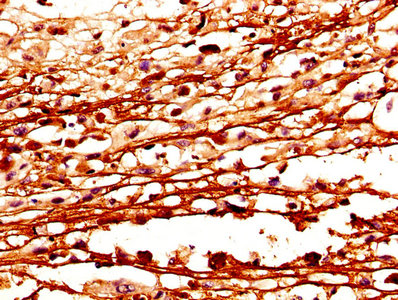
The antibody against CSTA was raised in rabbit using the Recombinant Human Cystatin-A protein (2-98AA) as the immunogen. This antibody exists as a non-conjugated isotype IgG, purified by protein G with a purity greater than 95%. This antibody has been validated on ELISA, WB, IHC, IF.
$299.00
| Cat.No | ADC-44028A | Clonality | Polyclonal |
|---|---|---|---|
| Host Species | Rabbit | Target Name | CSTA |
| Form | Liquid | Species Reactivity | Human |
| Isotype | IgG | Storage Buffer | 0.01M PBS, 0.03% Proclin 300; Constituents: 50% Glycerol, PH 7.4 |
| Purification Method | >95%, Protein G purified | Conjugate | Non-conjugated |
| Application | ELISA, IF, IHC, WB | Storage | Upon receipt |
| Immunogen Description | Recombinant Human Cystatin-A protein (2-98AA) | Target Species | Human |
|---|---|---|---|
| Immunogen Sequence | Complete sequences for the immunogen, target protein, and peptides are available upon request. | Uniprot ID | P01040 |
Uniprot Id
P01040
Target Species
Human
Target Name
CSTA
Target Full Name
Cystatin-A
Target Function
This is an intracellular thiol proteinase inhibitor. Has an important role in desmosome-mediated cell-cell adhesion in the lower levels of the epidermis.
Target Involvement
Peeling skin syndrome 4 (PSS4)
Target Subcellular Location
Cytoplasm.
Target Protein Families
Cystatin family
Target Tissue Specificity
Expressed in the skin throughout the epidermis.
Target Research Area
Cancer
Target Synonyms
AREI; cstA; Cystatin A; Cystatin AS; Cystatin-A; Cystatin-AS; CYTA_HUMAN; Stefin A; Stefin-A; STF1; STFA
Target Background
The cystatin superfamily encompasses proteins that contain multiple cystatin-like sequences. Some of the members are active cysteine protease inhibitors, while others have lost or perhaps never acquired this inhibitory activity. There are three inhibitory families in the superfamily, including the type 1 cystatins (stefins), type 2 cystatins, and kininogens. This gene encodes a stefin that functions as a cysteine protease inhibitor, forming tight complexes with papain and the cathepsins B, H, and L. The protein is one of the precursor proteins of cornified cell envelope in keratinocytes and plays a role in epidermal development and maintenance. Stefins have been proposed as prognostic and diagnostic tools for cancer.
Notification