-
Chinese (Simplified)
-
English
-
German
-
Korean
-
Spanish

Chinese (Simplified)
English
German
Korean
Spanish
Sign up for an account to enjoy easy online shopping and instant order tracking.
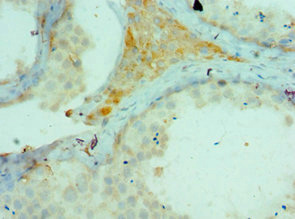
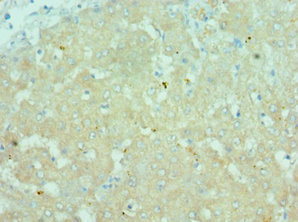
The antibody against CTCFL was raised in rabbit using the Recombinant Human Transcriptional repressor CTCFL protein (1-270AA) as the immunogen. This antibody exists as a non-conjugated isotype IgG, Antigen affinity purified. This antibody has been validated on ELISA, IHC.
$299.00
| Cat.No | ADC-44772A | Clonality | Polyclonal |
|---|---|---|---|
| Host Species | Rabbit | Target Name | Ctcfl |
| Form | Liquid | Species Reactivity | Human |
| Isotype | IgG | Storage Buffer | 50% Glycerol, PBS with 0.02% sodium azide, pH7.3. |
| Purification Method | Antigen affinity purified | Conjugate | Non-conjugated |
| Application | ELISA, IHC | Storage | Upon receipt |
| Immunogen Description | Recombinant Human Transcriptional repressor CTCFL protein (1-270AA) | Target Species | Human |
|---|---|---|---|
| Immunogen Sequence | Complete sequences for the immunogen, target protein, and peptides are available upon request. | Uniprot ID | Q8NI51 |
Uniprot Id
Q8NI51
Target Species
Human
Target Name
CTCFL
Target Full Name
Transcriptional repressor CTCFL
Target Function
Testis-specific DNA binding protein responsible for insulator function, nuclear architecture and transcriptional control, which probably acts by recruiting epigenetic chromatin modifiers. Plays a key role in gene imprinting in male germline, by participating in the establishment of differential methylation at the IGF2/H19 imprinted control region (ICR). Directly binds the unmethylated H19 ICR and recruits the PRMT7 methyltransferase, leading to methylate histone H4 'Arg-3' to form H4R3sme2. This probably leads to recruit de novo DNA methyltransferases at these sites. Seems to act as tumor suppressor. In association with DNMT1 and DNMT3B, involved in activation of BAG1 gene expression by binding to its promoter. Required for dimethylation of H3 lysine 4 (H3K4me2) of MYC and BRCA1 promoters.
Target Subcellular Location
Cytoplasm. Nucleus.
Target Protein Families
CTCF zinc-finger protein family
Target Tissue Specificity
Testis specific. Specifically expressed in primary spermatocytes.
Target Synonyms
BORIS like protein; Brother of the regulator of imprinted sites; Cancer/testis antigen 27; CCCTC binding factor (zinc finger protein) like; CCCTC-binding factor; CT27; CTCF paralog; CTCF T; CTCF-like protein; Ctcfl; CTCFL_HUMAN; dJ579F20.2; HMG 1L1; HMGB1L1; MGC163358; MGC169105; MGC169106; Putative high mobility group protein 1 like 1; Putative high mobility group protein B1 like 1; Transcriptional repressor CTCFL; Zinc finger protein CTCF-T
Target Background
CCCTC-binding factor (CTCF), an 11-zinc-finger factor involved in gene regulation, utilizes different zinc fingers to bind varying DNA target sites. CTCF forms methylation-sensitive insulators that regulate X-chromosome inactivation. This gene is a paralog of CTCF and appears to be expressed primarily in the cytoplasm of spermatocytes, unlike CTCF which is expressed primarily in the nucleus of somatic cells. CTCF and the protein encoded by this gene are normally expressed in a mutually exclusive pattern that correlates with resetting of methylation marks during male germ cell differentiation. Multiple alternatively spliced transcript variants encoding different isoforms have been found for this gene.
Notification