-
Chinese (Simplified)
-
English
-
German
-
Korean
-
Spanish
Chinese (Simplified)
English
German
Korean
Spanish
Sign up for an account to enjoy easy online shopping and instant order tracking.
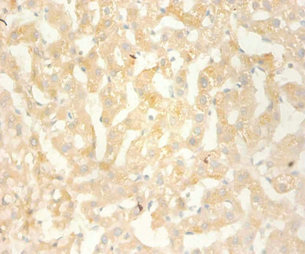
The antibody against CXCL13 was raised in rabbit using the Recombinant Human C-X-C motif chemokine 13 protein (23-95AA) as the immunogen. This antibody exists as a non-conjugated isotype IgG, Caprylic Acid Ammonium Sulfate Precipitation purified. This antibody has been validated on ELISA, IHC.
$299.00
| Cat.No | ADC-50769A | Clonality | Polyclonal |
|---|---|---|---|
| Host Species | Rabbit | Target Name | CXCL13 |
| Form | Liquid | Species Reactivity | Human |
| Isotype | IgG | Storage Buffer | 0.1mol/L NaCl, 15mmol/L NaN3, PH7.2 |
| Purification Method | Caprylic Acid Ammonium Sulfate Precipitation purified | Conjugate | Non-conjugated |
| Application | ELISA, IHC | Storage | Upon receipt |
| Immunogen Description | Recombinant Human C-X-C motif chemokine 13 protein (23-95AA) | Target Species | Human |
|---|---|---|---|
| Immunogen Sequence | Complete sequences for the immunogen, target protein, and peptides are available upon request. | Uniprot ID | O43927 |
Uniprot Id
O43927
Target Species
Human
Target Name
CXCL13
Target Full Name
C-X-C motif chemokine 13
Target Function
Chemotactic for B-lymphocytes but not for T-lymphocytes, monocytes and neutrophils. Does not induce calcium release in B-lymphocytes. Binds to BLR1/CXCR5.
Target Subcellular Location
Secreted.
Target Protein Families
Intercrine alpha (chemokine CxC) family
Target Tissue Specificity
Highest levels in liver, followed by spleen, lymph node, appendix and stomach. Low levels in salivary gland, mammary gland and fetal spleen.
Target Research Area
Immunology
Target Synonyms
ANGIE; ANGIE2 ; B cell attracting chemokine 1; B cell-attracting chemokine 1; B lymphocyte chemoattractant; B-cell chemoattractant ; B-cell-attracting chemokine 1; B-cell-homing chemokine (ligand for Burkitt's lymphoma receptor-1); BCA-1; BLC; BLR1L ; C-X-C motif chemokine 13; Chemokine (C-X-C motif) ligand 13 ; Chemokine (C-X-C motif) ligand 13 (B-cell chemoattractant) ; Chemokine; CXC motif; ligand 13; CXC chemokine BLC; CXCL13; CXL13_HUMAN; SCYB13; Small inducible cytokine B subfamily (Cys-X-Cys motif); member 13 (B-cell chemoattractant); Small inducible cytokine B13; Small inducible cytokine subfamily B; member 13; Small-inducible cytokine B13
Target Background
B lymphocyte chemoattractant, independently cloned and named Angie, is an antimicrobial peptide and CXC chemokine strongly expressed in the follicles of the spleen, lymph nodes, and Peyer's patches. It preferentially promotes the migration of B lymphocytes (compared to T cells and macrophages), apparently by stimulating calcium influx into, and chemotaxis of, cells expressing Burkitt's lymphoma receptor 1 (BLR-1). It may therefore function in the homing of B lymphocytes to follicles.
Notification